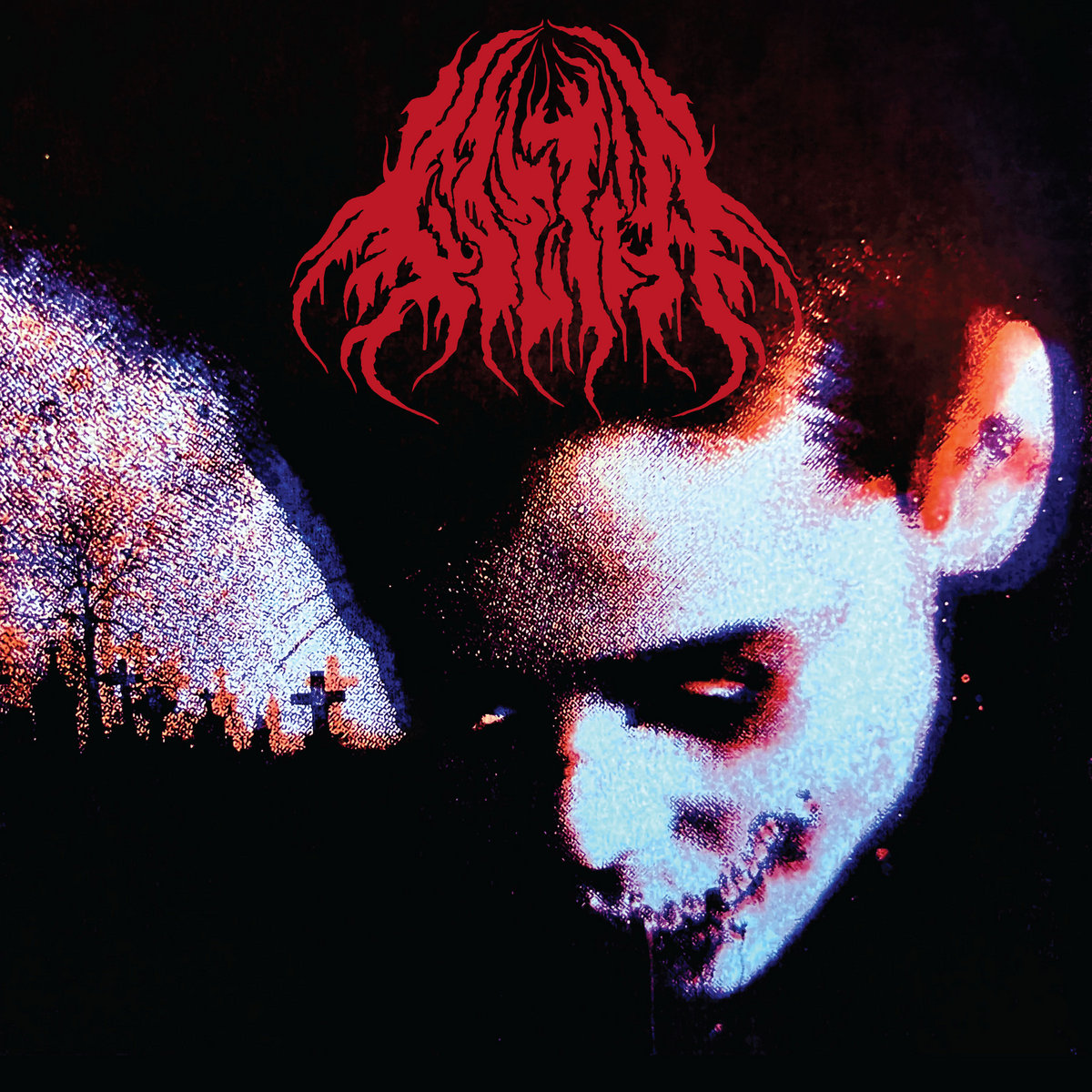
Label Description: “Mortuary Cult”, the first Full-Length album from Goetia, features ten blasting tracks of Death Metal desecration.
Goetia: Matt Scott – Bass & Vocals Demir Soyer – Guitars Nadia Tydings-Lynch – Drums
Recorded and Mixed by Matt Michel at Viva Studio in Fairfax, VA Mastered by Will Killingsworth at Dead Air Studios Cover Artwork by Chris Taylor Logo by Matt Scott
Label Description: With Shades of post-punk, trip-hop and film score dynamics, The Lucid Dreams LP is an immersive multi-genre listening experience that travels through murky underworlds and dream-like hazes.
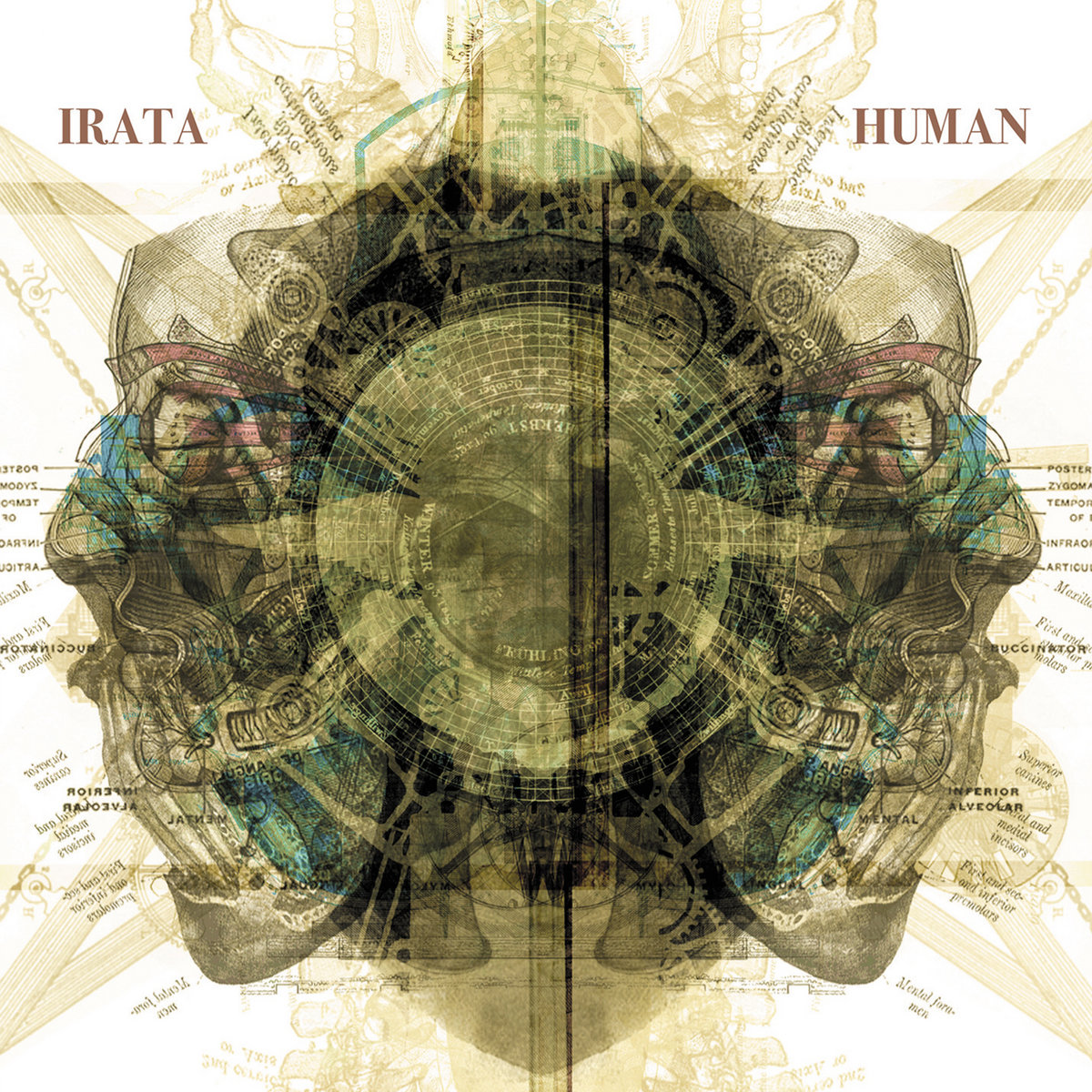
Label Description: Since its 2007 genesis at the hands of founding members Jon Case and Jason Ward, Irata has mutated relentlessly. Through four previous records, the band has never sat idly in any specific style, while maintaining a signature mesmerizing, grinding pulse between bass and drums that permeates an enigmatic vision of heavy rock. After releasing ‘Tower’ in 2019 as a four-piece, Irata is once again a trio, and continues to push forward into new sonic territories.
On ‘Human,’ the band is building on the structures that have created some of its enduring favorites — namely, thundering bass riffs, hypnotic drums, and grandiose choruses. They do not sacrifice expression for refinement, but manage to have it both ways. Their progression is evident in the patience with which “Altar” leads off, a melodic confidence that overarches the eight included songs, and the atmospheres in pieces like “Slipped” (see “pulse…” above) and the expansive finale “Daystar,” but none of ‘Human’ is so overblown as to give up its organically dynamic nature.
And perhaps in an era marked by the advent of machine-made art, ‘Human’ can be as much a statement of purpose as a declaration of self. In any case, with this collection of songs, Irata’s focus on vocal melody and intricate riffing distinguish them from a crowded underground sphere. The record moves as two sides of one image, opening with reflections of a final chapter, and closing with reflections of a new beginning through transformation; a story being told as it’s lived. What could be more human than that?
‘Human’ was recorded with longtime friends Hunter Allen and Adam Joyce of The Bronzed Chorus at Amplified Acres in Liberty, NC, and mixed by J. Robbins at The Magpie Cage in Baltimore, MD.
RIYL: Jane’s Addiction, The Smashing Pumpkins, King Buffalo, Helmet, Shiner, SHUN, All Them Witches
Irata is: Jason Ward: drums, keys, vox Jon Case: bass, vox Owen Burd: vox, guitar, keys
Recording engineered by Hunter Allen with assistance from Adam Joyce at Amplified Acres in Liberty, NC. Additional production at The 68 Sound in Greensboro, NC. Mixed by J. Robbins at the Magpie Cage in Baltimore, MD. Mastered by Dan Coutant at Sun Room Audio in New Windsor, NY. All music written by Irata. Lyrics by Owen Burd except “Seeds” by Jon Case. Produced by Irata with Hunter Allen and Adam Joyce. Artwork by Will Hackley. Layout by Stacie Shands.
Published by Small Stone Records (ASCAP) / SH Small Stone Music (BMI)
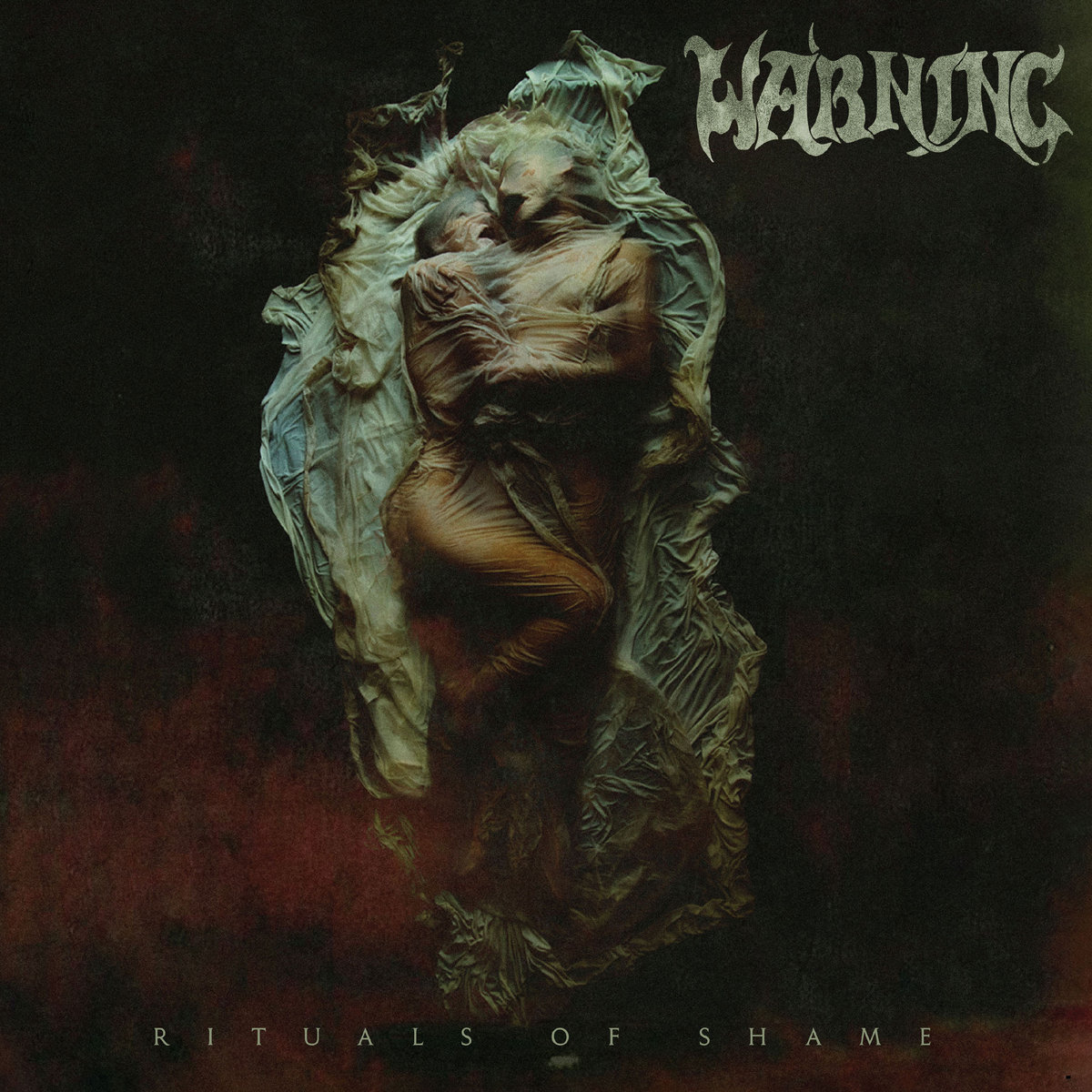
Label Description: As WARNING prepares to release Rituals of Shame – their first new music in twenty years,vocalist/guitarist Patrick Walker is self-effacing about what led to this moment. Over the last two decades he continued to write and release music, satisfied that he had achieved what he set out to do with WARNING. In those intervening years, interest in WARNING swelled, organically gathering an ardent fanbase. In particular, the 2006 album, Watching from a Distance, has gained a cult following.
In response to a transformative period in his life, Walker turned towards writing new songs, and it soon became apparent that these belonged to WARNING. In early January 2025, he started with a completely blank canvas, and piece by piece, he started to fill it with ideas that evolved to become the songs that make up Rituals of Shame. His immersion in the project became a full-time pursuit.
After successfully demoing the five songs, Walker retreated to a remote house on a hill outside Florence, Italy, to refine the lyrics. Recording took place at The Arch Studio, a 140-year-old former church in Southport, UK. Chris Fullard (Idles, Sunn O))), Ulver) handled the recording and mixing.
Walker’s lifelong musical inspirations can be traced through Rituals of Shame. The ambitious structural arrangements harken to Marillion’s complex but soaring episodic songs. They retain a sparsity that is reminiscent of June Tabor’s economic arrangements; thick with melody but with a diaphanous air to them. Citing John Brenner of Revelation as an enduring inspiration, Patrick credits him with introducing the idea of how to infuse heavy music with significant emotional depth.
Often reluctant to discuss the minutiae of his lyrics, Walker does acknowledge that making this album was a direct response to the immediate concerns of his current life period. Rituals of Shame also echoes the enduring themes and fixations that have marked most of his work: guilt, shame, personal failure, obsession, longing, and separation, but, most of all, he says, love.
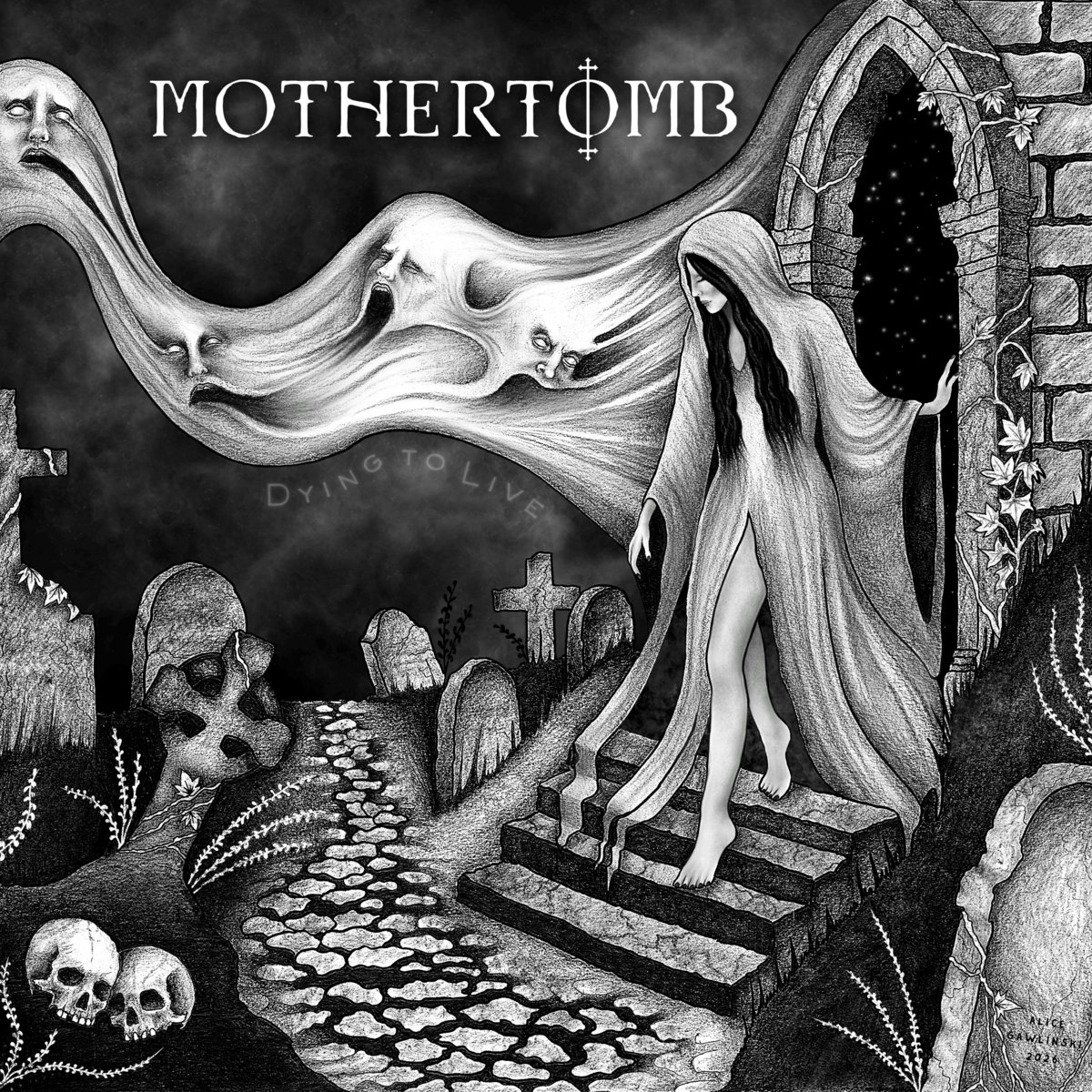
Label Description: Mothertomb emerged from the deep woods of Northern Michigan in 2025, forging a sound that is equal parts crushing weight and haunting atmosphere. Rooted in traditional doom metal yet unbound by convention, the band’s sound explores a broad spectrum of influences, from the hypnotic haze of heavy psych and stoner metal to the aggression of sludge metal and the dynamic complexity of progressive and groove metal.
Set for release on July 14th, 2026, Dying to Live is Mothertomb’s debut full-length album. Across its five tracks, the record explores themes of transformation, suffering, transcendence, and the timeless struggle between darkness and light. Drawing inspiration from Welsh folklore and the shadowed corners of the human psyche, the songs traverse landscapes inhabited by ancient spirits, inner demons, and the forces that shape the human condition.
The album unfolds through layers of metaphor, allegory, and introspection, inviting listeners into a world where darkness and illumination coexist. From brutal heaviness to moments of eerie beauty, Dying to Live is a journey through the depths of the human experience.
Created entirely as an independent DIY effort, the album was written, recorded, produced, and artistically directed by the band itself. Dying to Live stands as a testament to that labor of love, and we are honored to share it with the world.
Mothertomb: Alice Gawlinski: Vocals Chance Gawlinski: Guitar Alton Minor: Bass Mike Benitez: Percussion
“Dying to Live” was recorded in Charlevoix, MI at Death Box Records (2026).
Music written by: Mothertomb Produced by: Alton Minor and Mothertomb Lyrics written by: Alice Gawlinski Mixed and mastered by: Alton Minor Recording engineer: Alton Minor and Mike Benitez Artwork Design and Illustration by: Alice Gawlinski
There’s a dance scene in Tadeusz Konwicki’s Kafkaesque 1965 drama film ‘Salto’ that lodged itself in Przemysław Jankowiak‘s head while he was conceiving Everything Always Changes, For We’re Truly Here. The film plays like a dream and the dance works almost like the payoff, a haunting, poignant moment that subtly references the title itself, which loosely translates as ‘leap’. “I like listening through images and seeing through sound,” explains Jankowiak, who’s better known as 2K88. His music has always been cinematic, but this album in particular, made alongside acclaimed British artists Lauren Duffus, Rainy Miller and Bianca Scout, plays like slow cinema, meditating on themes that smolder evocatively without ever fully igniting. It’s best described as hypnagogic R&B, a reverie of affecting vignettes pieced together from unexpectedly vivid elements: sensual vocal hooks, free-flowing raps, submerged rhythms and rough, craggy atmospheres. The four contributors pass sounds and memories back-and-forth, imagining melancholy sci-fi hymns, inverted pop songs and neo-trip-hop outlines that melt away at the edges, falling into a captivating rhythm of their own.
The project was originally commissioned by Unsound in an effort to match up Polish and British artists. Jankowiak had already released SHAME, an album that reflected on the impact of Polish rap in the late 1990s and early 2000s, juxtaposing these elements with the aesthetics of UK club music, so presented himself as the obvious figurehead. Miller, Duffus and Scout were at the top of his wish list of collaborators and before long, the quartet were on their way to his home city of Gdynia for a residency, where they began to figure out the harmony between their respective approaches. It was planned as a live performance at first, with 2K88 overseeing and corralling the ideas from each of his allies. Miller, who is widely acclaimed for his unique fusion of rap, noise and ambient music on albums such as last year’s Joseph, What Have You Done?, would add poetic, inclement contemplations; Duffus, whose weightless, genre-blending productions have seen her release on AD93 and tour with indie rap heavyweight MIKE, provided cloudy but self-assured vocal hooks; while Scout, a producer and performer who shivered between gothic pop and medieval ambiance on 2023’s The Heart of the Anchoress offered haunted textures and desolate chorals.
“I think in the back of all our minds was a possible release if the collaboration worked out well,” laughs Unsound’s Mat Schulz. “And of course it did.” After the live performance in Kraków, the four artists turned the dream into a reality, projecting the same ideas onto 10 fully developed tracks. And on the opener, ‘Everything Always Changes’, the concept solidifies, with coarse noise rubbing against Scout and Duffus’s airy vocal tones and booming analog bass provoking tension before Miller’s familiar voice cuts through the clouds. “There’s a war where the sea meets the sky,” he sibilates, “where the lines blur into fantastical dissonance.” His imagery matches Jankowiak’s faded soundscape, bringing to mind a half-remembered, long-promised history lost to time and politics. “It’s trapped in this romantic haze,” says Miller. “It conjures images of fictional seaside towns, ghosts of past grandeur living through imaginary romances in the present.” And his voice returns on ‘Creeping Thistle’, AutoTuned to curve gracefully around sparsely populated, burned out terrain: ominous synths, wailing police sirens and reverb that seems to swallow everything around it.
On ‘The Quiet’s Song’ familiar R&B hits and stabs are isolated and surrounded by ominous negative space that Scout impedes on with her reserved incantation. Loose, casual piano themes wisp through the frame like smoky exhalations and those sirens still groan away somewhere in the distance. The various threads are knotted into a more legible form on ‘Poetic Fallacy’, when Jankowiak’s decelerated beats overlap with heartbreaking half-speed melodies and Duffus’s elegant hooks. Scout takes the mic for a moment and a broken de-tuned guitar picks out the remnants of a riff. But it’s the aptly-titled ‘Salto’ that gives the album its nucleus, fixating on Jankowiak’s all-important visual reference and using its imagery to power a genuine pop miniature, a gauzy, abstract modern R&B anthem that’s as impressionistic and suggestive as Konwicki’s’s film.
Label Description: I switched the remixes of It’s All Right To Fight and By Purpose Not By Plan out for the 7″ versions, which make more sense to me in the context of the album. Maybe it’s better this way? -Matt
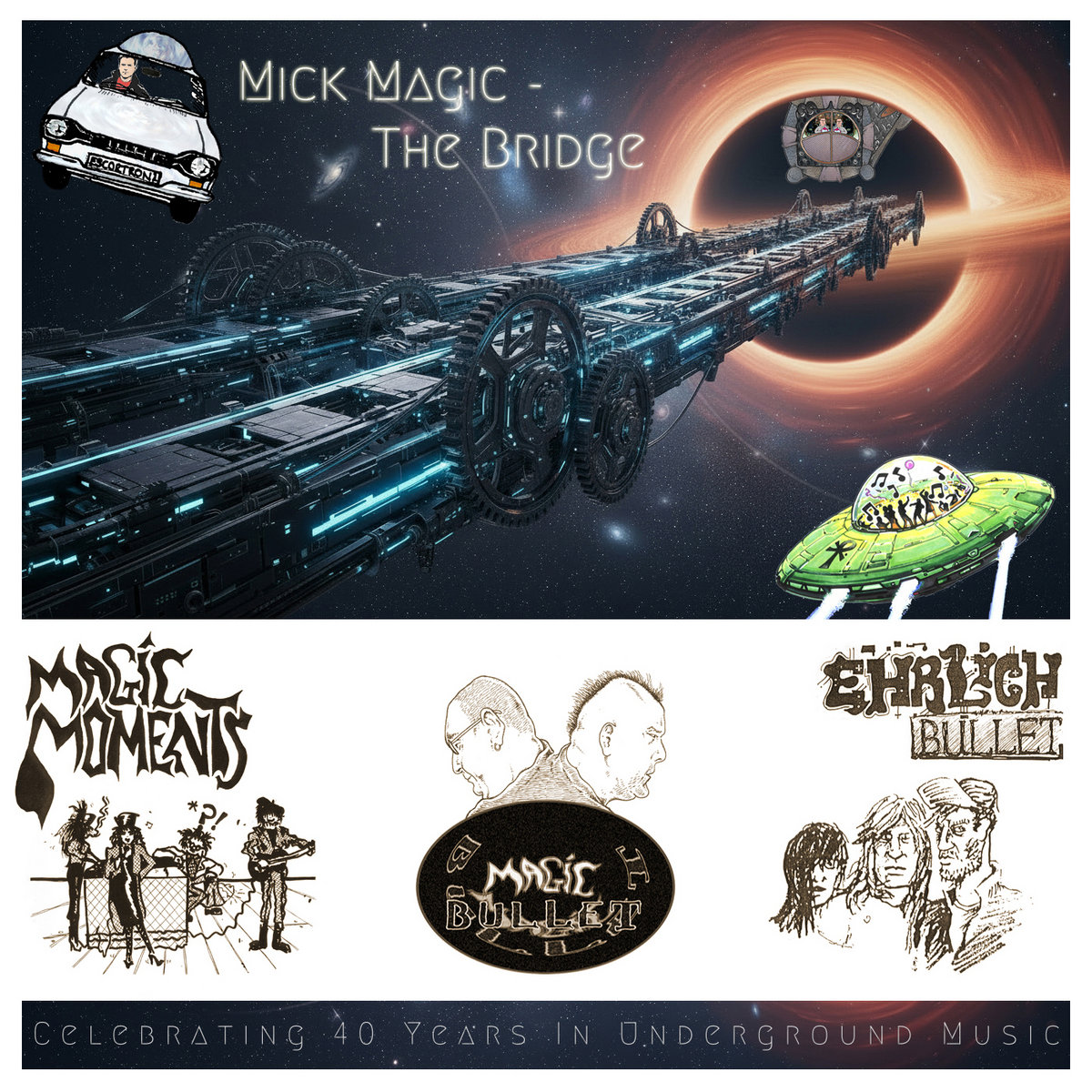
Label Description: “Celebrating 40 years in underground music, “The Bridge” is a collection bridging my cassette culture years, with Magic Moments At Twilight Time and Ehrlich Bullet, to my digital era project, Magic Bullet, and on to the bridge of my radioshow’s starship, the WSS Boobyprise (Consolation Class).”
– Mick Magic
Includes bonus items: The Bridge” – The official 40th anniversary album guide (PDF format booklet, 24 pages) “The Second World Chronicles” by Sati Varg (PDF format book, 244 pages, the ‘lost time journal’ from the 2016 Magic Moments At Twilight Time 30th anniversary online event, “Down The Rabbit Hole”)
Concept, Mix, Mastering – Mick Magic Also see individual track notes for further details. “Radioshow To The Stars” Pts. 1-8 recorded aboard the WSS Boobyprise (Consolation Class), June 2026
Cover Art includes elements originally drawn by: Kate Twilight: Ford Escortron and Magic Moments band picture Kevin Trundley: The WSS Boobyprise and Magic Bullet band picture Thayen Rich: The Starship Psychotron, with party going on Iaino Davies: Ehrlich Bullet logo and band picture Design and Layout by Mick Magic. www.mickmagic.net