DJ Plead – Please (Smalltown Supersound)

Label Description: After looking at how producers such as John Cage, Jean Michel-Jarre and Joe Meek produced music I translated that information into “Flashback Sequence”. This album evokes memories from the 90s and the Commodore Amiga. Enjoy.
Label Description: With his upcoming record, ‘Leap Life,’ Williams expands the definition of what music itself can be, operating on the philosophy that “the voice is the instrument.” Throughout the album, Williams speaks, chants, improvises and testifies over fluid arrangements that blur the lines between spoken word, jazz abstraction, hip-hop cadence, West African rhythmic logic, ambient composition and ceremonial sound design. Moving beyond traditional rhyme structures, the project embraces spontaneity, treating language as a rhythmic, vibrating force while capturing the essence of a jazz improviser chasing revelation in real-time, reflecting a lifetime of artistic preparation.
It’s a risky process — surrendering control inside a medium built on permanence — but Williams sees revelation in that uncertainty. “What does it mean to trust the moment?” he asks.
Label Description: AVAILABLE ON CD & VINYL:
elasticstage.com/triplicate/releases/the-geometry-of-vanishing-album
Belial often delights in making murky and foreboding tones, but he’s just as good at revelling in the prettiness this world still has to offer. This could not be more evident anywhere else but on this sprawling and spectacular selection of songs.
__________
INTERVIEW
__________
Triplicate Records: How have you been? What’s new in Belialand?
Belial Pelegrim: I’ve been really good. Like most of the time, I’m trying to find that balance between life itself and the amount of creative work I always seem to want to be doing. I recently got back from a vacation in Fort Bragg, California, and being near the ocean always resets something in me. It has a way of clearing out the mental noise and putting things back into perspective. I usually come away from it feeling renewed, both personally and creatively.
TRIP: We’ve spoken in the past about your lengthy and ambitious projects and how long they can take to come together; was this one of those ‘oh my gosh this is taking forever’ type dealies?
BP: Well, after TAFFETA, almost anything is going to seem like a short-term project! That was five years of releasing a new chapter every week, so it definitely recalibrated my sense of what “taking forever” means.
This new album came together differently. For about a year I had been working on music and deliberately setting certain pieces aside because I felt they belonged to something larger. I didn’t necessarily know exactly what that larger thing was going to be at first, but I knew I didn’t want to just release everything individually as soon as it was finished. I wanted to let a body of work accumulate and see what relationships started to emerge between the pieces.
I kept in touch with Mike during that time, and once I reached a point where I could stand back from the material and hear it as a complete thing, I contacted him and said, essentially, “I think I have something for Triplicate.” So this one never really had that oh my gosh, is this ever going to end? feeling. It was more like slowly filling a room with objects and eventually realizing they all belonged in the same room.
TRIP: If you could only eat one meal for the rest of your days, what would it be? Disregard health concerns. Let’s just say it’s magically healthy.
BP: My love of Mexican food knows no bounds, so this one is actually pretty easy: birria tacos. If we’re operating in a magical world where health concerns no longer apply, I’m fully prepared to make that commitment. Give me good birria, some consommé on the side, and I think I could live with the consequences.
TRIP: What’s your favourite title? There’s some bangers here; I particularly enjoy “Instructions found under Ice”.
BP: Part of the fun of making mostly instrumental music is coming up with the titles. Sometimes a title comes first and I end up writing toward it, or at least toward some vague idea or atmosphere it suggests. Other times the music is already there and the title arrives afterward. It really varies from track to track.
On this album, I do love Instructions Found Under Ice. That one has a nice mystery to it. I’m also really fond of The Hallway Had Other Plans and We Traveled the Lake in Sections. I like titles that feel as though they’re pointing toward a story without actually telling you what the story is.
I’ve also always felt that titles and cover art are part of the invitation into the music. With instrumental work especially, those things can give someone just enough of a doorway to become curious. The right image paired with the right title might be what gets somebody to press play in the first place, and then hopefully the music takes over from there.
TRIP: Read any good books lately?
BP: Absolutely. I spent quite a bit of time with Mark Z. Danielewski’s House of Leaves, and it really got its hooks into me. It’s one of those books where saying what it’s “about” almost immediately starts reducing it. On the surface there’s this impossible house that’s larger on the inside than the outside, the Navidson expedition into it, layers of narrators and documents and footnotes, and then the physical book itself begins behaving almost like another character. Words move around the page, disappear, become isolated, turn sideways—you eventually stop simply reading it and start physically navigating it.
What fascinated me most wasn’t necessarily the horror in the conventional sense. It was the spatial problem. I kept wondering: where are those hallways actually going? Where does that enormous black interior exist? I know the house can very easily be read as trauma, grief, relationships, the unconscious, all of those things—and I think all of those interpretations are valid—but I was reluctant to completely surrender the literal possibility. I liked entertaining the idea that the space is actually there, that it’s somehow extra-dimensional, or outside our normal understanding of location and time.
And creatively, the book definitely followed me out of the reading experience. I even started working on music inspired by some of those ideas. That’s usually the sign that something has really affected me—when I stop thinking about it simply as a book, film or piece of art and it starts infecting the way I think about my own work. House of Leaves absolutely did that.
TRIP: Can you talk a little bit about the hardware (or software) used to make The Geometry of Vanishing?
BP: I use a lot more software than hardware these days. For one thing, I like the fact that I don’t have to dust it. Seriously though, Ableton Live is really the center of everything for me. From there I use a ridiculous variety of third-party instruments, soft synths, effects and Max for Live devices. I don’t tend to build tracks around one particular piece of software; I’m much more interested in combining things that weren’t necessarily designed to live together and seeing what happens.
Off the top of my head, some of the things that showed up on The Geometry of Vanishing were Pigments, Myth, some homemade Reaktor synths, Kontrast, Abyss, Phona, Outgrowth, SketchCassette II, Buchla Easel V, Falcon, and various Spitfire and Vienna libraries. A lot of Slate + Ash instruments and I also used quite a few Max for Live devices inside Ableton for sequencing, modulation and generative processes.
So the software changes constantly, and I’m always finding some new instrument or strange little device to throw into the mix. The specific tools are important, but ultimately I’m much more interested in what happens when you start misusing them, combining them, and allowing them to lead you somewhere you weren’t necessarily planning to go. And as usual, I also employ a combination of real instruments; electric and acoustic guitars, drums, and upright bass when needed.
Composed & Produced by Scott Krakoff
Mastering by Michael Southard
Artwork by Michael Southard
Label Description: The latest voyage from Randall’s Orbit Service….A wild ride with irresistable(sic) rhythms and deeply atmospheric dives. “Delerium” is the fitting conclusion!
RF- voice,instruments.
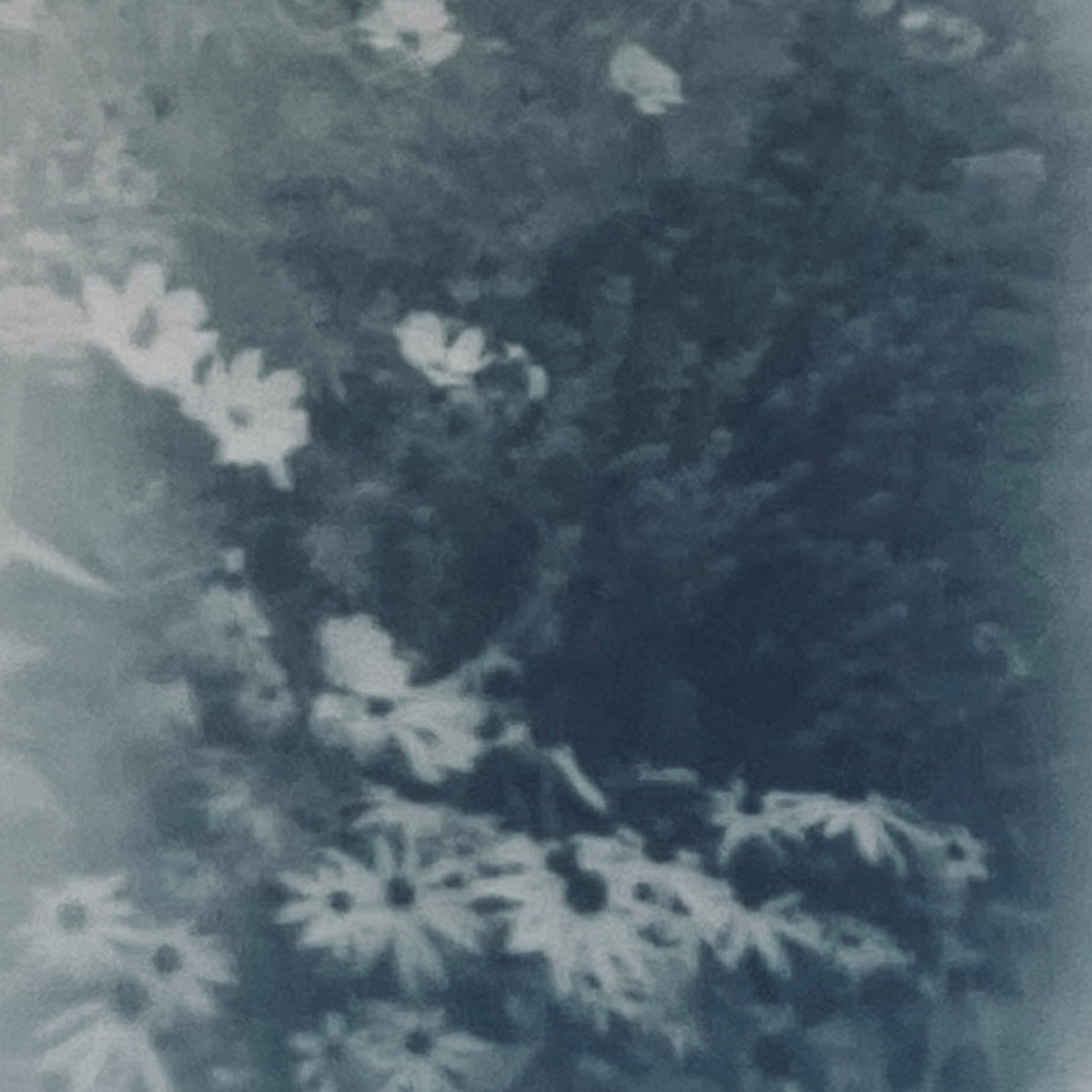
Label Description: Sweet Freeze – In Our Dream EP
This is the label’s first collaboration with Portland, Oregon lofi dream pop/experimental artist Sweet Freeze.
Dragon Trax approached Sweet Freeze to cover the song “In Our Dream’. You might remember the original by Socool & Edward Spark, which dropped in March 2024 with a brilliant jungle remix by Ordos Mk.0
Sweet Freeze has created two intriguing new versions of In Our Dream harnessing her leaning towards organic, minimalist sound, with her distinctive vocals, field recordings, and bittersweet instrumentation.
Sweet Freeze incorporated, and replicated with analog instruments, one of Socool’s skittering breakbeats into both versions.
AJ&JG and Asha Patera also reworked the Melodic version in line with their own aesthetics, taking it more towards the propulsive and the ambient respectively.
To make the EP even more special, the cover art is a stunning photographic work, Fleurs, by artist Donna Enticknap.
Percussive & Melodic versions: All instrumentation, field recordings, and vocals by Sweet Freeze, with the exception of a single electronic drum track by Socool from the original song.
Recorded on 8-track and iPhone.
Mixed and mastered by Michael Southard.
Lyrics by Socool, rearranged and revised by Sweet Freeze.
AJ&JG Mix produced by Andy Stockton and JG Stockton, mastered by JG Stockton
Asha Patera Remix produced by Asha Patera, mastered by JG Stockton
Cover Art: Fleurs (detail) by Donna Enticknap
Label Description: VINYL VERSION AVAILABLE HERE: elasticstage.com/timerival/releases/cooked-album
TIME RIVAL VISITATION QUESTIONNAIRE
CONDITION HUMAN (CNDHMN):You live in suburban Illinois. What is the most midwestern thing about you?
TIME RIVAL (TR):I grew up within one mile of the world’s largest corn maze
CNDHMN: Your album is titled ìCooked.î Care to explain? Are you a major foodie?
TR: Not really a foodie, no. I mean…I like food but I usually go for the simple things. Cooked, first and foremost, is some Gen Alpha slang. My son’s a pre-teen and into video games so he uses it in his vocabulary pretty regularly. I try to pepper it in when I talk to him just to be annoying. On top of that, though, it relates to the music because to me, this album has an over saturated, sun-bleached sound to it that connects the tracks together and makes it sound, well…cooked.
CNDHMN: Describe your journey to becoming a musician. Did you grow up in a household of music? Was it artsy? Were you always drawn to it or was it a later development?
TR: My parents aren’t musicians but they did expose me to different types of music. Listening was a big part of my upbringing, and allowing me to have my own musical tastes in my more impressionable years helped. I had a tape collection at 6 years old and a growing CD collection shortly after that. Any money I got as a kid went into buying CD’s.
I played trumpet in 5th grade band but it didn’t really interest me. My journey as a musician really started when I was around 14 years old and a friends’ older brother gave me a burned CD-R with some cracked music software on it. I taught it to myself and it really just grabbed my attention in a way nothing else did at the time. I decided to pursue music in college and played percussion in ensembles and orchestras. The engineering and production side was always more my speed though.
CNDHMN: You run the eclectic label Triplicate Recordings. Where’d the name come from and how does running it inform the music you make as Time Rival?
TR: There’s a little backstory here, in the early 2010’s I was invited to join an electronic music producer collective that we eventually called Mangled Music. There were about 12 of us ranging different styles. As the members started to lose interest and disband, I thought it would be cool to start a label with two of the artists in the group (George ìSuncastleî Ernst & Bryan ìBVSMVî Kraft) as a way to release our own music while sharing the workload. If you look back at the first year of Triplicate, all of the albums from 2018 come from the three of us. We picked Triplicate Records as a name because there were three of us, and it was a mildly amusing play on words.
As Time Rival, I record a seriously unnecessary amount of music and very little of it ends up on Triplicate Records. There are several other amazing artists that keep coming back to us and the release schedule is pretty limited, so I don’t want to take opportunities away from them because I decided to make 16 albums this year. I set aside music throughout the year that I think would be good for Triplicate and I squeeze myself into the schedule when I can.
CNDHMN: There’s a rumor you have a secret rap album as MC SOUTHSIDE MIKE called “MIC IT LIKE ITS HOT.” If false play it like it’s true. If true play it like it’s a terrible secret. So? (BONUS: your top 5 MC’s)
TR: Funny you should mention that, so I grew up listening to rap and very early on in my music production, I would find vocal stems of rap songs on file sharing services (this was pretty tough in the early days of the internet) and put them over weird beats I made. I certainly wouldn’t call it hip-hop, it was a very strange fusion. I lost all of those old recordings so I doubt they will surface any time soon.
Top 5 MC’s
Andre 3000 (Outkast)
Raekwon (Wu-Tang Clan)
Guru (Gang Starr)
Rakim (Eric B & Rakim)
Black Thought (The Roots)
CNDHMN: Time to play “Desert Island Device!” You’re stranded on a desert island and you can bring one piece of electronic gear. Doesn’t have to b e musical even. What is it?
TR: This might be a cop out answer but I’d bring a field recorder. I’m currently using the Zoom H6 and I have a few of the different mics you can swap in, but the X/Y gets the job done. If I was going to take it to a desert island I’d probably upgrade to the newer versions with 32-bit float recording to bring down that noise floor.
CNDHMN: What’s the most ridiculously overpriced piece of high end stereo equipment out there?
TR: There are some vanity home theater setups out there that cost upwards of $5,000,000 and I’m guessing a blind A/B test with a $5,000 system would be too close to call. The technology now is all pretty good, even for budget stuff. If I really wanted to splurge on something I’d build my own open baffle kit. But I would need a bigger room for that.
CNDHMN: Do you have a specific approach to making music? Any thoughts or overarching ideas when you sit down or stand to play?
TR: It starts in my paper planner when I have “new music” written for the day. I do this three times a week. I don’t always come up with something usable but I usually do. If it’s in the schedule, I just sit down and do it. I work in a few different genres so I like to switch it up to keep things interesting. I draw inspiration from field recordings, books, music, movies, etc. Even if I’m not particularly inspired, once I start working the ideas start to flow.
CNDHMN: What were the instruments used on “Cooked?” Do you have a favorite?
TR: Acoustic Instruments:
– Tongue Drums (various sizes)
– Native American Flute
– Ukulele
– Glockenspiel
– Kalimba
– Upright Piano
Electronic & Virtual Instruments
– Zoom H6
– Madrona Labs Aalto
– Madrona Labs Kaivo
– Arturia Microfreak
– Modal Electronics Skulpt Synth SE
– Ellitone Multi-Synth
I don’t really have a favorite, everything has its place
CNDHMN: Any final words before the inevitable heat death of the universe?
TR: Be nice. If everyone did that, the universe would be a much better place.
all tracks composed and recorded by michael southard
mastered by michael southard.
cover layout and design by chang terhune and michael southard.
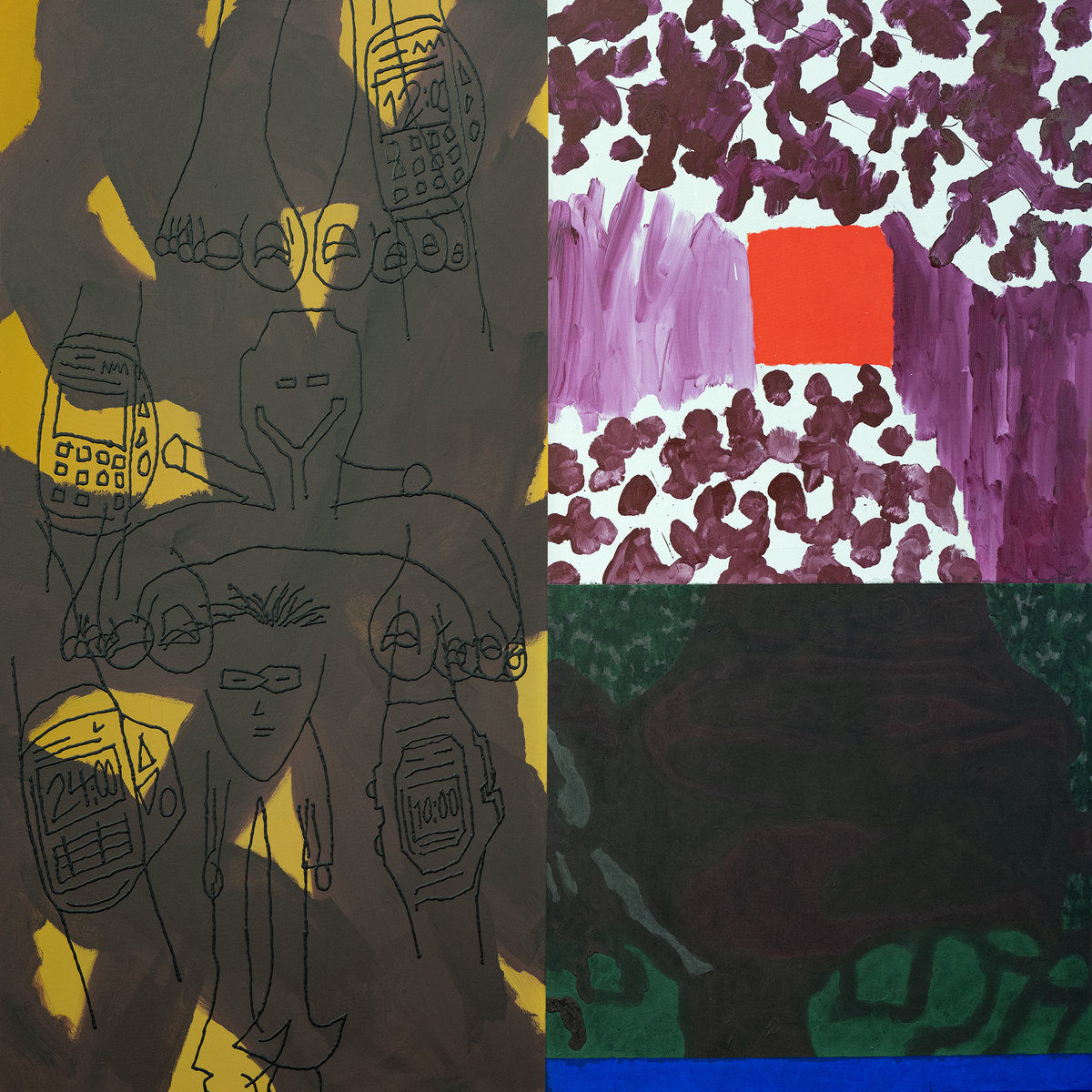
Label Description: The second full-length album from Simon Herody — French born, Berlin based multi-instrumentalist and composer. Featuring the visual universe of Paul Waak.
Water from Mars retraces the imaginary odyssey of a near-future conquest of space — a sonic journey conceived as a soundtrack for the imagination. Blending acoustic and electronic instruments, Herody navigates between sci-fi jazz, left-field ambient dub, space lounge, and 4th world music, crafting a world where melancholy and forward-thinking curiosity coexist in weightless suspension.
Indulgent, textured, and uncompromising — for fans of glitchy synthesizer textures, cinematic atmospheres, and music that refuses easy categorization.
Produced and performed by Simon Herody.
Mixed by Tim Tabellion.
Mastered by Wouter Brandenburg.
Painting & design by Paul Waak.
Drums on track 6 by Simon Grillères.
Drums on track 7 by Boris van der Hoff.
Thanks to friends and family for all the support
All songs written and produced by Simon Herody in Berlin.
Label Description: This is another later-than-anticipated release in an occasional series of musical catastrophes. All tracks were originally recorded between May and August 2010. Primary remixes (where the track structure and music were finalised) took place between August 2012 and April 2013. “Flow” was remixed by Loz Grover at Crimson Sun Audio in September 2013. Final mixes for all tracks except “Flow” were made between November 2017 and August 2020. Mastering was performed between April 2019 and August 2020.
This album was a little easier to put together than my previous releases, both in terms of writing, and also mixing and mastering.
Genre: ElectroProg, synths, TranceFusion, acid, groove, glitch, atmospheric, quirky, chillout
Written, recorded and mixed by Whatsisname in EnergyXT
Instruments:
Genesis CM1.02, Cubix, AMB Electra Bass Rack CM, Padawan, SQ8L, EnergyXT Drum Sampler, Texture, SynthMaster2, Amphetamine, BMK2, Polyiblit, EnergyXT Synthesizer, NI Pro-53, Drumatic 3, CM SR202, Lounge Lizard EP-4, EVM Ultra Sonique, Synth1, Drumatic 4, Abakos, Linplug Alpha3 Free, PPG Wave 2.V, Antopya, Linplug Alpha3, Dream Vortex Microtrance, GTG K 1.3, ilo Synth 1, Jxplugins JX220, Oktagon, KX77FREE KXOMNI-600, AM Kicklab XXL, SonicCharge Microtonic, Hahaha CS33, Oatmeal, ersdrums, Hahaha CS33V2, ZebraCM
Effects:
EnergyXT Delay, IK CSR, TP Basslane, IK CS EQ PG, U-He Satin, Permut8, EnergyXT Reverb, Valhalla Shimmer, REFLEX Free V1, Newfangled Audio Equivocate, EnergyXT Compressor, Diversion FxCM, Ohmforce Frohmage, SFXMachine Pro, Gvst Gcomp2
24-bit audio mastering in IK T-Racks3:
VC-670, Equal, Quad Comp, Saturator X, Stealth Limiter, Dyna-Mu
Label Description: Originally released in 2016 on Constellation Tatsu, Body Trip introduced Japanese ambient composer H. Takahashi’s quietly immersive approach to minimal electronic composition. Built from delicate synth tones, meditative repetition, and understated melodic movement, the album has become a lasting favorite within contemporary ambient circles.
Over the past decade, Takahashi has developed an internationally respected body of work spanning releases such as Raum, Low Power, Escapism, Elegy, and Paleozoic. Beyond his solo output, he has collaborated through projects including UNKNOWN ME, ATORIS, and H TO O, contributed music for installations and exhibitions, and performed throughout Japan’s experimental and ambient music communities.
Body Trip (Remixed & Remastered) revisits the original 2016 album with a newly remastered edition alongside reinterpretations from a cross-generational group of contemporary electronic artists. The collection connects H. Takahashi’s meditative ambient language with artists working across contemporary experimental electronics, dub-informed minimalism, ambient techno, and modern new age composition, extending the album’s original aesthetic into a broader contemporary context. Fans and listeners have frequently described Takahashi’s music as calming, minimal, comforting, and deeply transportive, with recent online discussions continuing to highlight Body Trip and Escapism as standout works in modern Japanese ambient music.
credits
released July 28, 2026
All songs recorded by H. Takahashi
Artwork & design by Yudai Osawa
 Music For The Rest Of Us