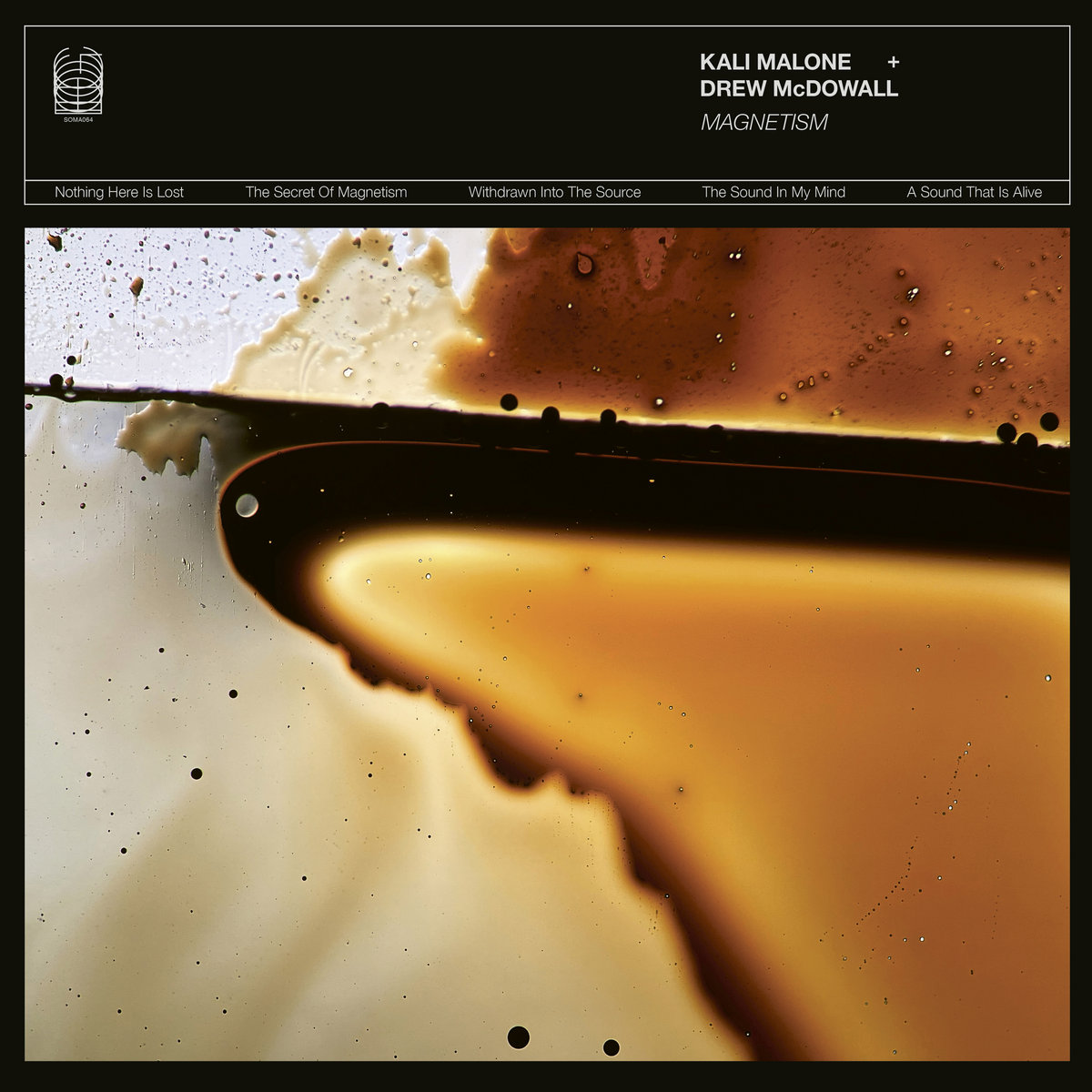
Kali Malone and Drew McDowall present Magnetism, their first collaborative album born from a decade-long friendship and ignited by a single day of creative synergy. When Malone stepped into McDowall’s Brooklyn home studio, a shared vision immediately took root and set the course for a remarkable collaboration between these two singular artists. On Magnetism, Malone’s poignant and evocative melodies manifest through McDowall’s signature timbral synthesis, creating a unified voice that soars freely and radiates with vitality. Technically, the duo employs an exquisite blend of Karplus-Strong synthesis, distortion and just intonation. Kali and Drew embrace these tools with refined grace while moving fluidly within their musical framework. Charged by the magnetic pull of repetition, saturation, and resonance, Magnetism pulses as a living music that captivates the senses and lingers long in the mind after the final notes fade.
Release Dates Bandcamp Digital : 14th November 2025 Vinyl / Stream / Digital : 21st November 2025 There will be two editions of the vinyl… A ‘DINKED’ ltd edition on coloured vinyl with a free additional 12″ ft the extra digital tracks 13-16. And the standard edition which will ft tracks 1-12 on black double LP.
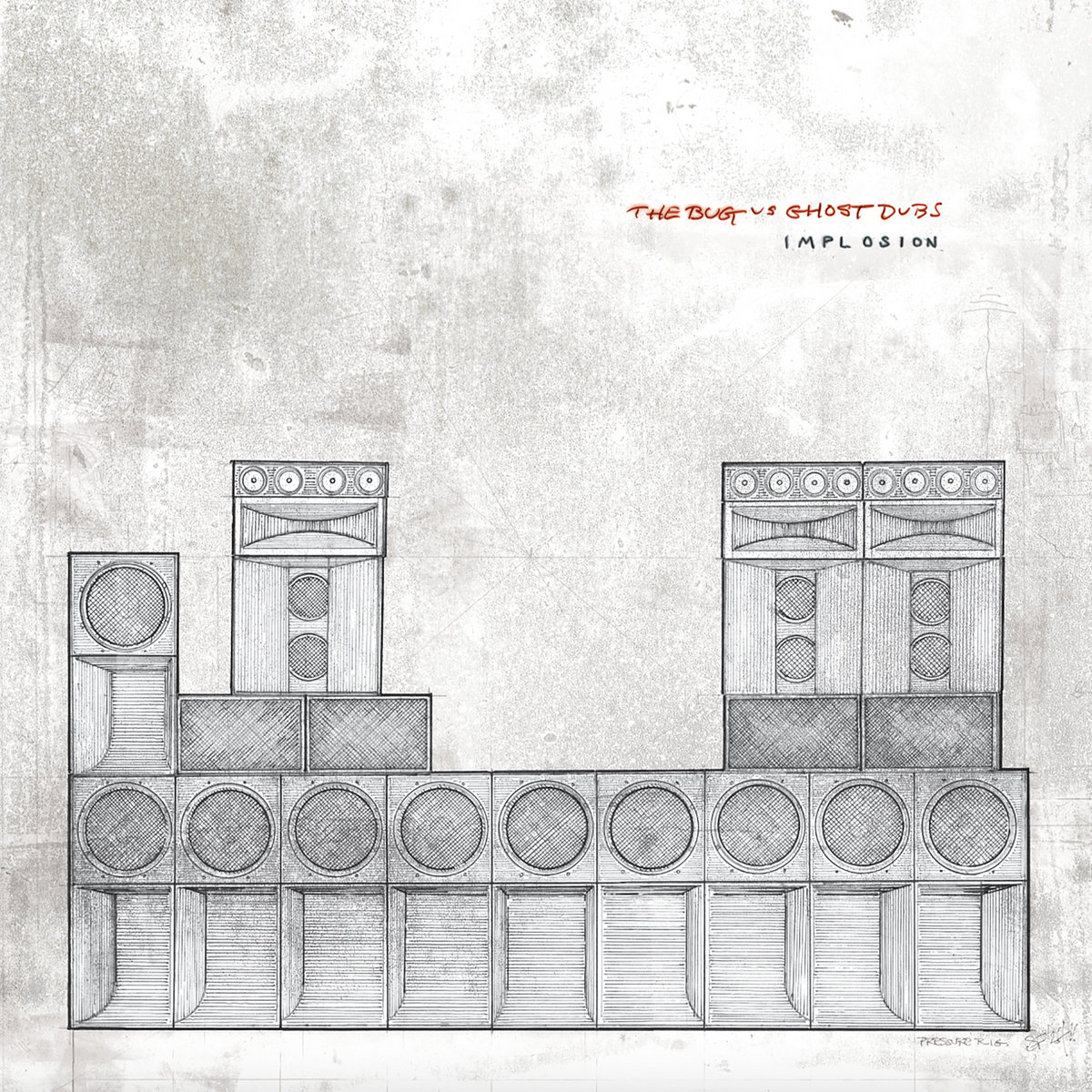
Press release : When Chuck D proclaimed “Bass, how low can you go?” on Public Enemy’s anthemic ‘Bring the Noise,’ maybe he was pre-empting or inciting the 10,000 fathoms-deep, spine-bending basslines and sub-quake tremors of ‘Implosion.’
Implosion is a crushing split album, appropriately released on The Bug’s own PRESSURE label. Mapping out a new form of spectral dub, the sound is deliberately immersive, introverted, and yes, definitely implosive. In pursuit of heavy lids, blurred vision, and merciless bass bin punishment, it’s one part meditation, two parts low-end theory, and essentially a confession of devoted sound system addiction.
As expected from a tag team featuring British soundlab explorer and ‘London Zoo’ composer Kevin Martin, aka The Bug, and Michael Fiedler, aka Jah Schulz—a long-time graduate of Germany’s new school of sound system reggae culture—the duo approaches their target differently yet share the goal of keeping their sound “raw” (Fiedler) and “brutally minimal” (Martin). This proves that opposites can attract, even if their tools are different and their methods sometimes diverge.
From such a disparate combo, hailing from different geographical and aesthetic backgrounds, contrasts are certainly on display, even within each artist’s own contributions. From the melancholia and transcendence of ‘Alien Virus (West Indian Centre, Leeds),’ to the duality of ascension and descension on ‘Hope,’ or the Sunn 0))) in dub, visceral drone of ‘Dread (The End, London),’ to the tripped-out repetitions of ‘Midnight,’ which reinvents Chain Reaction for post-millennials, the result is both sacred and narcotic. Each track illuminates the emotional impact and atmospheric pressure being explored across this deceptively sparse album—a mastery of tone and texture.
This collection might be as reduced, minimal, and deep as The Bug has ever gone, perhaps echoing the solemnity of his recent Kevin Richard Martin Black release and invoking the futurist steppas self-pioneered on his previous Pressure album. Alternatively, Fiedler‘s Ghost Dubs project ventures into his most heavyweight direction yet, which is no mean feat considering his previous, the critically acclaimed album Damaged, was a monstrously massive triumph of analogue weight and enviable sound design.
Implosion is ice-cool, a stark contrast to the warmth and sociability of traditional Jamaican roots and the current trends in digi-dub. Instead, the mood is soaked in tension and intense dread, finding an unexpected melting point where classic dub’s stark rhythm attack, isolationist ambience’s eerie drift, dub techno’s floatation strategies, and even the relentless riffs of doom metal collide. As the bass-obsessed pair drop what is arguably the heaviest ambient dub album to emerge from any electronic sector—a moody counterpoint to The Orb’s fluffy clouds, etc, Martin has cited The Roots Radics, Black Jade, and On U Sound’s Pounding System as heavily influencing his approach to the album, while Fiedler has expressed his admiration for Adrian Sherwood’s productions and Rhythm & Sound’s enchanting soundscape. Yet, the super heavyweight pulsations, emotive resonances, and bone-rattling vibrations detonated here effortlessly go far beyond these influences.
Shadowy and elusive, there’s a mysteriousness at this record’s core. A haunting moodiness oscillating between nostalgia and future shock. Despite the deadly fixation with SLOW and HEAVY, the album maintains a totally hypnotic swing throughout. Implosion and its lead single ‘Imploded Versions’ are testaments to being enveloped in bass, seduced by bass, submerged in bass, and utterly crushed by bass, as The Bug and Ghost Dubs seek to craft a new form of dub for zonal headz and Babylon seekers.
Mastered by Stefan Betke (a.k.a. POLE) at Scape Mastering studio, this record is heavy as f-ck without resorting to continuous distortion. It’s low-end worship taken to an absolute extreme, yet remains highly listenable and definitely danceable, albeit at the slowest of paces. Sacred and narcotic, this is low-end worship amplified to the max. Dive in if you dare.
As The Bug, Kevin Martin’s music is built from an overwhelmingly explosive sub-bass pressure, with relentless in-the-red beat production that amplifies mutant industrial sound design, fuzzed, expectant crackle, and bleak greyscale harmonics. Over decades of diverse and storied projects and releases, Martin has earned a reputation as a subverter of expectations. In 2008 – after his gritty, tumultuous album London Zoo, where he and his long-term collaborator Flowdan delivered the instant classic ‘Skeng’ – he unexpectedly formed the new trio King Midas Sound, whose mix of spoken word poetry and Japanese-language vocals (performed by British-Trinidadian dub poet Roger Robinson and WaqWaq Kingdom’s Kiki Hitomi, respectively) created a storytelling approach new to his work. Further collaborations followed as his range and output grew. He worked with long-established experimental composer Fennesz, post-metal pioneers Earth, and even the rarefied, mournful drone-folk of solo artist Grouper, each bringing new dimensions to his sound. In 2019, after the trauma of his son’s problematic birth, he abandoned all aliases and released Sirens, a deeply emotional exploration of dread and paternal love set in the most isolated ambient territory, winning rave reviews.
Michael Fiedler gained international recognition in 2024 with the Ghost Dubs album Damaged, released on The Bug’s own PRESSURE label. The Stuttgart-based artist crafted a wholly original fusion of low-end pressure, live dub techniques, and industrial sound aesthetics which, although inspired by traditional dub/roots, dub techno, and even shoegaze or drone, captured many listeners’ attention with Fiedler’s futuristic sound design and mesmerising, slo-mo dubbed gyrations. Previously known and established under his alias JAH SCHULZ, he is a graduate of Germany’s vibrant dub/reggae sound system scene. It was through that scene that he first released international records, performed at festivals, and developed legendary live dub shows where he began rearranging tracks in real time. Under the name JAH SCHULZ, he founded and co-owned Infinite Density Records and released music on various other labels, including Echo Beach, Green King Cuts, and Basscomesaveme. He also gained support from major international sound systems such as Iration Steppas, King Shiloh, Jah Shaka, and Blackboard Jungle, who regularly feature Jah Schulz tracks in their sets.
Ken Li 2025
released November 21, 2025
Music / Production : The Bug tracks : The Bug (Kevin Richard Martin) Ghost Dubs tracks : Ghost Dubs (Michael Fiedler)
Mastered : Stefan Betke (Scape Mastering)
Artwork : Simon Fowler Gatefold inner photography : Eric Audoubert
Making this album was an absolute joy. We used Rothko’s artwork as a major influence. His use of colour fields, blending, mood and scale really helped us build an album of tracks that could stand on their own and also work together as a coherent whole across all the tones we had been working with. It was also a chance to fall back in love with our 909, 808 and 707.
While working on music for several other projects, the “Rothko” project got renamed Loud Ambient because it did not really sit right with the My Brutal Life series. We often talked about what people make of The Black Dog and whether they think we only make ambient music. We do not. Over the last year or so, one of us would be working on something and someone else would say, “That is a Loud Ambient track.” The name stuck. We liked the funny side of it.
With Loud Ambient, everything just fell into place creatively. Surprisingly for us, the tracklisting never changed, just small tweaks here and there. That rarely happens. It marks a first for us as a band. All the stars aligned and the confidence in this album is the strongest we have ever had.
Loud Ambient was made to dance to, something we have not done in a while. We welcome the return to the dance floor with both hands. Will you join us?
Foetus is one of the major musical projects of NYC composer JG Thirlwell.
HALT is the final Foetus album, and the first Foetus album in twelve years. It completes the cycle of an arc that began in 1981 with the first Foetus album DEAF.
Thirlwell worked on HALT on and off over a period of eight years. As with each album he has made, he wanted to reinvent the music, use new forms, innovate and introduce new surprising forms into his musical palette, at the same time as feeling like a leap forward.
HALT deals with themes of war, religion, disease, media, global warming, anxiety, hypocrisy, conspiracy, death and mortality, among other things. Dread is a leitmotif through many of the Foetus albums and this one is no exception.
HALT will be followed by its companion album, LEAK, in 2027.
COMPOSED, PRODUCED, PERFORMED AND RECORDED BY JG THIRLWELL AT SELF IMMOLATION STUDIOS
MIXED AT SELF IMMOLATION STUDIOS AND CIRCULAR RUIN STUDIO FINAL MIXES WITH BEN GREENBERG AT CIRCULAR RUIN STUDIO DRUMS RECORDED AT 30 BELOW ENGINEERED BY BRENT MCLACHLAN
SPECIAL GUESTS LEAH ASHER (The Rhythm Method) VIOLIN ON 2, 11 JAKE BALDWIN TRUMPETS ON 3, 7, 10 BRIAN CHASE (Yeah Yeah Yeahs) DRUMS ON 1,3 ,8 TIMO ELLIS (Netherlands) GUITAR ON 3, 7 SIMON HANES (Tredici Bacci) BANJO ON 9, BASS ON 9, 11, ACOUSTIC GUITAR ON 9 BRENDON RANDALL MYERS (Dither) GUITAR ON 3, 4, 10 SAMI STEVENS VOCALS ON 3 LAURA WOLF ADDITIONAL VOICE ON 8
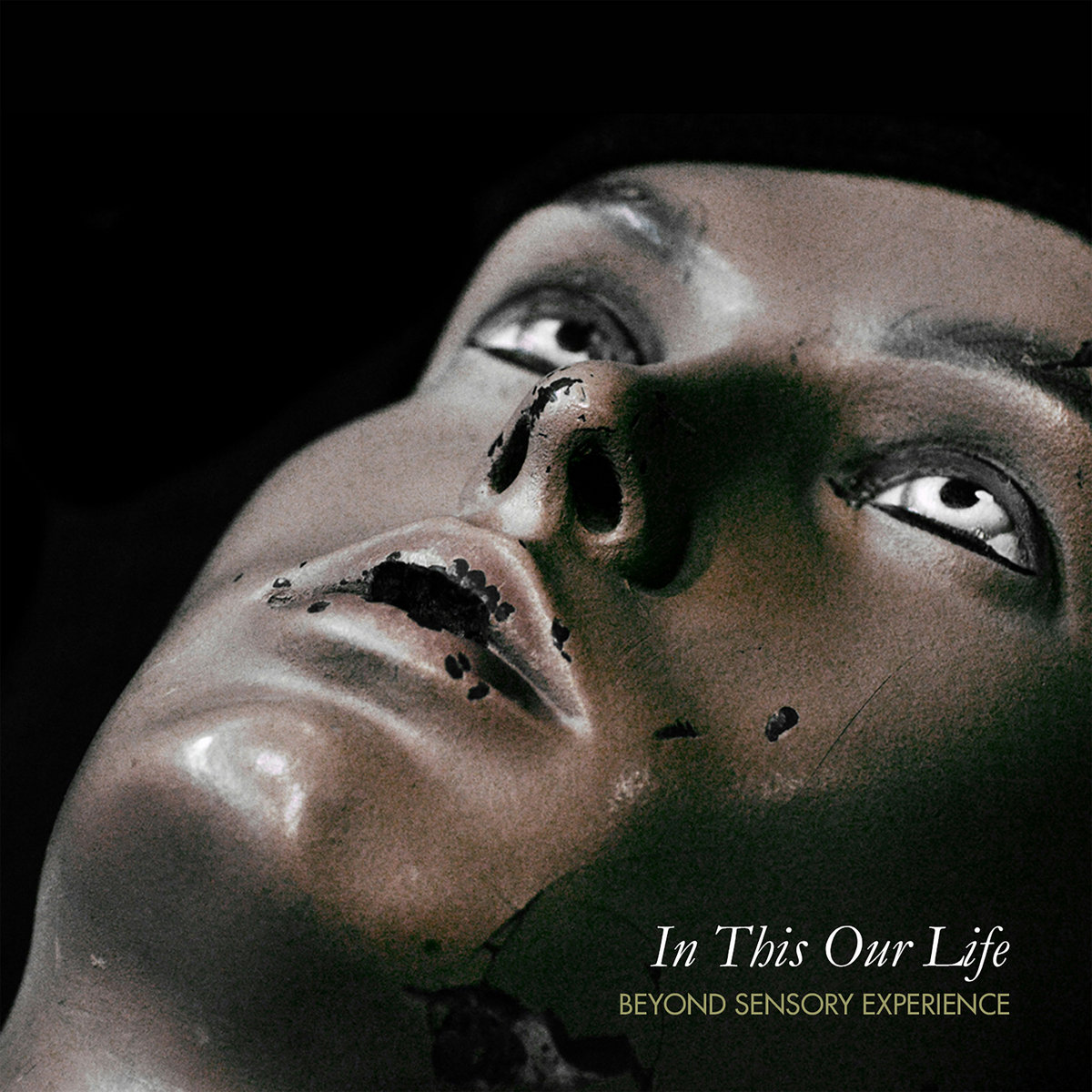
Beyond Sensory Experience announce “In This Our Life”, a new album that extends and deepens the austere, melancholic sound they have refined since their formation in 2001. The duo continue to balance sparse, cinematic atmospheres with richly layered textures and haunting melodic motifs.
“In This Our Life” follows a sequence of records that critics have described as immersive, melancholic and beautifully unsettling, works which place the duo among the most discreetly consistent voices in contemporary dark ambient. Previous releases were praised for their ability to create vast emotional registers from minimal material, a characteristic the new album amplifies while exploring more expansive song-forms and dynamic contrasts.
Stylistically, the album keeps the trademark BSE touch: low-frequency washes, distant vocal fragments, analogue warmth and crystalline, slowly unfolding harmonies. Where earlier records often emphasized brooding stasis, “In This Our Life” moves the project into more narrative territory, allowing passages of melancholic catharsis to emerge from dense, claustrophobic beds of sound. Reviewers of earlier records noted the group’s talent for making the sparse feel monumental, a sensibility that informs this new collection.
The production embraces both analogue textures and carefully balanced percussive elements. Tracks shift between shadowed ambience and melodic refrains that linger, and the sequencing creates a discreet arc, from intimate, near-silent openings to more emphatic, emotionally charged culminations. Fans of the project’s prior work will recognize the continuity, while new listeners will find entry points in the album’s stronger melodic hooks and cinematic pacing.
CD Edition of 300 copies in 6 panel Digipak. 11 Tracks. Running Time 48:16
It’s been a couple years, but we’re back with a big album, and we’re not holding anything back!
From the late ’90s era of gaming through to today, this project highlights so many of our favorites. We hope you’ll find something that resonates with you among these 15 tracks, too.
Bi Score is: Ian Cowell: Guitars, synths Carrie Wood: Bass, vocals, additional guitar
Additional musicians on this album: Kev Ragone: drums/percussion on tracks 1, 4, 8, 10 Andy Wade: drums on tracks 6, 7, 9 Kyana Sun: drums on track 11 Dom Palombi: drums on track 12 Yusef Kelliebrew: drums on track 13 Angel Hernandez: drums on track 14 Chuck Salamone: guitar on track 6 Chris “angrypolarbear” Doughty: synths/keys on track 11 Logan “Biggoron” Tucker: synths/keys on track 13 Lacey Johnson: piano on track 15 Cheryl Carr & Riley Zielinski: flutes on track 8 Jacob Deaven: saxophone on track 10
Tracks 1, 2, 4, 5, 6, 7, 8, 9, 10, 11, 13, 14, 15 arranged by Carrie Wood Tracks 3, 12 arranged by Ian Cowell Arrangement on track 14 based on initial 2021 arrangement by Jonathan Shaw as commissioned and directed by Carrie Wood Additional arranging on track 13 by Yusef Kelliebrew
Mixing and mastering by Ian Cowell.
Album art by Patricio Thielemann (Pokerus Project).
Special thanks to: Kev Ragone, Andy Wade, Kyana Sun, Dom Palombi, Yusef Kelliebrew, Angel Hernandez, V-Ron Media, Chuck Salamone, Cheryl Carr, Riley Zielinski, Jacob Deaven, Xander Plute, Chris Doughty, Logan Tucker, Lacey Johnson, Patricio Thielemann, Barry “Epoch” Topping, Drew Gibson, the entire Dwelling of Duels community, the entire GameGrooves family, Mark Schimmelbusch, Jonathan Shaw, Gene Dreyband, Veronica Tyler, Phil Wood, Diane Gunther, Enzo Cowell, Elroy Cowell, Frank Cowell, Ganon & Friday
GO!GO!STYLE, written by Barry “Epoch” Topping for Paradise Killer (2020) Moon Mountain, written by Tsuyoshi Tanaka for Harvest Moon 64(1999) Under the Rotting Pizza, written by Nobuo Uematsu for Final Fantasy VII (1997) Azure Blue World… For Emerald Coast, written by Jun Senoue for Sonic Adventure (1999) Terran 1, written by Glenn Stafford for Starcraft(1998) That’s a Big Stick, written by Chuck Salamone for Hylics 2 (2020) Genius of PK Love, includes elements of Genius of Love by the Tom Tom Club (1981), Fantasy by Mariah Carey (1995), Eight Melodies, written by Keiichi Suzuki for EarthBound (1994) and Pollyanna, written by Keiichi Suzuki for Mother (1989) Korok Forest, written by Manaka Kataoka, Yasuaki Iwata and Hajime Wakai for The Legend of Zelda: Breath of the Wild (2018) Title Theme, written by Jonathan Dunn for Robocop (1990) Into the Valley, includes elements of Opening, Valley and Professor Oak’s Lab, written by Ikuko Mimori for Pokemon Snap (1999) Smooooch, written by Kors K for Beatmania IIDX 16: Empress (2008) Snake Man, written by Yasuaki Fujita for Mega Man III (1990) Jenna’s Theme, written by Motoi Sakuraba for Golden Sun: The Lost Age (2003) A Long Fall, written by Masayoshi Soken for Final Fantasy XIV: Shadowbringers (2019) Hope, written by dai for Umineko: When They Cry (2007)
Bonus tracks (exclusively on physical CD): 16. Psycho Killer (Talking Heads) 17. Sultana Dreaming (from Final Fantasy XIV: A Realm Reborn) – Feat. V-Ron Media 18. National Park (from Pokémon Gold/Silver/Crystal) – Feat. Xander Plute 19. Butter-Fly (from Digimon Adventure) – Feat. Angrypolarbear, Kyana Sun Tracks 17, 18, 19 mastered by Drew Gibson.
Psycho Killer, written by David Byrne, Chris Frantz and Tina Weymouth, originally by Talking Heads (1977) Sultana Dreaming, written by Masayoshi Soken for Final Fantasy XIV: A Realm Reborn (2014) National Park, written by Go Ichinose for Pokémon Gold & Silver (1999) Butter-Fly, written by Hidenori Chiwata and Cher Watanabe for Digimon Adventure (1999)
Label Description: Voices and lyrics by Enrique Garoz de Diego Electronics, sound manipulations, composition and mixes by Miguel A. García Lead voice in 2 by Phlegeton Vortex Additional raw sound sources in 1, 3 y 6 by Ibon Rg Mastering by Juan Carlos Blancas
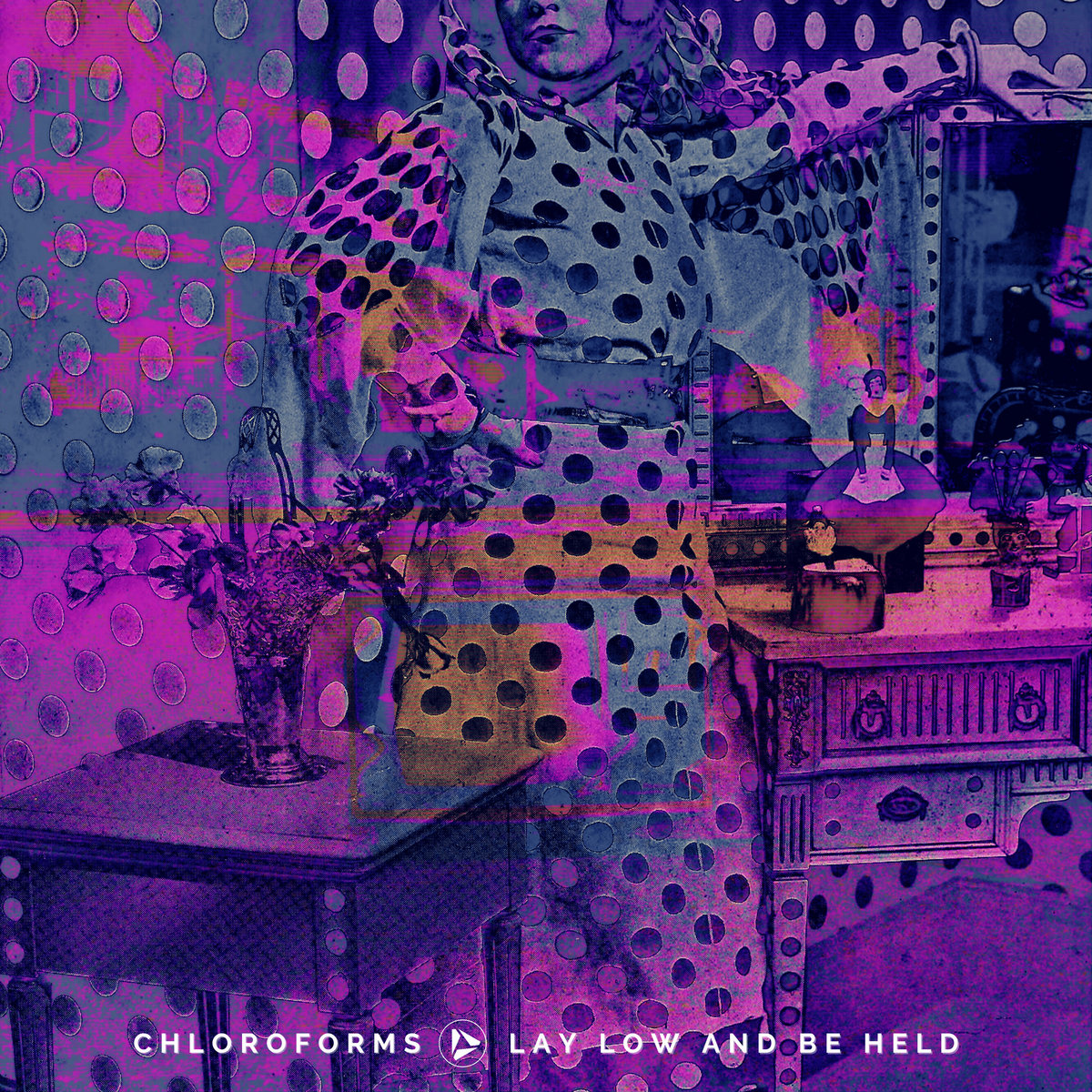
Immediately, the industrial beats of the opening track ‘Rattle Can Paint Job’ tell you all you need to know about Chloroforms’ Triplicate debut ‘Lay Low and Be Held’. 1. The beats and fire and will consistently catch you off guard. 2. You’re gonna be taking in a genre, or subgenre at least that’s not immediately clear, but you’ll notice it’s seldom heard on our label. 3. You’re about to have a good time. Time to make it happen!
~~~~~~~~~~~~ INTERVIEW ~~~~~~~~~~~~ George Ernst, Triplicate Records: OK before I ask anything else, please, can you give some context to the mysterious MC referring to you by name on ‘Sonar for Sore Eyes’?
Michael Marchant aka Chloroforms: Yes. I like to collect audio snippets of things I hear out in the world and recontextualize them to besmirch my name. Ha! This was the first time I’ve used one from my collection. I’d be super curious if someone could place where this was taken from! We’d probably have an annoying amount of things in common.
GE: What IS heat vision? Or was that a Jeopardy answer?
MM: That is MY question, sir! WHAT IS HEAT VISION?! A question that randomly popped into my head while trying to name the project file for this song. Instead of making myself a separate note so I could go look up what heat vision was later, I named the song “What is Heat Vision?” as a reminder. Which reminds me…According to Wikipedia, heat vision is ‘the fictional ability to burn objects with one’s gaze’. Perfect.
GE: Was MX-80 a reference to the noise-rock band from Indiana?
MM: You know, it wasn’t; but my noise-rock band, IfIHadAHiFi, has played quite a few shows in Bloomington. And I really like the MX-80 album Out of the Tunnel. When I was making the track “MX-80” I was trying to make it sound like the musical equivalent of an old dot matrix printer shaking itself off of a desk. I named it after the Epson MX-80 which would be an incredibly bitchin’ instrument in the hands of the right noise-rock band.
GE: Can you tell us a little about both the name of your project Chloroforms’, and the inspiration behind the album title?
MM: I’m going to show my age here, but Colorforms were a toy from my childhood that were these little vinyl clings in the shape of cartoon characters that you could stick to smooth surfaces. That was BIG entertainment to a small child at the time, but life goes on and I had fully forgotten they existed.
Then one day not too long ago I see them for sale out in the world, the first time since I was a child. I instantly recognize their iconic logo, but my brain reads it as CHLOROFORMS. Instant band name. FONT FACT, the font that I used for the free_refills_or_die EP is the closest to the Colorforms logo I could find.
As far as the album title goes, Lay Low and Be Held is two things to me. First, it’s a play on the phrase “lo and behold”. Second, it’s just a nice thing to aspire to.
GE: Your honest opinion on kangaroos: give it to me please. I’ll know if you try to lie.
MM: I love these questions. I am strongly in favor of kangaroos. Especially YouTube videos of kangaroos who are keeping it real. One long night after a show in Louisville, Kentucky my bandmates and I watched a video titled ‘Kangaroo Shoved Through Fence During Tussle at Canberra Nature Reserve’ approximately 135 times and almost died from laughter. Link to the good stuff: youtu.be/N7M6lhzYOow?si=rAjq4gzSz2tsNJ6m
GE: What was your favourite track to work on? I really love Maximum Capacity Dry Spell.
MM: Thank you! I was 100% happy with everything on this album so it’s difficult to choose a favorite. “Maximum Capacity” has a great groove and was the quickest thing I wrote for the album. Satisfying when that happens. “Cadaver Chiropractic” was written in 5/4 which is strange and proggy and took the longest to get right, so that sticks out. “Hide the Smoke” was an exercise in subtlety which is not always where my brain leads me. “The Proud Parer” might be the winner (for today) since it was my attempt to write a Chloroforms version of “I Wanna Dance with Somebody (Who Loves Me)”. I think I nailed it.
~~~~~~~~~~~~ REVIEW ~~~~~~~~~~~~
Chloroforms: ‘Lay Low and Be Held’. A fascinating project from Milwaukee that we couldn’t be more excited to share with you! With dark titles like ‘Mugger’s Lullaby’, ‘Cemetery Symmetry’, and ‘Cadaver Chiropractic’, no one has tricked you. You’re going to be diving head first into some extremely danceable murk. Let’s analyze!
As soon as the industrial beats of ‘Rattle Can Paint Job’ blast out from the periphery and into the forefront, you know you’re in for something engaging, something you’ve not heard before. Hardcore, relentless pounding, interspersed with light-speed wooshing and a bassline that perfectly flirts with fuzz without leaving it feeling overbearing.
There’s also a paranoid bent to several of the songs on show here, the first bearing such baggage is the fraught yet funky ‘What is Heat Vision’. Alienated fear-beats or funk-laden bop. You be the judge. But really it’s both, and manages to pull these vibes off in a spectacularly grandiose manner. ‘Mugger’s Lullaby’ on the other hand, tricks you. You think you’re in for a straightforward stripped down macho-sounding THUNK-THUNK beat, then half way through, the gentleman responsible for this record, whose first name I know but will henceforth be referred to as ‘Mr. Chloroforms’, swipes the floor away, and you’re left in a void of ultra-fast IDM. It’s a trip that comes out of nowhere and pulls off a perfect bait and switch!
‘Lay Low’ on the other hand offers a lighter collection of melodies and textures than the opening trio. That’s not to say it’s some breezy intermission. The tambourine jangle works beautifully with a series of warbling synths, and I mean, hey! (extreme Ron Howard Voice) ‘That’s partially the name of the record!’. We segue neatly then, into the equally brief, yet decidedly more Lynchian-static-laden eccentricity of the aforementioned ‘Cadaver Chiropractic’, which to be fair does indeed give the old bones a good thorough shake. As does the similarly darkly titled ‘Cemetery Symmetry’, which offers a bag full of beat-treats, and Mr. Chloroforms’ isn’t shy about switching things up on a dime, creating a blistering, disorienting, but undeniably appealing effect. This three-minute microcosm of an industrial mixtape is done when he damn well says so, ok?
Then we have ‘MX-80’. At several points this track feels like it’s pursuing you. You know? No? Just me? Ok… moving on. ‘Hide the Smoke’ conjures the misty atmosphere in your mind that the title promises. Whirring disembodied wind-enveloped synths haunt the mix, while a stark and sparingly-riffed-on bit of percussion rumbles away in the dark. It’s effective and fun, even if it’s not meant to be. Meanwhile ‘Route Driver, Asleep at the Wheel’ feels so hyper-charged with dark static that it might combust at any second. Here the drums pound with greater grit and otherworldly malaise than ever, and coalesce to make a murky and melodically fascinating piece of music, increasingly frantic until the half-point switch up, the delightfully batshit-ramifications of which, you need to hear and draw your own conclusions. (But if they’re not positive, you’re wrong.)
‘Maximum Capacity Dry Spell’ Starts as a ultra-focused, borderline synth-wavey bop, and for the most part maintains its slick composure in the face of equally slick percussive flourishes. The rubbery, cool-as-shit bassline compliments the arrangement perfectly and cements MCDS as a highlight. Similarly fun, yet decided more off-kilter is the mysterious ‘Sonar for Sore Eyes’, a relentless slammer, soaked in spooky vibrations and prefixed by an equally unnerving recording of a woman referring to Mr. Chloroforms by his government name. What does it all mean? Well keep reading to find out, hopefully. Otherwise, it just slaps!
Equally slapworthy is the final, ‘The Proud Parer’. A fun pun, and a decidedly chill way to end a record. While ‘Lay Low and Be Held’ can at times feel like a mission statement akin to ‘make cool weird music and set yourself apart from the herd’ (stop me if I’m way off), the music is utterly unpretentious. Borrowing its studious delights from sources across the electronic spectrum, with some good industrial rock thrown in for good measure, the album ends as it started: with a fabulous piece of music that puts you in a lively mood. That was all I ever wanted. I want that for you too, dear reader.
Written and Produced by Michael Marchant Artwork by Michael Marchant Mastered by Michael Southard
●●●●●●●●●●●● Also available in Big Cartel webshop, less charges for non-EU buyers. ●●●●●●●●●●●●
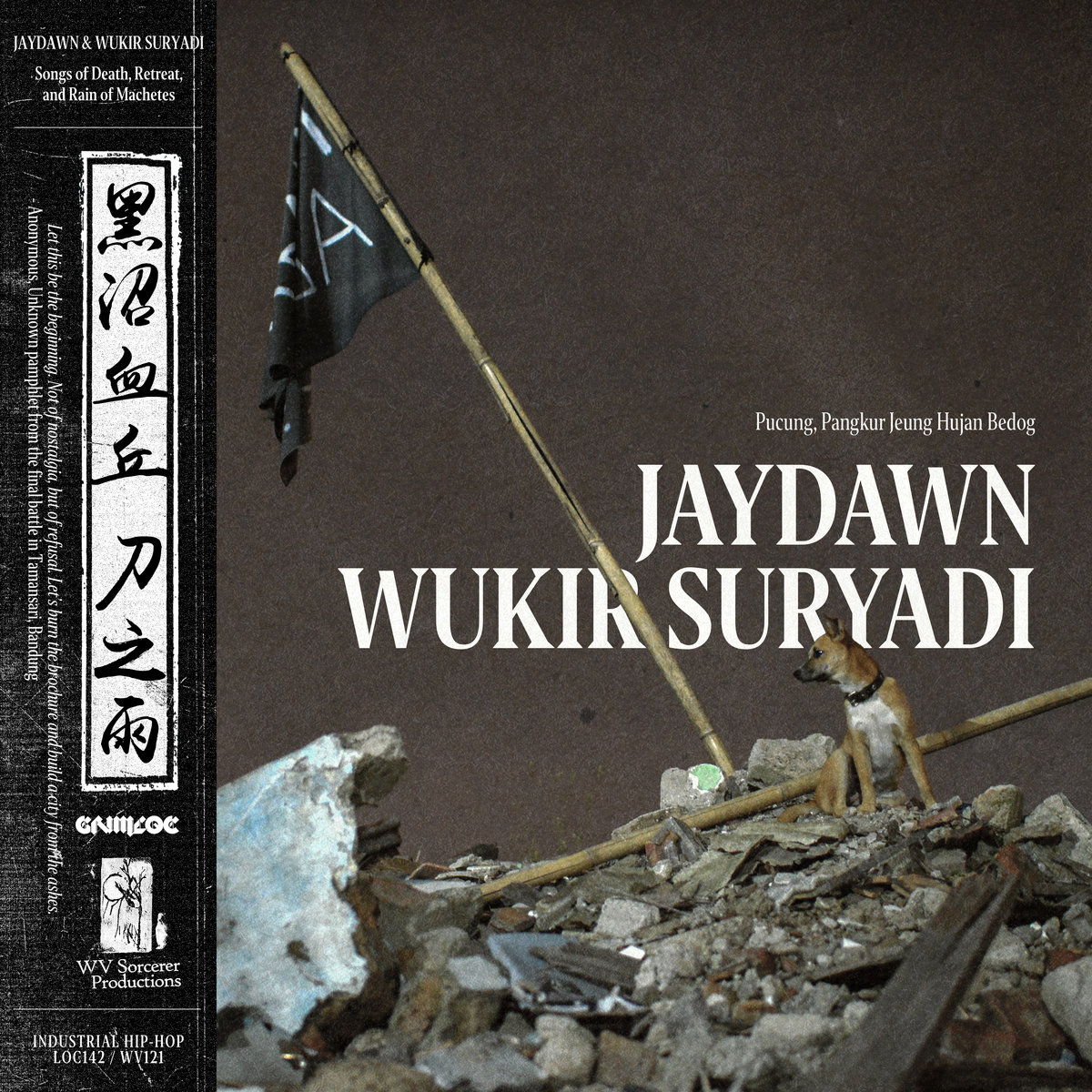
▼WV121: Jaydawn & Wukir Suryadi – Pucung, Pangkur Jeung Hujan Bedog (Songs of Death, Retreat, and Rain of Machetes)
WV Sorcerer Productions proudly presents this collaboration with Grimloc Records, Bandung’s cornerstone of underground countercultural sound, known for championing uncompromising voices across genres. This alliance bridges Indonesia’s radical industrial hip-hop with the experimental vanguard from beyond.
A collision between two uncompromising forces in Indonesia’s underground—Jaydawn’s gritty, sample-scarred beatcraft and Wukir Suryadi’s raw, hand-built sonic rituals. Recorded between Bandung and Salatiga, this genre-breaking work fuses distorted rhythm, ancestral resonance, and industrial tension into a soundtrack of resistance. A hallucinatory dispatch from a city under siege, where displacement hides behind the language of development.
▼
This collaboration was forged not in comfort, but in contradiction. Two of Indonesia’s most uncompromising underground figures—Jaydawn, Bandung’s rogue boom-bap architect, and Wukir Suryadi, the genre-eviscerating shapeshifter behind Senyawa—collide in a visceral new project that defies category and disobeys silence. Their debut collaboration is not just an album—it is a rupture, an aural pamphlet, a ghost howl from the dance hall beneath the rubble of a city being sold. Crafted in the sacred noise labs of Studio Tingkir (Salatiga) and Cutz Chamber (Bandung), this 10-track release fractures hip-hop, ambient drone, Bambu Wukir metallurgy, and industrial echoes into a palette of resistance. One war-song, “Parancah”, features a searing verse from Bandung’s own acid-spitter, Morgue Vanguard. Titled “Pucung, Pangkur Jeung Hujan Bedog” (translated as “Songs of Death, Retreat, and Rain of Machetes”), this project is both elegy and uprising.
Jaydawn’s beatwork is carved from vinyl cracks, cassette hiss, metal clank, and turntablist ruins—echoing DJ Muggs, DJ Premier, and the political edge of The Bomb Squad, while rooted deeply in Bandung’s own lineage of sonic resistance: Homicide. His textures refuse polish. They choose grit.
Wukir Suryadi, the mystical engineer of raw tradition, conjures a language of bowed bamboo, scratch-built strings, and ancestral distortion. His instrument is never the same twice. It breathes, convulses, and testifies. With Morgue Vanguard behind the producing desk, they soundtrack a Bandung under siege—where “revitalization” is code for displacement, and “development” is a velvet glove over state violence.
Accompanied by writings that channel the ghosts of the Situationist International and the militancy of urban poor struggles, this album is an act of counter-cartography—drawing lines across erased kampungs, evicted dreams, and unauthorized prayers. It is music made with the ruins, not merely about them.
▼
Wukir Suryadi Shape-shifter of sound, half of Senyawa — drags the ghosts of gamelan and guttural metal onto the classical stage. His hands are rituals: plucking, bowing, summoning chaos and calm in a single breath. He invents instruments the way others invent excuses. Hailing from Salatiga, Indonesia, his music walks barefoot across centuries—haunting, primal, always unfinished. He brings theatrical ruckus to the classical stage, plucking, strumming, and bowing his way from peaceful meditations to rhythmical frenzies. The evolution of his music is never complete as he utilizes the agility of his instrument to collaborate with musicians and performance artists from around the world, fluently bridging musical styles and inventing new instruments as he goes.
Jaydawn Bandung’s beat-smith from the undercurrent began in the cipher shadows of the early 2000s. From D’Army to Eyefeelsix, he’s stayed true to the dirty reel-to-reel dream: boom-bap, dusty drums, and samples scraped from rust, vinyl cracks, and cassette hiss. Alongside his mentors, DJ Evil Cutz and Morgue Vanguard, Jaydawn forms the backbone of Napalm Squad, a production unit behind numerous influential local releases—most notably Blakumuh’s debut album, Krowbar’s Galaksi Rima Sakti, and Rand Slam’s 9051. His remix credits include genre-crossing reworks for acts like Homicide and Efek Rumah Kaca.
Jaydawn’s sound is steeped in grit and groove, echoing the spirit of DJ Muggs, DJ Lethal, early Dr. Dre, DJ Premier, and the raw political energy of The Bomb Squad. Locally, his biggest influence remains Homicide, a touchstone in his sonic language. Drawing samples from funk, rock, metal, and traditional Indonesian sounds, Jaydawn crafts a broad palette—from classic, hard-hitting boombap to the eerie minimalism of contemporary drumless hip-hop.
Produced by Morgue Vanguard All music written by Jaydawn & Wukir Suryadi Lyrics on Parancah written by Morgue Vanguard Recorded at Wukir Suryadi’s studio in Tingkir, Salatiga, and at Cutz Chamber in Bandung Mixed & mastered by Hamzah Kusbiyanto Photography by Arif Danun Design & layout by Herry Sutresna & Ruò Tán
LOC142 / WV121 Rights owned by the artists respectively Grimloc Records & WV Sorcerer Productions 2025





 Music For The Rest Of Us