Lawrence English – The Rest Is My Ghost (Room40)

Label Description: “Ruins are the style of our future cities, future cities are themselves ruins.” – Izosaki Arata

A Note From Lawrence English
Nostalgia is not an ideology, though in this moment, we could be mistaken for thinking it might be just that. Over the past years, the idea of nostalgia has been filtered through various political and technological lenses and has become a tool used for forgetting, rather than remembering. Instead of embracing histories’ complexities and inconsistencies, this version of nostalgia seeks only singular recollection. This contemporary phenomenon of nostalgia has become a methodology at best, and a weapon at worst, used to erode the past and project forward a collapsed and unimaginably sanitised version of things, places, and ways of being from former times. It’s this projection that sees it playing a mounting role in a social pathology associated with reducing the imagined possibilities of future.

The Rest Is My Ghost is a record that interrogates the manifestations of this reductive futuring and celebrates those that have tried (and failed), and those who continue to push back against decayed and revisionist positions. It’s a record that considers the weaponisation of nostalgia for the purposes of cloaking possible futures.
 
In recent times, I’ve proposed a term for this weaponised use of nostalgia, something I have called Acid Nostalgia. I offer it as a shorthand to describe the de-contouring of the future through a corrosive fixation on a flatten rendering of the preceding times. It is, in part, a certain type of lazy cultural scripting where tropes of the past are presented in the absolute, as empty pictorials; photocopies without any original from which to draw actual meaning, or useful detail.
 
Acid Nostalgia describes an increasingly common political projection of nostalgia that exists without any subjective connection to the memory surrounding and contained within it. Like acid poured onto a surface, this use of nostalgia seeks to erodes and smooth out the complexity and texture of lived connection and longing, which has until recently guided contemplations of nostalgia. Acid Nostalgia instead erases the texture of histories and de-contours the past, and in doing so dematerialises the horizon of possibility, which by its very nature marks the beginning point for any (and all) imaginable futures. Acid Nostalgia is a dreamless screen, where uncertainty, restlessness and aspiration are subjected to corrosion, breaking down and neutralising the wellspring of futures which are birthed from within the ambiguously charged, complex and at times chaotic atmospheres of the present.
 
The Rest Is My Ghost is not however some universal reading of these things and happenings. Rather it draws its breath from a very personal pathway carved through my own fraught experiences of nostalgia and framed through a disparate collage of chance encounters, situations, places and provocations. It takes oblique notes from civic and architectural references such as Japan’s Metabolist movement, Hong Kong’s ‘one line sky’ and Los Angeles’s vanished Sodium Vapour lights. It interpolates texts – factual and fictional – by authors such as Franco Berardi, Kate Crawford, JG Ballard, Katsuhiro Otomo, Mark Fisher and Alexei Yurchak who have each so wonderfully sought to rupture the familiarity of now, and push us towards other ways of imaging ourselves, our surroundings and our very ways of being in this world.
 
I also owe a debt of thanks to Adam Curtis in helping launch what has become this edition. It was his provocation, in a conversation we shared about an overwhelming and profound sense of uncertainty around being able to predict the immediate future and how to respond to that, which sparked the earliest inklings of this edition.
 
The Rest Is My Ghost is ultimately a record about the promise of constructions and connections to come, material, social and political. It’s a record that accepts the fragility of failure as a source of ultimate potential, and a position from which the deepest freedom of imagination might be sought and summoned forth to conjure even the most unimaginable, (but) possible futures. 

Credits
Written and Composed by Lawrence English at Negative Space
with
Chris Abrahams – Piano (9,10)
Tony Buck – Drums (2,8) Percussion(8,9), Gongs(8)
Madeleine Cocolas – Voice (7,8,10)
Mats Gustafsson – Saxophone (1,2)
Thor Harris – Hammer Dulcimer (2), Gongs (8,9), Vibes (2)
Lena Ito – Gamelan (5)
Chuck Johnson – Pedal Steel (2,3)
Peter Knight – Trumpet (2,4,8,9)
Sean Mackenzie – Trombone (2,6)
Brodie McAllister – Trombone (2,6)
Heinz Riegler – Guitar (2,9), Electronics (6,8)
Richard Sanderson – Trombone (2,6)
Rully Shabara – Voice (1,2)
The Australian Voices – Choir (1,3,9)
Vanessa Tomlinson – Gamelan (5), Concert Bass Drum (1,9)
Norman Westberg – Guitar (2)

Trombones recorded by James Clark at Tonepacer
Mats Gustafsson recorded by John Chantler
Mastered by Stephan Mathieu at Schwebung
Design by Traianos Pakioufakis
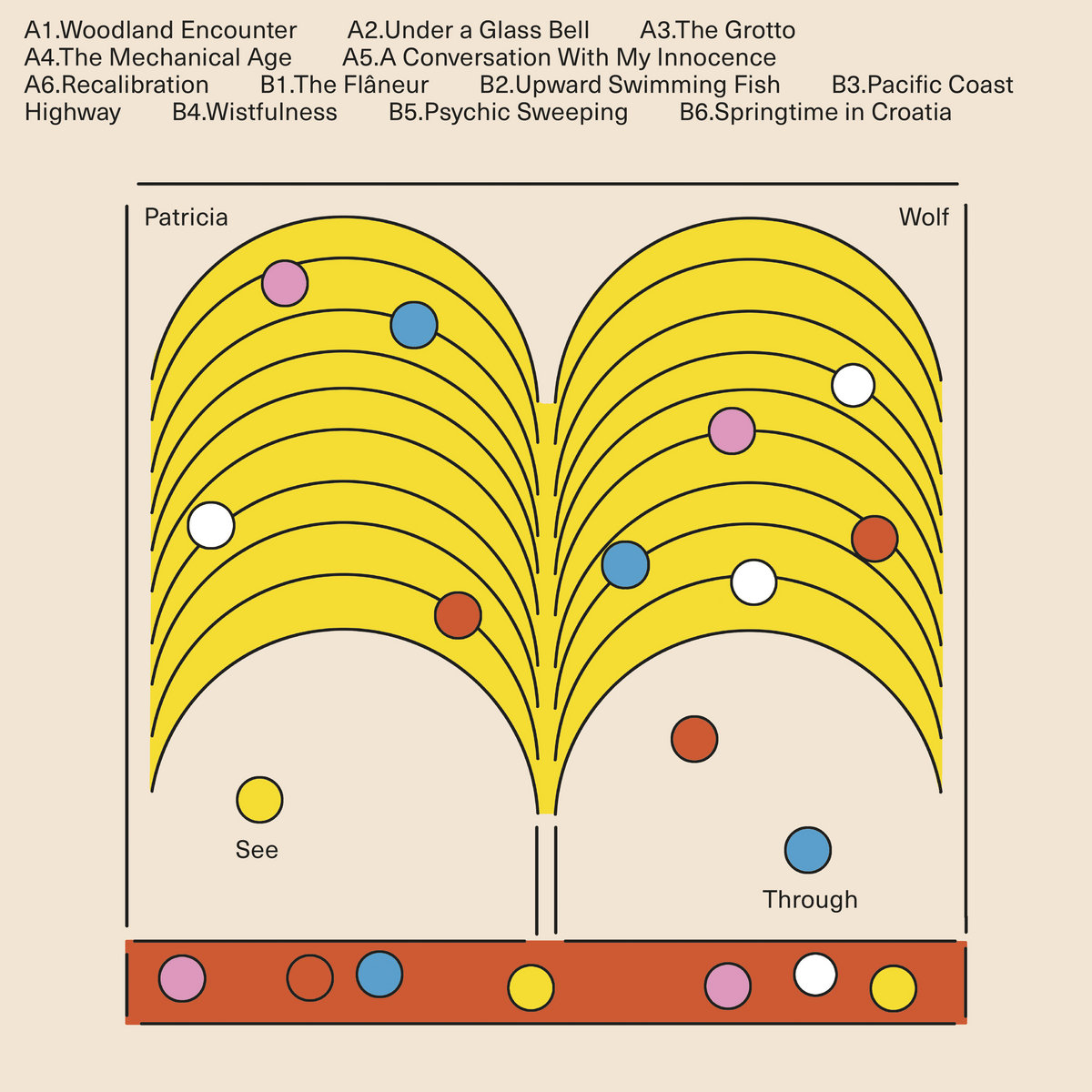
Patricia Wolf – See-Through (Balmat)

Label Description: Following her debut album, ‘I’ll Look for You in Others’ (Past Inside the Present), earlier this year, Patricia Wolf joins Balmat label with ‘See-Through’, her second album. ‘See Through’ finds the Portland, Oregon musician and field recordist continuing to develop her signature style of ambient, balancing radiant soundscaping with a carefully expressive sensibility. But the new album is also marked by an important difference. Where ‘I’ll Look for You in Others’ was largely written in response to the death of a loved one, ‘See-Through’ represents a kind of rebirth. 

“After a long period of grief, I had been hoping to find my way to a place of lightness, peace, playfulness, curiosity, and sensuality again,” Wolf says. “What I was surprised and pleased to find is that for the most part, I had.”

She wrote and recorded many of the album’s songs quickly, in preparation for an August 2021 broadcast on the online radio platform 9128 Live. Excited for the opportunity to play live after more than a year of the pandemic, Wolf decided to write all new material for the event, working with a lean setup of Octatrack, Roland Synth Plus 10, Make Noise 0-Coast, and Novation Summit. (In fact, Wolf was the first sound designer invited to create patches for the Summit.) She also picked up an acoustic guitar that her brother had loaned her. “I decided to take the surrealist approach of ‘pure psychic automatism’ to see what poured out of me,” she recalls. “Woodland Encounter,” “Under a Glass Bell,” “The Grotto,” “The Mechanical Age,” “The Flaneur,” and “Psychic Sweeping” are all products of those sessions; the through line holding them together is their exploratory spirit and clarity of vision. 

Other songs, like “A Conversation With My Innocence”, “Recalibration” and “Psychic Sweeping”, wrestle with the traumas of the preceding year. Though they may linger on the heaviness of loss, Wolf says, “What I discovered is that a stronger archetype had grown inside me to steer my emotions and thoughts to a better place. “Likewise“, “Wistfulness” and “Upward Swimming Fish”—her first experiments with VST synthesizers—balance the bittersweet embrace of melancholy with the freedom to choose happiness.

“Pacific Coast Highway”, the album’s lone song with drums, might at first seem like an outlier. But it also signals Wolf’s interest in finding a fusion between the introspection of ambient and the togetherness of beat-oriented music. “Experiencing loss and isolation is what drove me into gentler territories of sound,” she says, “but I want to start making more beat-oriented music. After an extended period of loss and isolation, I’m ready to experience more joyous and social things.”

Listeners with keen ears might recognize the album’s closing song, “Springtime in Croatia”: A different mix of the song originally appeared on the 2021 digital compilation ‘secondnature & friends Vol. II’, from the Seattle label secondnature. This marks its first appearance on vinyl, however, and its spiritual home is undoubtedly here, at the close of ‘See-Through’. As the bookending answer to the opening “Woodland Encounter”—another song in which field recordings play a crucial role—it closes the circle of an album that is itself keyed to the steadily turning cycles of life. 

Written, produced and mixed by Patricia Wolf.
Mastered by Pedro Pina.
Cover artwork by José Quintanar.
Designed by Basora.
‘Springtime in Croatia’ was originally released on secondnature.

Dedicated to my mother, Max, and Kathleen.

balmat.bandcamp.com

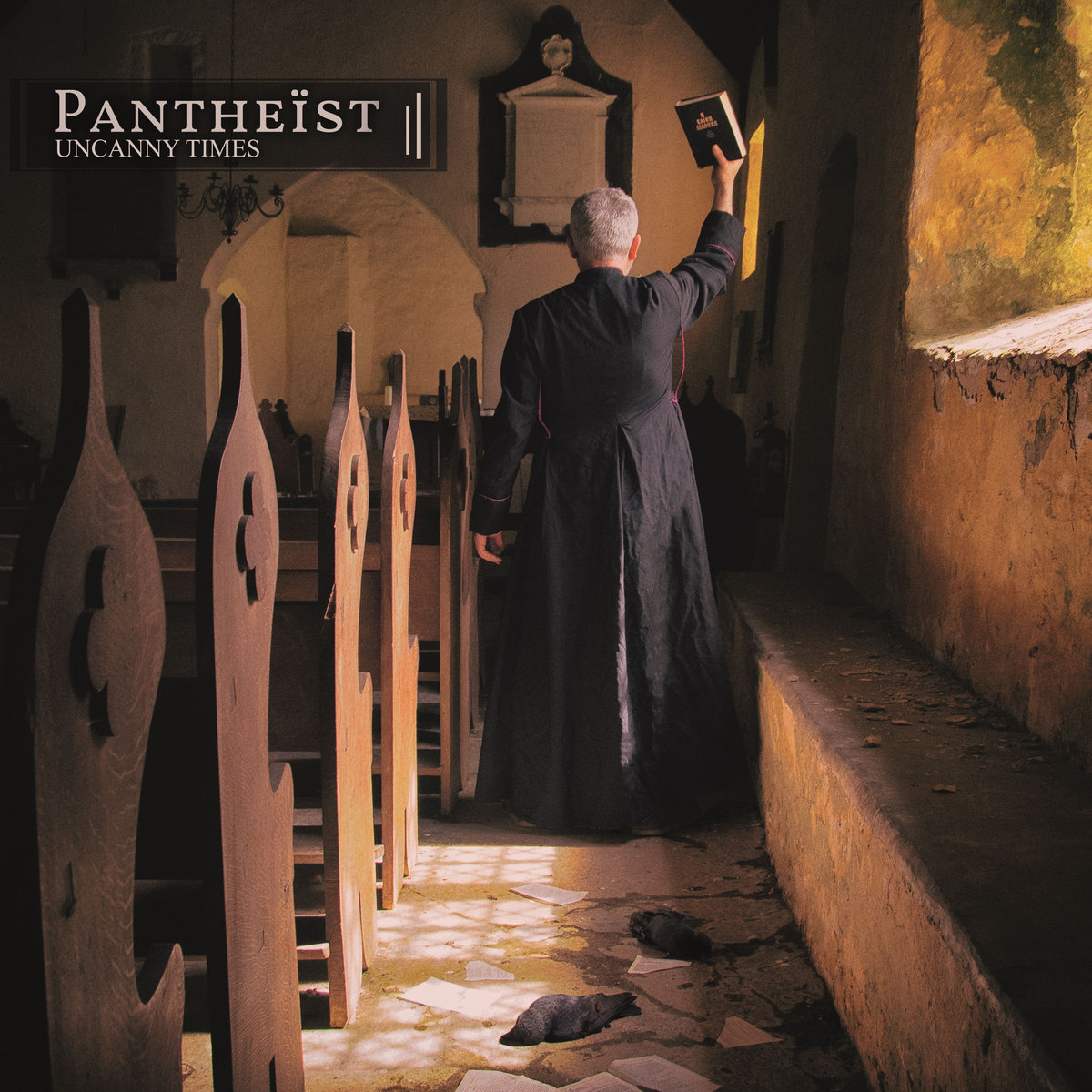
Pantheist – Uncanny Times (Argonauta Records)

Label Description: ‘Uncanny Times’ is Pantheist at their most monumental, immersive and emotionally devastating. Six epic journeys plunge deep into darkness, existential reflection and transcendence, where crushing funeral doom meets haunting melodies and an immense atmospheric scope. From the towering grandeur of “The Final Journey” to the haunting finale “Requiem for your Dreams”, Pantheist create a deeply hypnotic experience that lingers long after the final note.

Atanas Kyurkchiev- guitars
Fanel Lefterache- drums
Kostas Panagiotou- vocals, keyboards
Linda Dumitru- vocals
Matt Strangis- bass

Music by Kostas. Lyrics by Kostas with additional contributions by Linda.
Arrangements by Pantheïst. 

Album recorded, mixed, mastered and produced by Timothy Vincent at Woodcroft Audio. Drums recorded and engineered at LongWave Studio by Timothy Vincent.

Artwork by Cheryl Panagiotou. Layout by Gero Lusicano

The Final Journey: Guest guitar leads and solos by Frank Allain (Fen)
Laughing Falcon:  ‘Laughing falcon’ samples captured in Panama by Kostas 
Entropy:  Lyre and dulcimer performed by Ian Arkley (My Silent Wake). Drum programming by Aleksej Obradovic and Atanas Kyurkchiev.  Additional drums recorded at LongWave Studio by Fanel Lefterache. Mixing and additional engineering by Jeremy Lewis (Mesmur). 
Ithaca Out Of Sight:  Cello by Luke Clemenger (Froglord). Guest guitar solo by Jeremy Lewis. Acoustic guitar by Linda Dumitru.

Rural District Lo-Fi Recording Project – The Blessed Brethren of the Sacred Solar Scream (Self-Released?)

Label Description: Welcome Brothers and Sisters

You have come of your own free will to sit among the elect, to be revered and anointed as a member of Our Congregation.

Our community has lived for time immeasurable, our roots run deep into the Sussex chalk. Our practices witnessed by Giants, by the ghosts of Ancient Kings resurrected from their Downland Barrows, by conquering Caesars. By the coming of the Angles, the fall of the Saxons, the rise of the North men to the times of gunpowder and the charge of electricity.

We take our witness from the wolf that stalked the shadows of our fires. The bird that sung the coming of our Sun. The Fallow deer which grazed our path across our meadows and the fish that leaps, over the roll of the waves, washing us forever clean, moving forever forward.

Brothers, Sisters
You Are Loved and You Belong

Come. It is time to keep your appointment with
The Blessed Brethren Of The Sacred Solar Scream

All field recordings and music by David Soulscorch

Contains vocal samples taken from the spoken word vinyl record (found in a charity shop in mid Sussex)
“Relaxation and Meditation” by Norman Renshaw
Contains samples from the 1972 BBC Records vinyl
“Singing Along With The Girl Guides”

Chimp Beams – Fragile (Personal Affair)

Label Description: 25th Anniversary

Chimp Beams is a New York-based breakbeats, dub, and jazz trio that has been sculpting its own unique sonic landscape since forming in 2001. Comprising core members Marihito, Keigo, and Yusuke, the group amassed a rich discography of six albums across four different labels before entering their current hiatus.
Their latest release, Fragile, serves as a compelling archival showcase, compiling instrumental versions of tracks originally crafted for vocalists alongside “1997” a rare gem making its digital format debut. Built on the backbone of Marihito’s beat making, the ensemble features an organic blend of Keigo’s guitar and Yusuke’s vibes, flute, and keyboards, speaking volumes of their distinct originality. The title Fragile serves as a metaphor for the very world we live in. Released during their hiatus, this timeless album remains entirely immune to the shifting trends of modern music.

*All tracks are taken from Slowly & ASDR with Shing02 except 1997

All songs produced by Marihito & Chimp Beams
Mixed & Mastered by Hideyuki Waki
Designed & Photo by Marihito “MARI” Ayabe

Marihito: MPC 60 & MPC 1000, Keys, Drum Machines, Guitar, Bass, Rhodes. Perc. & Arrangement
Yusuke: Vibraphone, Keys, Perc., Melodica, Flute, Mbira, Drums, Trp. & Guitar
Keigo: Guitars

Scratch: DJ Icewater
Trp. Takuya Kuroda

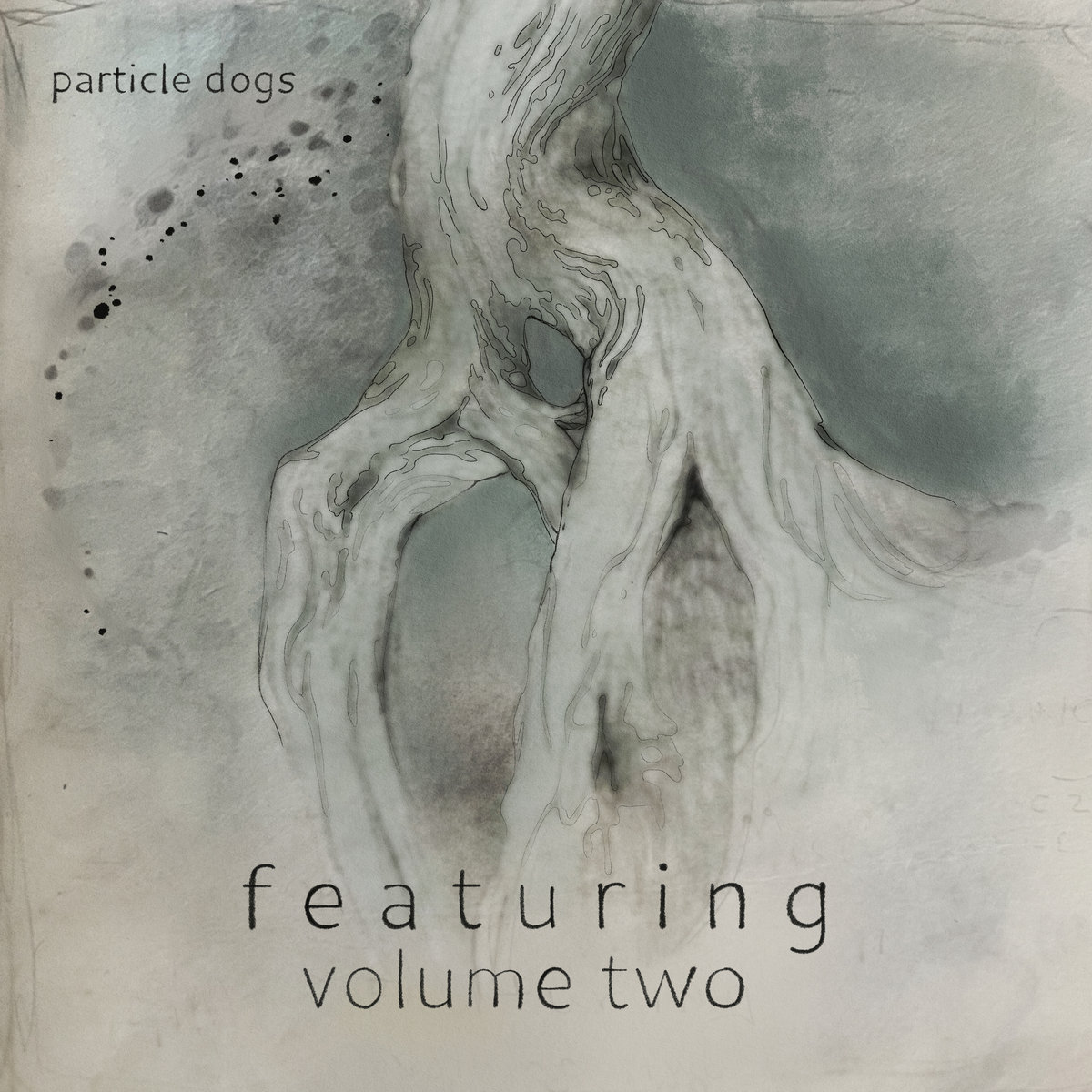
particle dogs – featuring, vol. 2

Label Description: the second album in our featuring series! we have amazing contributions from a wide spread of vocalists and a few guitarists that have been paired with beats by particle dogs

particle dogs is Austin Riley on bass, drums, keys, guitar with Scott Riley on guitars

Vocals as listed per track plus additional contributions from Lucas Taylor, frielf, Himbo Deluxe, PB, jims

Album art from sunsetpixel, silasfrazee.com

Proceeds from this album will be donated to charities recommended by our vocal contributors: Lamda Legal, Habitat for Humanity, The Marsha P Johnson Institute, PCRF, the Trevor Project, and the Houston Food Bank.

Kali Malone – Burning Song (Ideologic Organ)

Label Description: Kali Malone’s music reminds the listener that spectacle is felt in the chest. Its otherworldliness, represented by its scale, duration, and presentation in spaces defined by the aesthetics of transcendence, activates intimately held feelings of wonder and insight. Here is a space where sound can unlock a state of reflection and unwavering tenderness. Still, the creation of that music, Malone’s own experience of it in performance, has been one defined by focus and rigor, by adherence to structures that dictate cyclical returns and the detailed work of exploring microtonal harmony. For all its grandeur, her music is elemental at its core: born of sweat, concentration, the physicality of pipes vibrating as air rushes through them, the desire to share the emotional intensity ignited with each tonal shift.

Burning Song, Malone’s first new album of solo compositions since early 2024’s All Life Long, represents a transformation in her compositional strategy towards a process that is more intuitive and direct. Feeling supersedes matrices, and each piece proceeds linearly, connected to one another by subtle bridging tones. The album was recorded at the historic Thomaskirche in Leipzig, Germany, where J.S. Bach was cantor for the last 27 years of his life; his body rests beneath the sanctuary. Malone is the first musician to perform contemporary works on the church’s Bach Organ, an instrument completed in 2000 but with bespoke tuning and temperament systems based on historical norms of the baroque period. She is joined by Lucy Railton on cello and Stephen O’Malley on bowed acoustic guitar, the same trio that honed a profound connection based on deep listening through the development of Malone’s work Does Spring Hide Its Joy. Recording took place over the course of two late nights in August 2025, with the engineer Francesco Donadello placing over 20 microphones throughout the room and closely upon the instruments, allowing the listener to locate themselves within the music as it fills the historic sanctum.

Chord follows chord, each in slow succession, emerging like stones of various shades and shapes on a winding path. The trio moves as one, stepwise, through passages that are alternately ambiguous and radiant, at times triumphant as the tones rise towards the organ’s upper register. By discarding canon form, which has dominated much of her organ work, there is a clear sense of freedom that allows these pieces to unfold more gradually and speak more declaratively than ever before. Even with the presence of one of the most canonized and dissected composers of all time just underfoot, Malone felt the pressure of tradition lifting, an ease of being dictating the flow of the music. She is careful to never extend the narratives of any individual piece beyond what feels conclusive, resulting in a relatively compact cycle of compositions.

The first half of Burning Song was commissioned for the 2023 Venice Music Biennale and presented at the remarkably ornate San Pietro di Castello. Initial seeds of these pieces were developed on a piano backstage at Bozar in Brussels following a solo electronic performance, long after the audience and staff had departed. It was the first time Malone had used the piano as a compositional tool since her childhood, offering a portal to a younger self. The album’s final three pieces were composed swiftly in the month preceding the recording session in 2025, their stately progressions emerging within her mind’s ear with a sense of ease and inevitability, hovering in the moment just before understanding, where revelation lives. The album’s final piece, “My Eve My Dawn,” represents a clear vision of this process; foregrounding the cohesion between endings and beginnings, it moves through passages of sadness and joy, the linking tones offering a sense of continuity, and thus of acceptance.

The metaphor of burning holds two meanings. Fire moves in ways that appear intuitive, changing shape moment by moment, and relentlessly insistent. Here, Malone moves from harnessing the fractaline beauty of mathematics to reveling in the impact of feelings, of foresight, of something more undefined and from within. But burning is a process of change in which transformation spreads from a nexus point to rapidly consume whatever it encounters. The freedom found in the process of composing and realizing Burning Song is one that opens innumerable doors of possibility. In the fertility of ashes grows whatever comes next.

Jonathan Williger, June 2026 

Bach Organ – Kali Malone
Cello – Lucy Railton
Guitar – Stephen O’Malley

Recorded at Thomaskirche, Leipzig – August 2025.
Recorded & Mixed by Francesco Donadello.
Recording assistance by Samuel Schwenk.
Mastered & Cut by Matt Colton at Metropolis Studios, London – March 2026.

Design by JS Aurelius
Photography by Kinglsey Ifill
Liner notes by Jonathan Williger


IDEOLOGIC ORGAN
SOMA078

℗&© 2026 IDEOLOGIC ORGAN

Special thanks to Thomaskirche & Maren Glockner, La Biennale Musica di Venezia & Lucia Ronchetti, Basilica di San Pietro di Castello & Claudio Micconi, Uppenbarelsekyrkan & Kerstin Börjeson, Stephen O’Malley, Lucy Railton, Francesco Donadello, Matt Colton, Kingsley Ifill, JS Aurelius, Jonathan Williger, Nora N. Khan, Bartolomé Sanson, Regina Greene, Lisa Wells, Charlie Colton, Gerald Woehl, Bells Echo, Silvia Farago, Nick Wood, José Ortega, Hildur Guðnadóttir, Sam Slater, Sam Shepherd, Jan Börjeson, Grace Atkinson and Agnes Gryczkowska. This project was carried out with the support from Stim.