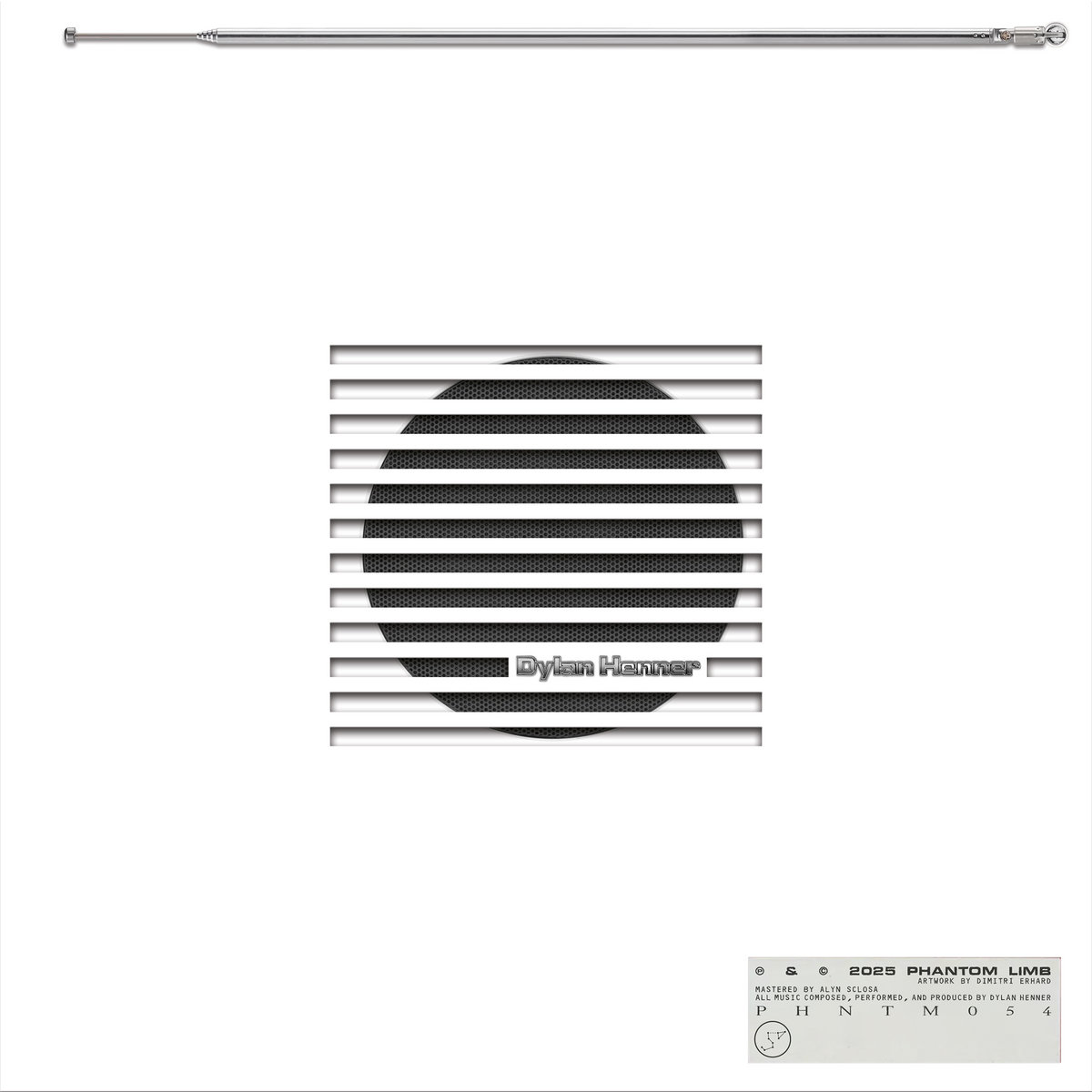
Dylan Henner – Star Dream FM (Phantom Limb)

Label Description:

“Henner reaches out to the listener directly…Rejuvenating and universal…Gorgeous.”
The Quietus

“Meandering from emo rave to gamelan, Henner pours his heart into these elegant ambient soundscapes.”
MOJO

Enigmatic UK producer Dylan Henner announces new album of deeply considered and choral-laced experimental ambient music Star Dream FM, said to be taped from a mysterious radio broadcast that plays his favourite memories from adolescence.

“Late one evening, I was listening to the radio alone at home. I couldn’t find the station I wanted, so I shifted the dial around for a while. Between frequencies, fading in and out of fidelity, I found a station I’d never heard before. To my amazement, the station was broadcasting my own memories. Memories from when I was seventeen. Some of the most formative and important moments of my life, alive on the air,” Dylan Henner’s self-penned mythology begins. “I called some friends and asked if they could find the same frequency, but no-one did. So, quickly as I could, I stuck a blank tape into my hi-fi and hit record. At some point I heard the jingle and the name of the station: Star Dream FM.”

Though (clearly) fictional, the backdrop to new album Star Dream FM represents a tactile canvas on which the record’s true meaning is painted. It is, through Henner’s now-characteristic employment of ambient-textured synthesis, marimba, digital choir, and processed voice, a study of late adolescence and the experience of being seventeen.

“Why seventeen? Because (in Western, 21st century culture at least) it is a unique time of fragility and self-realisation. A gateway between the joy and wonder of childhood and the heavy realities of adult life. A seventeen year old has almost formed their outlook, mindset, purpose, drive, but only as a hop away from childhood. It’s a challenging period, sure, but also a time of optimism, of excitement for a new life to begin in your own image.”

The result of this examination is a collection of meticulously constructed human-not-human compositions built from Henner’s mesmeric brand of desolate beauty. His immersive, storytelling range is broad, spanning from serene to cerebral, from powerful to uncanny. Henner references ambient and experimental music, chamber composition, the human voice, sound design, and field recordings, and wraps everything in the myth of his imaginary radio station Star Dream FM. Opening with the station’s sting and “I Borrowed my Dad’s Car But We Had Nowhere To Go So We Drove Around Listening to Music All Night”, a disconnected, fuzzy DJ osmoses between non-human singing and floral synthesis that opens and flutters like fast-motion botany, eventually yielding a choral denouement of magisterial elegance.

Key moment “I Used To See Her On The Way Home from School and She Lit Up The Sky with her Beauty” marries heavily processed and near-wordless vocals with angelic harp swells, gently undulating bass frequencies, and digital string ensemble to mimic the glory and reverence of early church music. Which is, incidentally, a key influence to Henner’s practice.

Little is known about Dylan Henner, who landed on the ambient scene in 2020 with cassette releases for Phantom Limb, Belgian label Dauw, and cult tastemakers AD93. He barely promotes himself publicly, instead choosing to communicate through disarmingly poetic song titles. His debut album “The Invention of the Human” (AD93, 2020 – a recipient of BBC 6Music’s Album of the Year honours) responds to a set of philosophical questions – what exactly makes us human? What good is civilisation when there’s so much misery attached to it? How will technology affect humanity in the long run? In 2022, he released follow-up You Always Will Be on AD93, which traced the course of a single life from birth, to childhood, to adolescence, adulthood, parenthood, middle-age, old-age, and demise. He has also covered Raymond Scott, Terry Riley, Aphex Twin, Ryuichi Sakamoto, and Su Tissue among numerous further projects.

Sohme – PSALM23: Palm (Phantom Limb)

Label Description:

Persian-American ambient producer sohme joins Phantom Limb’s Spirituals imprint for debut album Palm, a study of new fatherhood and changing stages of life for synthesis, acoustic instrumentation, and field recording, integrating a practice in architecture and two distinct cultural heritages.

Saumon Oboudiyat, aka sohme, is a Persian-American sound artist, producer and architectural designer based in Philadelphia. His music is informed by a decade of work in architecture and a lifetime of musicianship. Through a careful balance of soft harmonics, Eno & Lanois-esque melodic detail, slo-mo chordal shifts, and drifting, dreamlike field recordings, the music of Palm reflects Oboudiyat’s entry into parenthood and the accompanying transformation therein. “When I began working on the album in New York, we were just starting to see the other side of the pandemic,” he writes. “Upon completing mixing in my home studio, my wife and I prepared to welcome a new life into this world.”

Opening track and first single “These Are All My Thoughts” combines monastic reflection with a swelling and sirenic pathos, employing the kind of cosmic redolence that conjures early space travel documentary or hermetic contemplation. Hues of twentieth century German ambient production glitter and enshadow its powerful sonics.

Later, “The One, The Other” is more reminiscent of Middle Eastern musics. An oud-like pluck shudders and shimmers about broken and nonlingual vocal snippets, a howz of still water amidst a desert plain of sparse and arid instrumentation. Another key moment is “Signal”, and its deceptively pop-oriented chord structure. Housing clattering steps, shooting stars of high frequency melody, and single notes of conical synthesis that resemble the Persian karna, its soundworld is warm and enveloping, safe and secure.

sohme joins A Lily, Jan Esbra, Eamon Ivri, Sachi Kobayashi, Dau, Ibukun Sunday, Beqa Ungiadze, Suso Saíz, Menhir, Francsesca Ter-Berg, Dylan Henner, and Pram of Dogs (and others) on Phantom Limb’s Spirituals imprint, a sub-label offering works of high grade, emotive ambient and experimental music from emerging artists from across the world. Palm is his debut release.

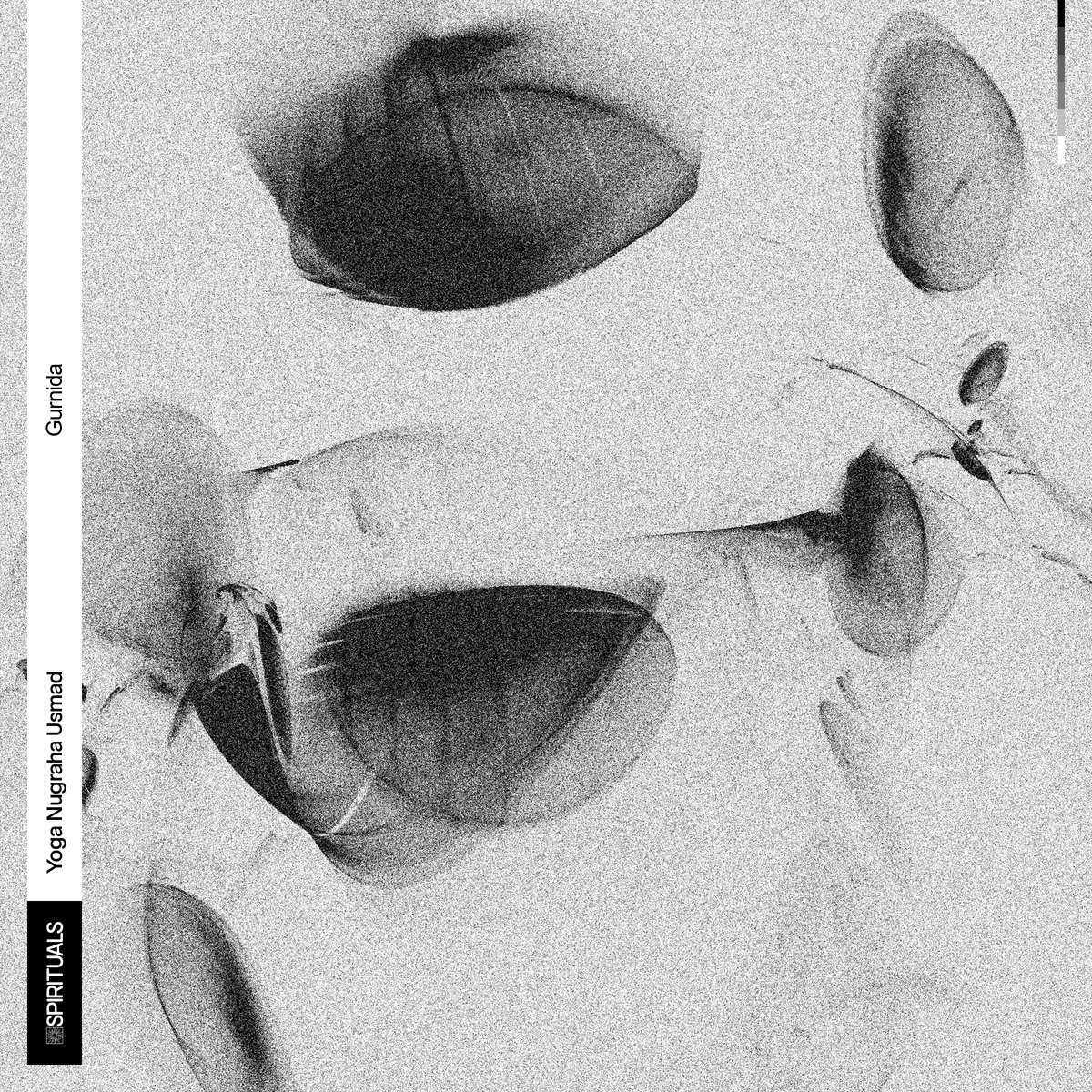
Yoga Nugraha Usmad – PSALM022: Gurnida (Phantom Limb)

Label Description:

“Explores ancient, unseen worlds…immersed in mythological recollections…Yoga packs countless ideas into these pieces, but the album flows with an underlying narrative, searching for new living pathways.”
Foxy Digitalis

Solo Indonesian ambient producer Yoga Nugraha Usmad joins Phantom Limb’s Spirituals imprint for new album Gurnida, an aqueous and archipelagic collection filled with ruminative pathos, ancient mythology, and carefully applied grit.

Yoga Nugraha Usmad began the creative process that yielded new album Gurnida at the once-sacred Boyong River in Yogyakarta, Java. “A river that once carried myths, prayers, and daily rituals,” he writes. Now a centre for aggressive and destructive sand-mining, the river’s beauty is being eroded. “It is slowly losing its flow, drowned out by the roar of machines and the dust of exploitation,” Usmad laments. The music of Gurnida asks: “do the spirits that once dwelled within it disappear, migrate, or linger restlessly among the remnants left behind? Do they seep into the earth, seeking refuge elsewhere, or remain in silent defiance?”

Through looping bamboo flutes, reflective harmonics, undulating drones, and nocturne synthesis, the music of Gurnida speaks not only of physical loss but also of the fading spiritual and ecological bonds between humans and nature. It is an album “composed of soundscapes from geographical and symbolic realities. A place that holds souls and spirits that continue to resonate between existence and memory,” writes Usmad. Field recordings taken on location at such environments haunt his musical spaces like these spirits, their ghostly ephemera lacing Usmad’s arrangements with fragments of ancient stories, sometimes real and sometimes imagined.

Opening track and first single “Old Trees” is at first groaning and low-lit, an eldritch dusk rising over the metallics and machinery of an ecosystem shattered by industrial landstripping. But as a scintillating, wooden flute melody snakes through to its surface, the spirits of the old river begin to find their voice. They call and conjure in a multitude that drowns out the destruction, the place that we have found ourselves revealing a pristine and perfect state of ancient reverence.

Next, “Fluid and Solid” is founded on field recordings from Yogyakarta’s Plunyon River, a landscape traversed by lava from Mount Merapi’s last eruption. “In this track,” writes Usmad, “I imagine the dual nature of lava—its destructive force that devastates natural habitats, topples trees, and disrupts wildlife, as well as its regenerative power. Despite the destruction, lava also creates opportunities for the emergence of a new ecosystem.” Lava is here represented by throbbing synthesis tuned directly into geologic frequencies, sometimes flowing at engulfing speed and sometimes resting and breathing, on the earth, while the birdsong and insect chirp of the Plunyon forestry coagulates around its stream.

Spirituals – PSALM020: Psalms (Phantom Limb)

Label Description:

We celebrate reaching twenty releases on our Spirituals imprint with a special compilation album featuring material from every artist who has featured in the catalogue so far.

From Spain’s seminal ambient luminary Suso Saíz and his collaboration with Menhir, to debuting solo South Korean drummer Chloe Kim 김예지. From Nigerian producer and violist Ibukun Sunday, to the teenage electronic experimentations of label founder James Vella and his A Lily project, Spirituals’ remit is and always will be to champion voices in experimental music from all over the world. To offer a creatively fertile and accepting environment to produce music that can reveal secrets about the cosmos and ourselves.

Our twentieth release is a thank you to everyone for listening, thank you for supporting, thank you for allowing us your time.

Tape Loop Orchestra – PSALM019: Sabbat De Voix (Phantom Limb)

Label Description: “A haunting combination of strings and field recordings. There’s a strong sense of sorrow coming out of these aged tones, crying out quietly with no real beginning or end.”
Anthony Fantano, The Needle Drop

“A gorgeous process: meticulously composed, looped, developed, and finally broken down. Hargreaves is a master.”
Tiny Mix Tapes

Manchester composer and musician Andrew Hargreaves (a founding member of The Boats) brings his acclaimed Tape Loop Orchestra project to Phantom Limb’s Spirituals imprint with the hissed-out choral elegance of new album Voix de Sabbat.

“The voice is something I keep returning to,” Hargreaves writes. “Disembodied voices, secondary vocalisation, borrowed voices, and the reproduced voice. Can a machine be made to reproduce something that is made to seem human but isn’t?” Like a spectral choir communing from a transversal plane, Hargreaves’ newest outing under his Tape Loop Orchestra guise Voix de Sabbat is an uncanny and experiential immersion into strange but beguiling depths. It explores “the gap between a sound and it being heard, and where meaning is encoded in this process. The shadow of a sound, and how something can be reduced, distorted, but still carry the essence of its message and intent.”

Over two longform pieces, Voix de Sabbat traces repetition, gradual dissolution, repetition, gradual dissolution, and the narrative interplay that binds the two together. Throughout, Hargreaves’ characteristic mist-laden shimmer and subtle employment of shadow, apparition, and lassitude breathes life into a gently nuanced interzone between spectral choral voice and impressionist tape blur. A subtly unsettling nostalgia unfolds through the ghostwatching, while motes and artefacts of melodic pathos appear in distant, half-imagined, or near-imperceivable whispers. “Sometimes we need something outside ourselves to remind us of our connection to the world and each other,” Hargreaves offers. Though part of this music, or at least its compositional palette, is derived from voice, Tape Loop Orchestra’s treatment and process renders it meaningfully and arrestingly(sic) beyond the human.

Opener “Voix Figées” revels in foggy moor hermitude and a detached romanticism, its cycles of hiss and echoes osmosing between the corporeal and spiritual. The “frozen” voices of its title are glassy, lucid, and runic, filling a space in which time has stopped. Haunted string lines and eventually reverberate piano join, and the piece could be mournful, or even majestic, but instead it occupies a sacred place, both mysterious and knowing.

Next, “Voix Empruntées” reflects the “the process of preserving sound and the additional artefacts (surface noise, hiss, hums etc), reminding us that we are listening to a “real fake, made from real elements but constructed” (to borrow a phrase from Luc Ferrari).” It is more outwardly elegiac than its sibling, centred on lilting and lamenting piano phrases conjured from an ancient and holy unreality. As disembodied choral voice enters, so does a light, and Hargreaves’ effortless harnessing of wistful remembrance floods the senses.

SABIWA, Queimada, Nathan L. – Sons of _ (Phantom Limb)

a3725386344_10

Label Description:

“Provides footholds like glimpses of truth, then snatches them away…Enjoy the experience of being dislodged.”
A Closer Listen

Rising Taiwanese sonic and visual experimentalist SABIWA teams up with Italian duo Queimada and Nathan L. for the release of strange and beguiling new EP Sons of _, marrying disembodied field recordings and processed orchestral instrumentation with coruscating noise and half-forgotten Taiwanese folklore.

“We wanted to achieve a unique sonic experience that gently pulls listeners into a calm, introspective realm of sound, visuals, and hidden stories,” write the trio. All based in mainland Europe, but bringing divergent and itinerant influences to the mix, SABIWA, Queimada, and Nathan L. each represent complementary elements to the deep and unpredictable elixir that makes up their collaborative debut Sons of _. The record is characterised by SABIWA’s heavily processed singing voice fluttering and glitching in strange, coded languages within a heavenly but deserted CGI cathedral rendered from crashed software. Italian brothers Marco and Lorenzo Colocci (Queimada and Nathan L. respectively) are both well versed musicians, exposed to classical schools as well as the outerspheres of experimental music. Their contribution to Sons of _ can be felt in its no-input thumps, its crawling of mechanical insects, its devastating waves of crushing noise. Together, the trio push at sonic realities and temporal structure to form an indecipherable messaging. “A rediscovery of a new self, unrecognisable from its former shape,” they offer.

Key moment “Nothing blue – 無憂無慮” feels culled from a dreamlike, alien mythology, fugged into disparate and divergent worlds as if the dust from a newly-collapsed Tower of Babel has still not settled. The track loops and swoons with raw distortion, James Bond fever dream strings, and SABIWA’s mystifying vocal experimentation before introducing a lolloping rhythm of church bells and crackling, staticky snare. Next, “What is true is not true -無明大夢” almost proceeds like a song. It has a recognisable rhythm – rare for Sons of _ – and a processed vocal loop maintains a riverine melodic flow. But throughout, its foundations splinter and shiver under the weight of malfunctioning modems screaming to escape. Later, “The Root of Unwilled Existence – 無自性” breaks apart under its own weight. Clouds of noxious gas swallow whole its harmonic voicing as mischievous transversal pixies haunt a psychedelic, reverberant inner chamber.

Cover photo by @yoteng087

released November 8, 2024