Scanner – Forces, Reactions, Deflections (quiet details)

Label Description:

Music by Robin Rimbaud
Mastered by Alex at quiet details studios
Artwork by quiet details in collaboration with Robin Rimbaud
Design by quiet details
© quiet details 2025 all rights reserved

Elated to welcome one of the most enduringly creative and boundary-pushing artists of the last few decades to quiet details, Robin Rimbaud, otherwise known as Scanner.

A towering figure in the worlds of music, sonic and visual art, dance, installation and a myriad of other disciplines – Robin has covered a huge amount of artistic ground since his earliest forays into our consciousness in 1991.

From countless albums and projects as a solo artist and in many collaborations, including the likes of Brian Ferry, Michale Nyman, Steve McQueen, Stella McCartney, Laurie Anderson and Hussein Chalayan, and Pauline Oliveros; to the first Sound Art commission at the Tate Modern London; scoring a dance piece for the UK Olympics; the list of his critically-acclaimed achievements goes on and on.

At the core of his work is always a deep curiosity, the ability to make cognitive leaps into the creative unknown and fashion something beautiful – it’s with this sense of wonder he’s made something truly incredible for quiet details.

The album is a stunning sonic exploration of the world around him, another fundamental element running through his work – realising the majesty contained within structures that has always been there, now brought to life.

As Robin says:

This album is forged entirely from the resonant clangs, echoes, and whispers of a stainless steel staircase at home, transforming everyday architecture into an unexpected orchestra.

By coaxing rhythm, tone, and atmosphere from the metallic body of a staircase, the work reimagines movement between floors as a passage through sound.

No synthesisers were used in the creation, only the natural sound of the staircase using a geophone seismic microphone and the gentle assistance of the occasional resonant filter and sample software.

This has led to an album of enveloping beauty – highly textured drones meet distant pulses; metallic fragments merge with hauntingly evocative melody. Physical architecture translated to harmonic structures in the most breathtaking way imaginable.

There’s so much to admire here – from the beauty of the original recordings to the highest level of craft to turn them into something so musically engaging – a true masterpiece from one of our finest artistic minds.

Huge thanks to Robin for being part of the series.

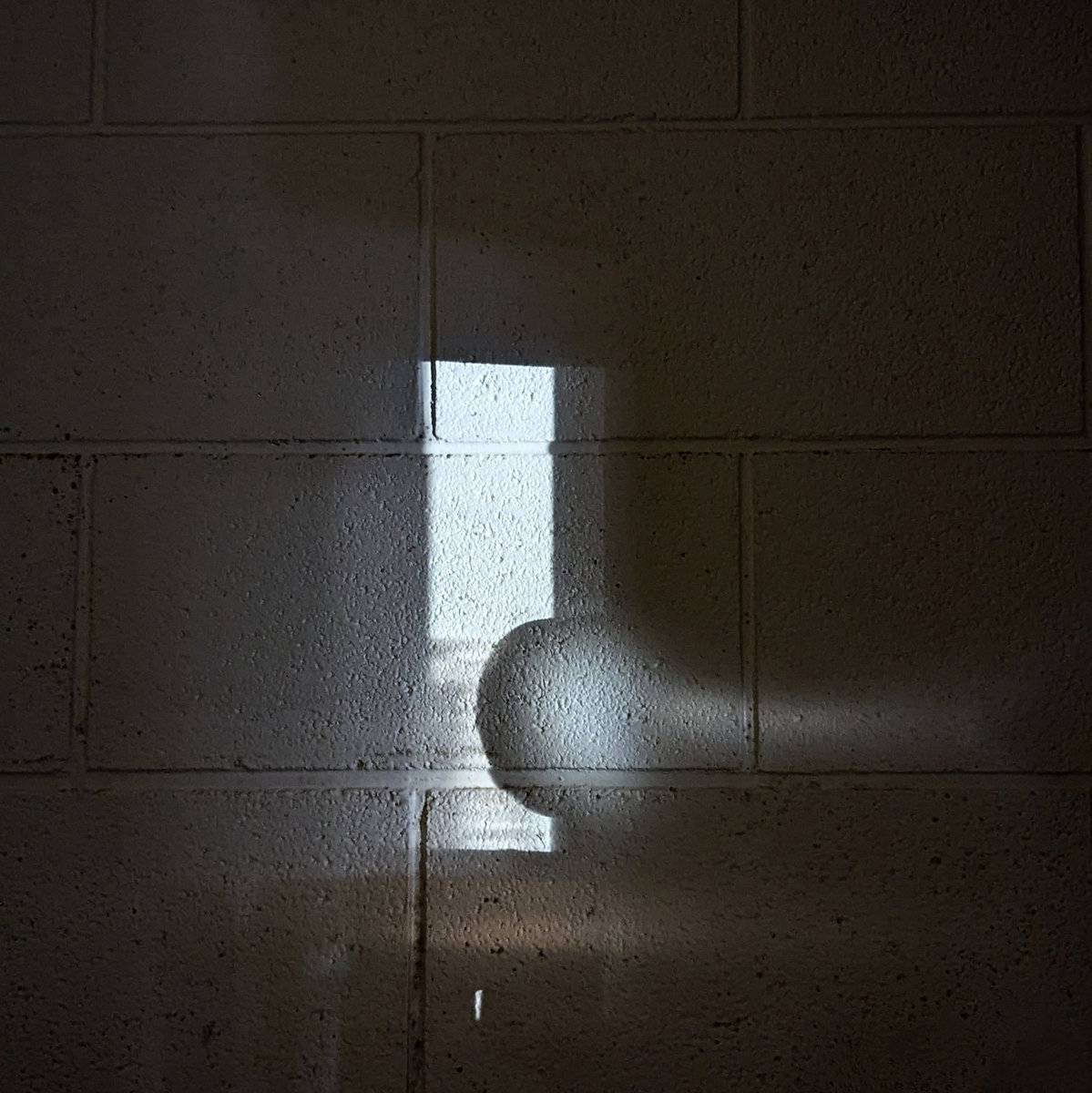
The artwork was made as always influenced by the music and idea behind the album – originating from a photo from Robin which was then captured with analogue photography and processed here at quiet details studios.

As usual, the album is presented on the physical edition, a custom six-panel digipack with a separate fine art print too.

The CD also has a special long-form continuous mix of the album, created by the artist and representing the music in its purest form.

scanner.bandcamp.com
Richard Bégin – Déjà Vu (Reverse Alignment)

Label Description:

Déjà vu is a fleeting yet profound sensation, a moment when time seems to fold in on itself, between past and present. It is a phenomenon of memory—both elusive and deeply personal—where recognition and strangeness coexist. Few artistic mediums can evoke this liminal state as powerfully as ambient music, where repetition, decay, and texture shape sonic landscapes that mirror the ghostly presence of the past within the present.
Canadian composer Richard Bégin has been steadily building a reputation in the realm of ambient music for his explorations of memory, crafting soundscapes that feel like echoes from a distant past, lost yet eerily familiar. His latest work, centered on the concept of déjà vu, follows in the tradition of artists like Boards of Canada, Fennesz, Philip Jeck, and William Basinski—musicians who have sculpted time-worn textures, fragile loops, and sonic artifacts to capture the essence of recollection and its inevitable dissolution.
Like Basinski’s Disintegration Loops, which document the slow decay of recorded memory, or Jeck’s ghostly turntable manipulations that awaken forgotten voices from the grooves of old records, Bégin’s music invites listeners into an auditory space where time is fluid. Fennesz’s digital deconstructions and Boards of Canada’s nostalgia-tinted melodies find an echo in Bégin’s work, which similarly embraces imperfection, layering textures that drift between clarity and erosion keeping the listener between the comfort of recognition and the disquieting realization that the past is always just out of reach.

credits

Grandbruit – Lys (Florina Cassettes)

Label Description:

The inspiration for this long-form piece comes mainly from hikes around an abbey near the house where we grew up.
In Cistercian silence, countless lilies overlook the walking trails.
Sweet summer memories in a crisp winter.

credits

released February 7, 2025

Music by Francis Tremblay
Photo by Pier-Luc Tremblay
Original painting “Portrait of Bindo Altoviti” by Jacopino del Conte (Oil on wood, early 1550s)
Design by Anne-Julie Dudemaine

Dylan Houser – Your Personal Swarm (Self-Released)

Label Description:

Cold night on Valencia, the only spirit drifting throughout. A long-lost companion is feral yet lurks in the shadows still.

Recorded between December 2023 – January 2025

Instruments used: voice, keyboard, shortwave radio, rumble of ancient times, livestreams, running water, tiny plastic guitar, acoustic guitar, steel drum, wind chimes, synthesizer and sampler apps, outdoor field recordings, various assorted percussion, Chef Jakether speaking

Thank you to Bowman, Bevis, Bishop, and Billingsley

Is this phase two of a light that always goes out?

Tape Loop Orchestra – PSALM019: Sabbat De Voix (Phantom Limb)

Label Description: “A haunting combination of strings and field recordings. There’s a strong sense of sorrow coming out of these aged tones, crying out quietly with no real beginning or end.”
Anthony Fantano, The Needle Drop

“A gorgeous process: meticulously composed, looped, developed, and finally broken down. Hargreaves is a master.”
Tiny Mix Tapes

Manchester composer and musician Andrew Hargreaves (a founding member of The Boats) brings his acclaimed Tape Loop Orchestra project to Phantom Limb’s Spirituals imprint with the hissed-out choral elegance of new album Voix de Sabbat.

“The voice is something I keep returning to,” Hargreaves writes. “Disembodied voices, secondary vocalisation, borrowed voices, and the reproduced voice. Can a machine be made to reproduce something that is made to seem human but isn’t?” Like a spectral choir communing from a transversal plane, Hargreaves’ newest outing under his Tape Loop Orchestra guise Voix de Sabbat is an uncanny and experiential immersion into strange but beguiling depths. It explores “the gap between a sound and it being heard, and where meaning is encoded in this process. The shadow of a sound, and how something can be reduced, distorted, but still carry the essence of its message and intent.”

Over two longform pieces, Voix de Sabbat traces repetition, gradual dissolution, repetition, gradual dissolution, and the narrative interplay that binds the two together. Throughout, Hargreaves’ characteristic mist-laden shimmer and subtle employment of shadow, apparition, and lassitude breathes life into a gently nuanced interzone between spectral choral voice and impressionist tape blur. A subtly unsettling nostalgia unfolds through the ghostwatching, while motes and artefacts of melodic pathos appear in distant, half-imagined, or near-imperceivable whispers. “Sometimes we need something outside ourselves to remind us of our connection to the world and each other,” Hargreaves offers. Though part of this music, or at least its compositional palette, is derived from voice, Tape Loop Orchestra’s treatment and process renders it meaningfully and arrestingly(sic) beyond the human.

Opener “Voix Figées” revels in foggy moor hermitude and a detached romanticism, its cycles of hiss and echoes osmosing between the corporeal and spiritual. The “frozen” voices of its title are glassy, lucid, and runic, filling a space in which time has stopped. Haunted string lines and eventually reverberate piano join, and the piece could be mournful, or even majestic, but instead it occupies a sacred place, both mysterious and knowing.

Next, “Voix Empruntées” reflects the “the process of preserving sound and the additional artefacts (surface noise, hiss, hums etc), reminding us that we are listening to a “real fake, made from real elements but constructed” (to borrow a phrase from Luc Ferrari).” It is more outwardly elegiac than its sibling, centred on lilting and lamenting piano phrases conjured from an ancient and holy unreality. As disembodied choral voice enters, so does a light, and Hargreaves’ effortless harnessing of wistful remembrance floods the senses.

Asher Levitas – Above The Pale Green (Waxing Crescent Records)

a1501281012_10

Label Description:

Above The Pale Green, takes its name from a line in Colophon to Songs Of The Groves, a poem by Victor Neuburg. It’s vivid description of a return to nature, frames this collection of field recording collages, ambient soundscapes and outsider pop songs. File somewhere in between Hiroshi Yoshimura and Daniel Johnston.
released June 14, 2024

Written and Produced by Asher Levitas
Mastered by exm
Artwork by Megmayo

SABIWA, Queimada, Nathan L. – Sons of _ (Phantom Limb)

a3725386344_10

Label Description:

“Provides footholds like glimpses of truth, then snatches them away…Enjoy the experience of being dislodged.”
A Closer Listen

Rising Taiwanese sonic and visual experimentalist SABIWA teams up with Italian duo Queimada and Nathan L. for the release of strange and beguiling new EP Sons of _, marrying disembodied field recordings and processed orchestral instrumentation with coruscating noise and half-forgotten Taiwanese folklore.

“We wanted to achieve a unique sonic experience that gently pulls listeners into a calm, introspective realm of sound, visuals, and hidden stories,” write the trio. All based in mainland Europe, but bringing divergent and itinerant influences to the mix, SABIWA, Queimada, and Nathan L. each represent complementary elements to the deep and unpredictable elixir that makes up their collaborative debut Sons of _. The record is characterised by SABIWA’s heavily processed singing voice fluttering and glitching in strange, coded languages within a heavenly but deserted CGI cathedral rendered from crashed software. Italian brothers Marco and Lorenzo Colocci (Queimada and Nathan L. respectively) are both well versed musicians, exposed to classical schools as well as the outerspheres of experimental music. Their contribution to Sons of _ can be felt in its no-input thumps, its crawling of mechanical insects, its devastating waves of crushing noise. Together, the trio push at sonic realities and temporal structure to form an indecipherable messaging. “A rediscovery of a new self, unrecognisable from its former shape,” they offer.

Key moment “Nothing blue – 無憂無慮” feels culled from a dreamlike, alien mythology, fugged into disparate and divergent worlds as if the dust from a newly-collapsed Tower of Babel has still not settled. The track loops and swoons with raw distortion, James Bond fever dream strings, and SABIWA’s mystifying vocal experimentation before introducing a lolloping rhythm of church bells and crackling, staticky snare. Next, “What is true is not true -無明大夢” almost proceeds like a song. It has a recognisable rhythm – rare for Sons of _ – and a processed vocal loop maintains a riverine melodic flow. But throughout, its foundations splinter and shiver under the weight of malfunctioning modems screaming to escape. Later, “The Root of Unwilled Existence – 無自性” breaks apart under its own weight. Clouds of noxious gas swallow whole its harmonic voicing as mischievous transversal pixies haunt a psychedelic, reverberant inner chamber.

Cover photo by @yoteng087

released November 8, 2024