Abul Mogard & Rafael Anton Irisarri – Where Light Pauses in the Silence of the Sun (Black Knoll Editions)

Label Description: In spring 2025, Abul Mogard and Rafael Anton Irisarri created the source material for their second album, Where Light Pauses in the Silence of the Sun, during a three-day residency at Morphine Raum in Berlin. Functioning as both recording studio and performance venue, the space has no stage, with the audience gathered around the performers. Working within an open framework, the duo reshaped the music each evening while recording the performances live to multitrack. Rotary speakers, modular synthesizers and bowed guitar formed the core of their sonic language, captured through a 1970s mixing console and microphones placed around the room.

Back in Mogard’s studio in Rome, the material was further crafted as motifs were stretched, fragments isolated, and tempos dissolved. Irisarri recorded additional guitar textures and treatments in New York, while passages recorded by Martina Bertoni and Andrea Burelli in Berlin reinforced the harmonic centres and brought breath, refinement and a new sensibility to their compositions. The process continued as Mogard’s layering and subtraction reassembled everyone’s parts into the final arrangement.

The album opens with “In the Eastern Wild,” building from a sparse outline into a monumental formation of low-frequency weight, its internal motion shaped by the rotating Leslie speaker. “Over the Domes” widens into a broader acoustic field, where sustained modular tones meet waves of softly plucked guitar. The music then turns inward with “A Blue Descent,” centred on Bertoni’s cello, whose growling timbre introduces a melancholic depth.

At the album’s centre, “In a Quiet Radiance” unfolds around a slow guitar ostinato, its luminous stillness opening into a more expansive and reflective state. Across its ten-minute span, Burelli’s violin lines and Bertoni’s lower cello phrases gradually surface, weaving through the harmonic field. Mogard brings Burelli’s processed voice to the fore, its emotive, operatic presence becoming one of the record’s pivotal moments. “Of Blessed Ages” suspends the sonic flow, shifting between parallel major and minor chords as lingering, slowly decaying melodies shape the music’s internal drift. The closing “Among Shadows” settles into a darker resonance as layered textures recede.

Mogard and Irisarri’s shared language balances restraint and maximalism. UK magazine Crack describes the music as “a tidal wave held in suspension,” while Dutch newspaper de Volkskrant writes, “What a colossal sound, and how this music strikes at the emotions.” Reflecting on the residency sessions, Irisarri recalls: “At moments I genuinely couldn’t tell if a sound was coming from me or from Abul. It stopped feeling like two people making decisions and began to feel like we were inside a system moving on its own.”

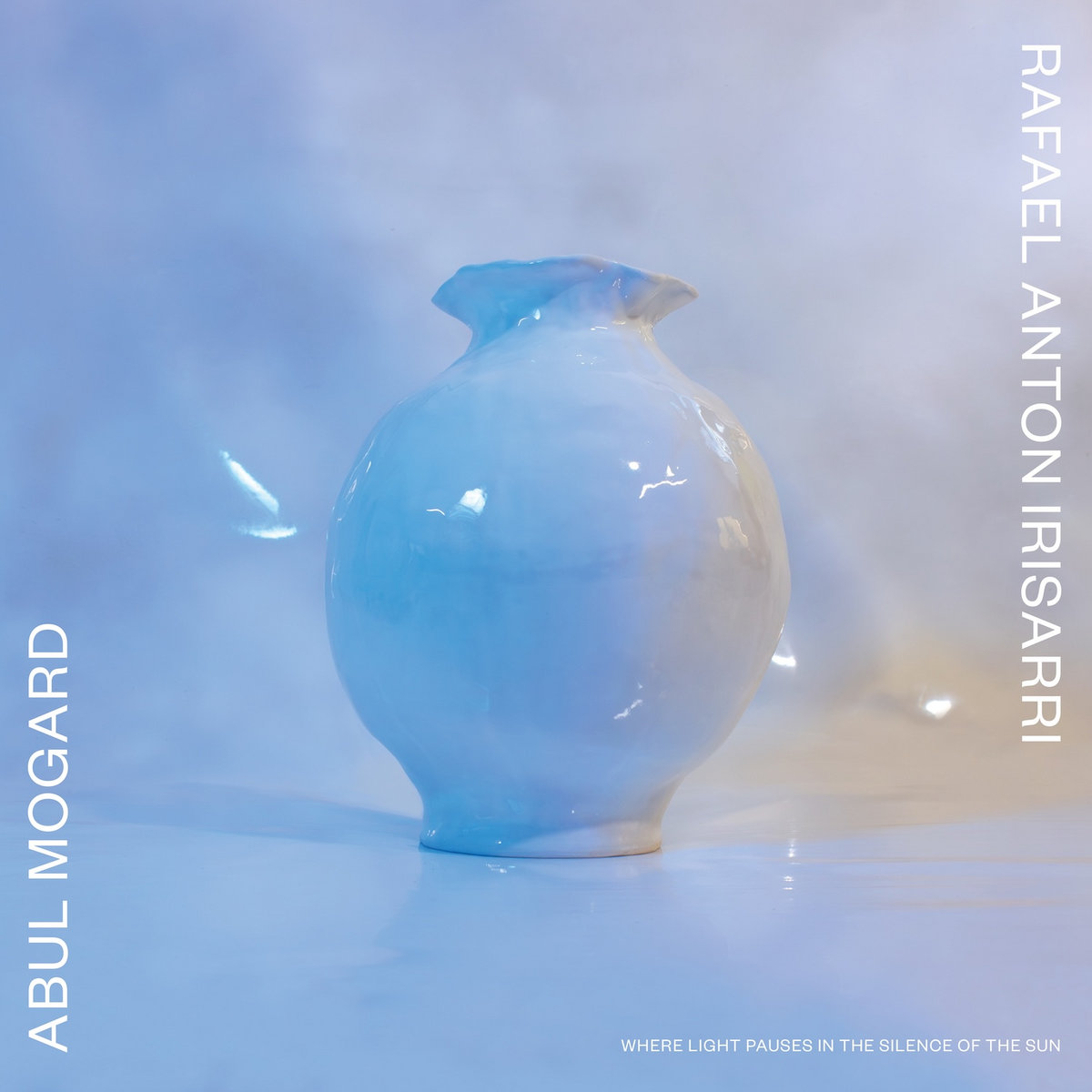
Marja de Sanctis’ cover artwork revisits the vessel sculpture from the duo’s first album, Impossibly Distant, Impossibly Close. There it appeared as raw, unfired clay. Here it has been fired in the kiln and finished with a glaze. Light gathers on its polished surface and spills into the surrounding space. As she explains, “I wanted to convey the idea of continuity within the duo, and the vessel became a kind of container for that idea. However, their music felt different this time, and with the collaboration of Martina and Andrea, I felt it should have a sleeker, softer, more glamorous look, very distant from the first raw appearance.” The transformation of the vessel from raw clay to fired form suggests a passage from immediacy toward permanence, mirroring the music’s gradual expansion.

Abul Mogard: synthesizers, treatments

Rafael Anton Irisarri: electric guitars, Leslie speaker, treatments

Martina Bertoni: cello on “A Blue Descent” and “In a Quiet Radiance”

Andrea Burelli: violin and vocals on “In a Quiet Radiance”

Composed and produced by Abul Mogard and Rafael Anton Irisarri.


“A Blue Descent” composed by Abul Mogard, Rafael Anton Irisarri, and Martina Bertoni.


“In a Quiet Radiance” composed by Abul Mogard, Rafael Anton Irisarri, Andrea Burelli, and Martina Bertoni.

Recorded by Rabih Beaini and Lucas Brell
during a residency at Morphine Raum, Berlin, 18–20 March 2025.

Transformations and overdubs completed in Rome, New York, and Berlin, Summer 2025.

“Of Blessed Ages” recorded by Abul Mogard in Rome.

Additional recordings by Andrea Burelli and Martina Bertoni in Berlin.

Mixed by Abul Mogard in Rome, September–October 2025.

Mastered by Stephan Mathieu at Schwebung, Bonn.

Lacquer cut at Schallplatten Schneid Technik (DE).

Pressed on BioVinyl at Optimal (DE).

Artwork by Marja de Sanctis

Photography advisor: Alessio Pizzicannella

Design and layout by Daniel Castrejón

Made in Germany

Many thanks to: Alessio, Daniel, Karen, Iulia, Marja, Matze and everyone at Morr Distribution, Stephan, all our friends and family.
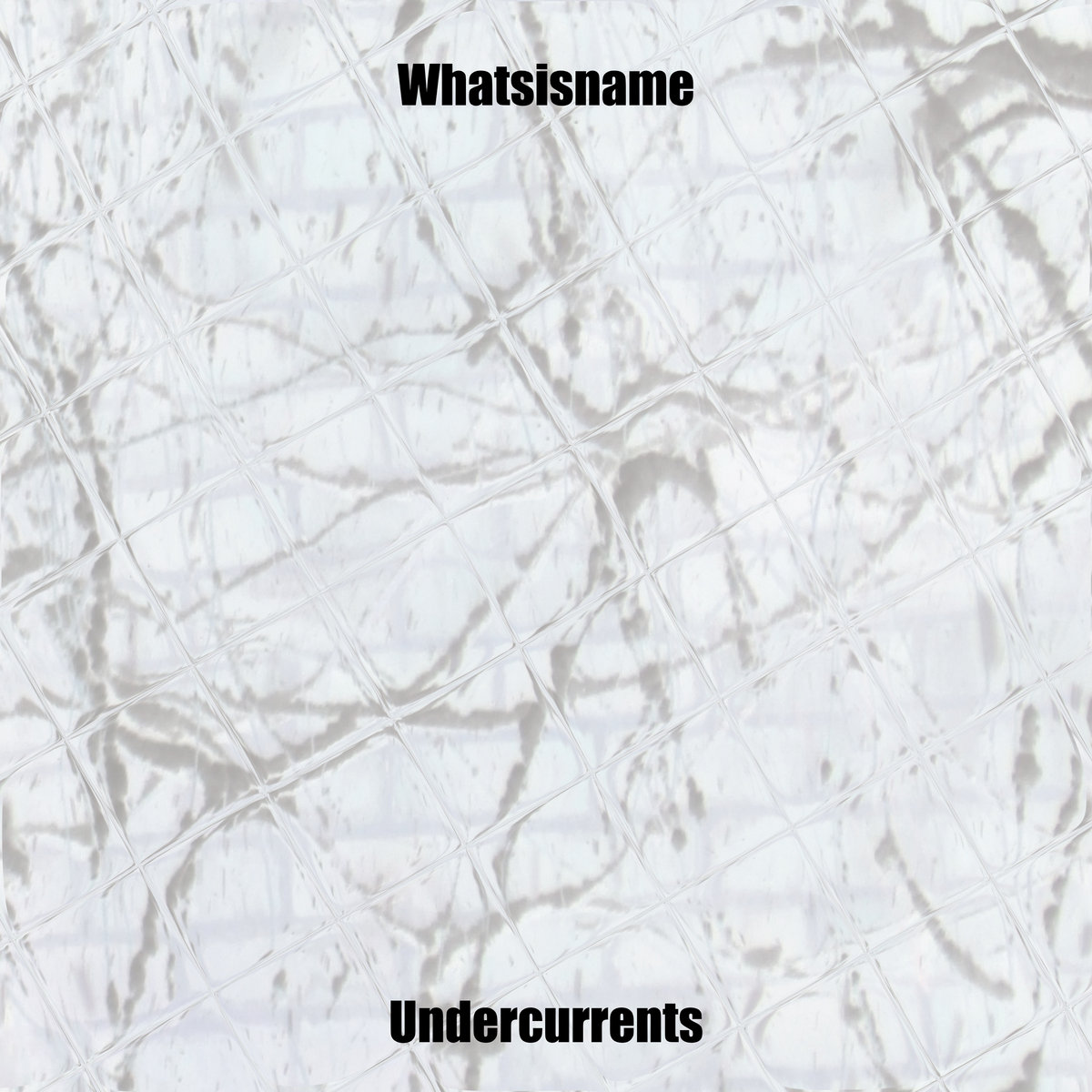
whatsisname – Undercurrents (Self-Released)

Label Description: This is another later-than-anticipated release in an occasional series of musical catastrophes. All tracks were originally recorded between May and August 2010. Primary remixes (where the track structure and music were finalised) took place between August 2012 and April 2013. “Flow” was remixed by Loz Grover at Crimson Sun Audio in September 2013. Final mixes for all tracks except “Flow” were made between November 2017 and August 2020. Mastering was performed between April 2019 and August 2020.

This album was a little easier to put together than my previous releases, both in terms of writing, and also mixing and mastering.

Genre: ElectroProg, synths, TranceFusion, acid, groove, glitch, atmospheric, quirky, chillout

Written, recorded and mixed by Whatsisname in EnergyXT

Instruments:

Genesis CM1.02, Cubix, AMB Electra Bass Rack CM, Padawan, SQ8L, EnergyXT Drum Sampler, Texture, SynthMaster2, Amphetamine, BMK2, Polyiblit, EnergyXT Synthesizer, NI Pro-53, Drumatic 3, CM SR202, Lounge Lizard EP-4, EVM Ultra Sonique, Synth1, Drumatic 4, Abakos, Linplug Alpha3 Free, PPG Wave 2.V, Antopya, Linplug Alpha3, Dream Vortex Microtrance, GTG K 1.3, ilo Synth 1, Jxplugins JX220, Oktagon, KX77FREE KXOMNI-600, AM Kicklab XXL, SonicCharge Microtonic, Hahaha CS33, Oatmeal, ersdrums, Hahaha CS33V2, ZebraCM

Effects:

EnergyXT Delay, IK CSR, TP Basslane, IK CS EQ PG, U-He Satin, Permut8, EnergyXT Reverb, Valhalla Shimmer, REFLEX Free V1, Newfangled Audio Equivocate, EnergyXT Compressor, Diversion FxCM, Ohmforce Frohmage, SFXMachine Pro, Gvst Gcomp2

24-bit audio mastering in IK T-Racks3:

VC-670, Equal, Quad Comp, Saturator X, Stealth Limiter, Dyna-Mu

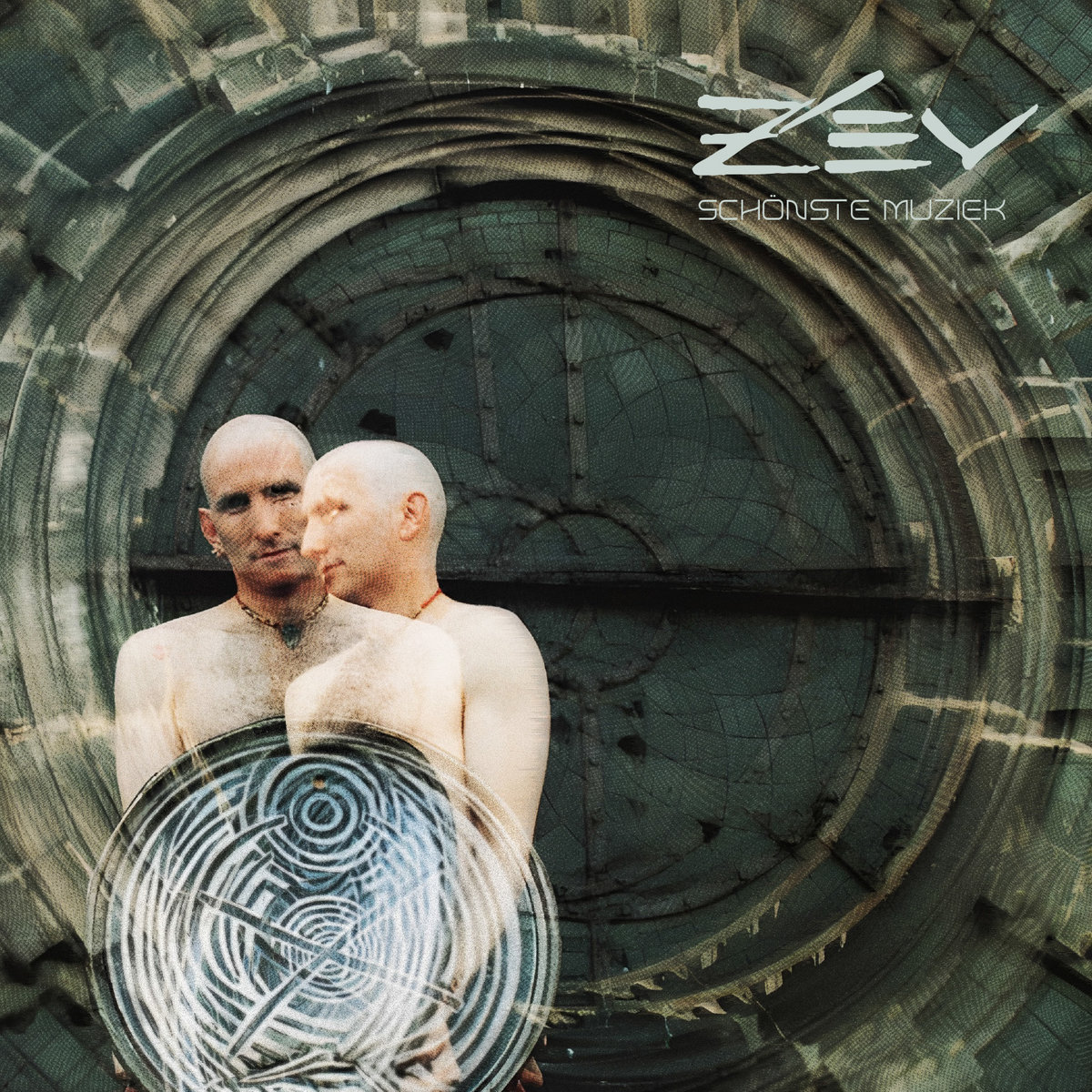
z’Ev – Schönste Muziek (Cold Spring)

Label Description: Early hallucinatory ritual percussion works from the much-missed rhythmajik master. This legendary album by Industrial pioneer Z’EV was originally released in 1986 (LP, Dossier), now finally available with the state-of-the-art remastering it deserves.

Also included is the bonus 20 minute track ‘Titan Night’, recorded at Berlin Atonal in December 1983, now available here for the first time on any format since the original 1984 split LP with Psychic TV (who performed their iconic set at the same event). Z’EV performed on all-steel, custom-made percussion instruments, designed to activate the acoustics of the space.

“Each track finds Z’EV creating moody and atmospheric percussion based compositions. If you’re familiar with Z’EV’s work you’d say these tracks are a bit more primal, stripped back, and unmanipulated. Each track takes in a set pattern of percussive elements, which he investigates over the tracks length, and these move from forceful battering onto more moody drifts, and in between the two… a worthy work from this most respected and unequalled artist” (Musique Machine).

CD in matt digipak, with all artwork remaining true to Z’EV’s original concepts.

1-5. Recorded 6th August 6 1986, 22:00 – 00:00 At Corps de Garde
6. Recorded at Berlin Atonal, Saturday 3rd December 1983

All Sounds and Compositions by Z’EV

Recording: Dick Lucas
Executive Producer: Manfred Schiek
Neutral Listener: Gerd Peeckel
Provocative Listener: Paul Delli Quadri
Time Keeper: Francis Horton
Original Photographs: Nick Fault

Graphic Design: Abby Helasdottir
Mastering: Martin Bowes

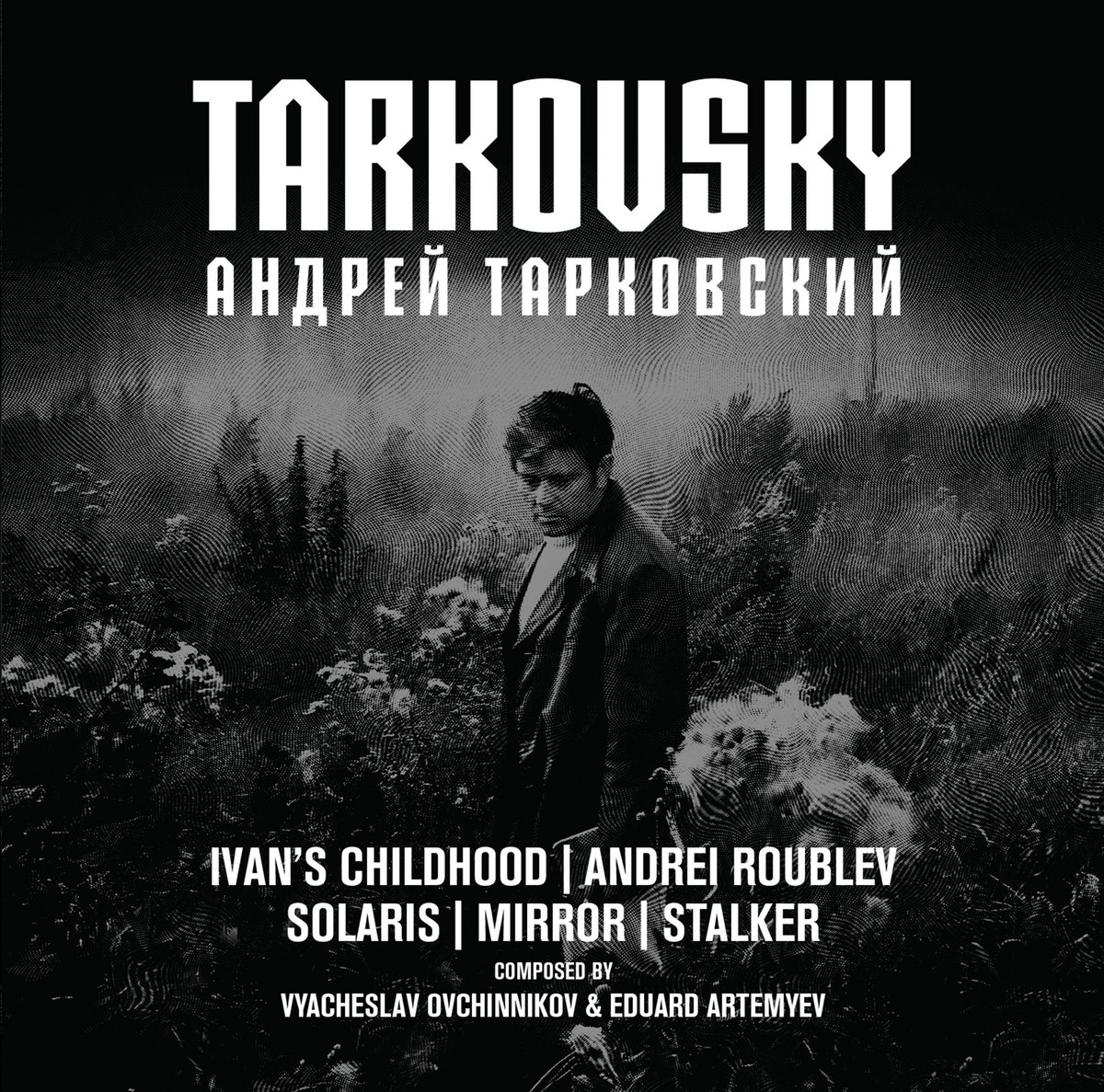
Various Artists – Tarkovsky (Cold Spring)

Label Description: This boxset contains the original soundtracks to the five core works of Andrei Tarkovsky, the master of Soviet cinema: “Ivan’s Childhood”, “Andrei Roublev”, “Solaris”, “Mirror”, and “Stalker”.

The works by Eduard Artemyev and Vyacheslav Ovchinnikov may sound imperfect to the modern ear, but have been sympathetically remastered and presented as close as possible to how striking they would have sounded to audiences at the original film presentations.

Deluxe matt-laminate boxset containing 5 x CDs in individually-printed card sleeves. Each album is accompanied by an artcard featuring the original Soviet / Japanese cinema posters on its release.

-:-

Vol 1: IVAN’S CHILDHOOD
The haunting soundtrack for Andrei Tarkovsky’s 1962 film “Ivan’s Childhood” (Иваново детство) was composed by the prolific Soviet composer Vyacheslav Ovchinnikov. It features a deeply romantic yet sorrowful 5-note leitmotif that captures the poignancy of innocence lost in war. Ovchinnikov’s sweeping score relies on romantic idioms to contrast the harsh realities of the Eastern Front with Ivan’s nostalgic, dream-like flashbacks.

Vol 2: ANDREI ROUBLEV
The soundtrack for the 1966 masterpiece “Andrei Roublev” (Андрей Рублёв) was also composed by Vyacheslav Ovchinnikov. The sweeping, evocative score is deeply intertwined with the film’s religious and historical themes, with its profound, choral-heavy resonance that perfectly accompanies the film’s exploration of faith, art, and Russian history. The composer collaborated closely with Tarkovsky to create a score that captures the raw, earthy reality of 15th-century Russia while elevating the film’s stunning visual language.

Vol 3: SOLARIS
Eduard Artemyev’s score for Tarkovsky’s 1972 sci-fi masterpiece “Solaris” (Солярис) is a ground-breaking work of early electronic music. With Tarkovsky envisioning an ambient / mechanical soundscape, Artemyev’s futuristic takes on Bach’s organ works are combined with haunting, abstract synthesizer drones and environmental noise, all crafted on the famed ANS synthesizer. At atmospheric, dreamlike score that perfectly mirrors the psychological themes of the film.

Vol 4: MIRROR
Eduard Artemyev’s magnificent soundtrack to Tarkovsky’s 1975 film “Mirror” (Зеркало) is the natural follow-up to “Solaris”. Dense, slow-moving, and often disorienting mood pieces with Baroque sensibilities resonate beyond the film’s dream-like images. A combination of monolithic scale and pastoral melody makes the music so intriguing, lush and unique.

Vol 5: STALKER
For “Stalker” (Сталкер), the third part of Tarkovsky’s science fiction trilogy, Eduard Artemyev was inspired by Indian classical music and employed eerie layers of synth tones, flute, harpsichord, and tar (Iranian stringed instrument), as well as choirs, to create a central theme as spellbinding as The Zone, a setting in the film where laws of physics no longer apply. Achingly beautiful.

Mastered by Martin Bowes
Graphic Design by Abby Helasdottir

Licensed from TMP Ltd

c.soûle – Solamente Augustine (Shady Ridge Records)

Label Description: From the Artist

Such a great bulk of my life, spent muffling the tender inner voice, in maybe-understandable, certainly misguided attempt to shield myself from further feelings of loss. I believe we are all susceptible to this tendency. Turns out it only sublimates the pain, causing it to erupt in greater violence still, jutting out in all directions in fits of hollowed impotence, thorny, as failing, tangled canes.

We outsource the difficult imperative of the conscience to reaction, to the rage and hopelessness proffered by the digital half-world, to charlatan-shepherds of collapsing pretense. We listen for it in the emotional labor of the hurting, merrily excusing ourselves over the darling cliff of claimed helplessness, siblings in tow.

I have been working at listening for it a might bit better. These tunes are meditations on my novice’s effort at the same. They are an apology and appreciation to Augustine, decades gone, for being held as object and unwitting surrogate to my own inner voice. Apology for this too-usual offloading of emotional work, work I should ought to have been doing myself, projected onto a mythologized, magical “other”. Gratitude for the borrowed “Nah, Pelon” that stood in for my conscience such a number of years and spared so many along the way some of my very worst ideas.

I have come to know my conscience as a tiny, sometimes intruding guest, an insectile dragon, often annoying, as it pollinates this inverted flower, this fig, my clumsy devotion.

Self-congratulations hangs around all day, every day, a constant histamine crackle, as I clod-hopper my way along, trying not to break every single thing I come across. Still, volcanic consequence slices clean through my Chuck’s, describing old desolation, enriching future soil under these weeping feet.

The ration is bitter with the sap of old choices, but it nourishes well, across a tongue, plump and honeyed with gratitude.

Turns out his first name wasn’t Solamente, after all. He has only ever had one name. I just didn’t have the language yet to know any different.

But I am working to understand.

Enjoy,

Clayton aka c.soûle 

Written, recorded, and produced by c.soûle
Mastered by Thomas Ragsdale

SRR041

shadyridgerecords.bandcamp.com

Andreas Tilliander – Lava (quiet details)

Label Description: Credits:
Music by Andreas Tilliander
Mastered by Alex at quiet details studios
Artwork by quiet details in collaboration with Andreas Tilliander
Design by quiet details
© quiet details 2026 all rights reserved

Extremely pleased to say that next in the quiet details series, with an interpretation of immense breadth, is the eminent Swedish producer, Andreas Tilliander, with Lava.

Andreas has been established in the highest echelons of electronica since the late nineties – amassing a vast discography across many leading labels and multiple aliases. Wide-ranging productions under his own name, Morika, TM404, Rechord and many more – on the likes of Kontra Musik, Mille Plateaux, Raster-Noton, Acid Test and his own Repeatle – has proven him time and again to be one of the most important and influential artists of recent years. Essential live performances have served to enforce this legacy.

Lava is Andreas Tilliander at his finest – endlessly experimental and wildly creative expressions, shaped into a sonic excursion of mind-expanding distinction.

As he says, this is “An exploration of southern Sweden – light, memory, and open landscapes.” And we can feel this from the very first second.

Deeply atmospheric from the start, submerged locational recordings intertwine with gradually evolving synths – creating an introduction that lays out the beginning of the path into this beautifully constructed album.

Trademark acidic pulses emerge through the clouds as the music continues on unabated, and from there we’re led by the hand through the emotions Andreas elicits from his surroundings.

His mastery of his machines is total – analogue richness, digital grunge – recordings from many sources manipulated into fascinating collages – all meld into a cohesive whole by the immense creative vision he possesses.

At times vivid and luminescent, and others dark and meditative – always profoundly reflective – this is an album of vast contemplation, perfectly executed by a master of his form.

As Andreas says:

Recorded primarily with samplers, some shitty synthesizers, field recordings from Hässleholm, old VHS tapes, and the quiet electricity of Skåne.

Special thanks to the fields and roads of Vinslöv, Vankiva, and Hässleholm. To the shores of Åhusfältet and the streets that shaped everything. Thank you for the crystal clarity, the glow, the light, and the stillness.

Street Wise. Vinslöv. Vankiva. Hässleholm.

I feel crystal clear.

Huge thanks to Andreas, a stunning addition to the series.

The artwork was made as always influenced by the music and idea behind the album – originating from a photo from Andreas which was then captured with analogue photography and processed here at quiet details studios.

As usual, the album is presented on the physical edition, a custom six-panel digipack with a separate fine art print too.

The CD also has a special long-form continuous mix of the album, unique and representing the music in its purest form.

repeatle.bandcamp.com  

Rapoon – Goodbye To Dreams Of Space (Zoharum)

Label Description: Rapoon’s new album brings ten premiere tracks. Over an hour of pulsating ambient music, bathed in a somewhat dreamlike aura, from which lazily emerge snatches of melody, sonic nuances of an ethereal nature. We still encounter the Brit’s signature sound, but above all, we experience music with a slightly more meditative, reflective quality than usual. With each passing minute, images unfold, intricately woven like clichés of memory, vaguely recalled in our minds…