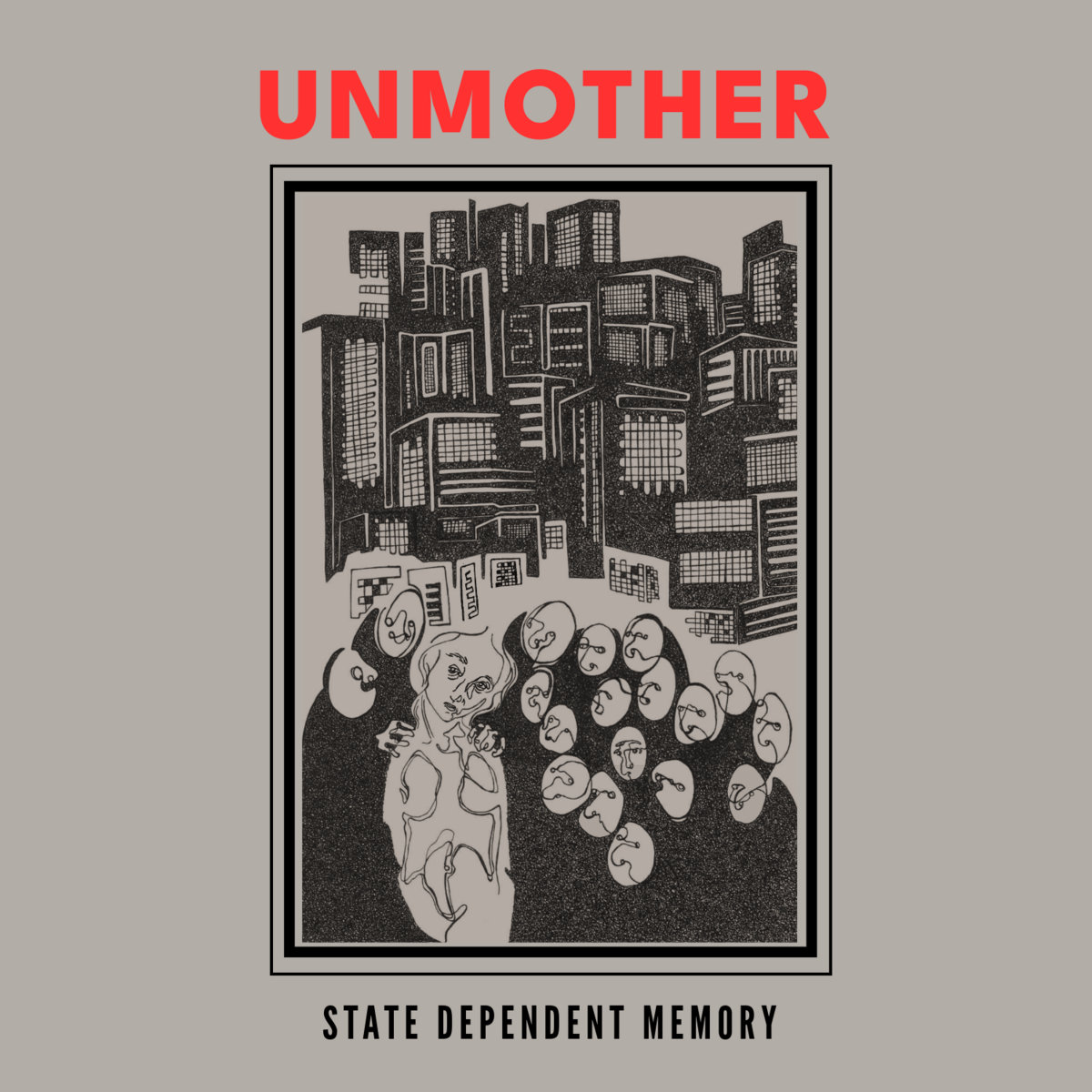
State Dependent Memory is Unmother’s second album. We wanted to reflect the isolation a large metropolis can impose on you, at times torturing and at times redeeming. This was our effort to capture the feeling of being lost inside a vast, busy, and suffocating urban landscape.
Vocals: V. Guitar: Azoso Guitar/Bass: Declwa
Drums recorded by Krzysztof Klingbein Additional Vocals by Venla on Modern Dystopia & State Dependent Memory
Mixed by Angeliki Mourgela Mastered by Roland Rodas at Cavern of Echoes mastering Artwork by Rania Tsigarida
Label Description: Bifuu_ZONE, translated loosely as “a zone of gentle breeze,” is a concept drawn from Tsudio Studio’s personal vocabulary rather than a strict linguistic equivalent. While liminal spaces are often framed through unease, Bifuu_ZONE reimagines them as sites of quiet comfort, restoration, and slow transformation. The project centers on impermanence, erosion, and the subtle ways time reshapes even the most solid structures.
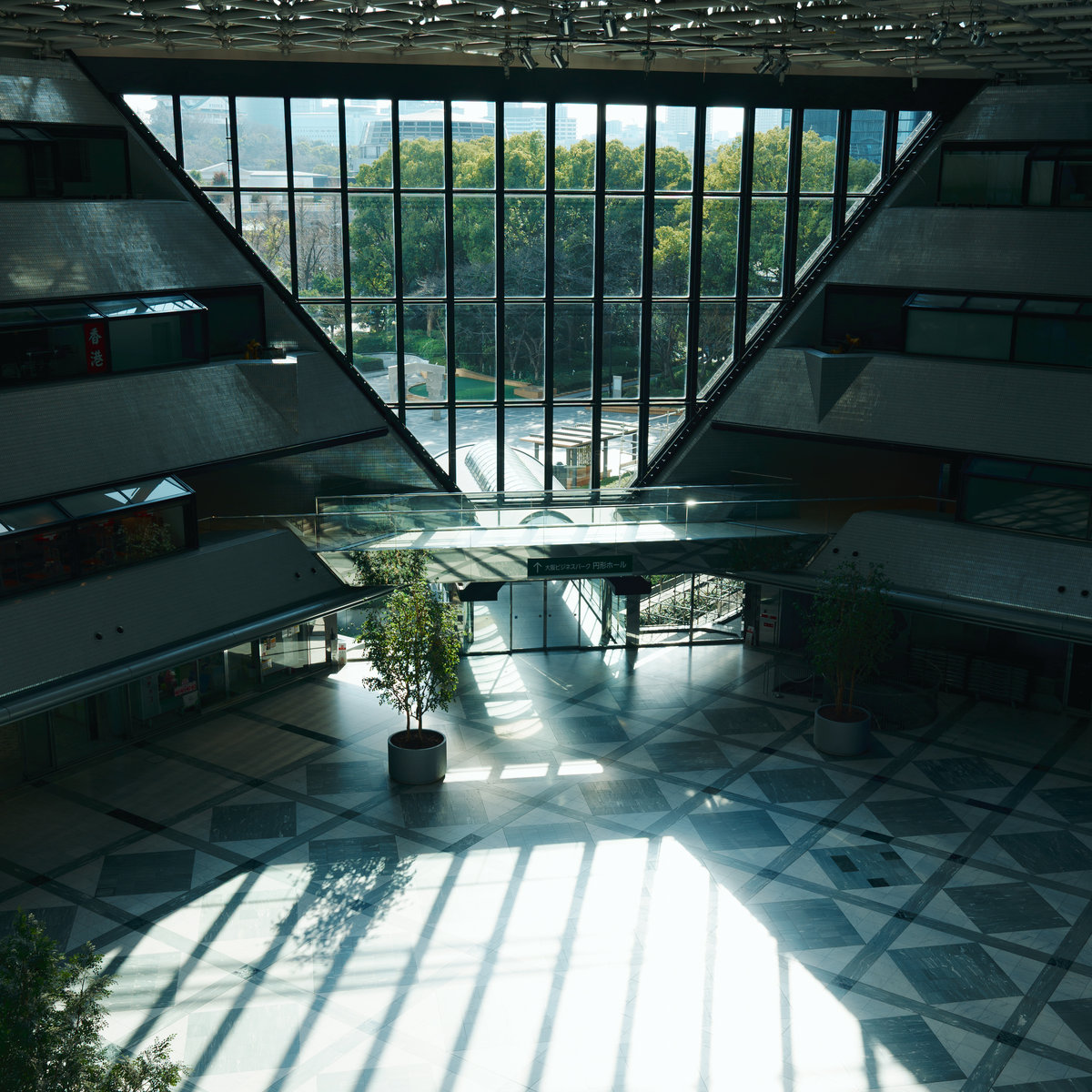
The West takes its title literally, drawing inspiration from buildings and environments located west of Osaka. Each track is composed with a specific architectural space in mind, allowing tone, texture, and resonance to emerge from imagined structures rather than narrative progression. The result is a site-responsive ambient work that listens closely to stillness, weathering, and spatial openness. Saxophonist mori_de_kurasu appears on three tracks, introducing breath and human fragility into the album’s restrained sonic palette.
This perspective is deeply informed by a Japanese sensibility toward impermanence, an acceptance of loss and change not as absence, but as gentle continuation. Rather than positioning liminal space through anxiety, Bifuu_ZONE gestures toward what lingers quietly after the dream has ended.
Beyond the album itself, The West also marks a point of convergence within Tsudio Studio’s broader practice. In March, he will present an exhibition and live performance at Gallery SHUTL in Higashi-Ginza, Tokyo, centered on the idea of “post-liminal space.”
Under his primary name, Tsudio Studio has released work through Media Factory, Local Visions, and ULTRA-VYBE, with collaborations spanning Japan, Europe, and the United States. His 2022 album My Room reached #2 on Bandcamp’s global charts. The West stands as a focused ambient statement, an invitation to inhabit spaces shaped quietly by time.
For the next interpretation of quiet details, I have the pleasure of welcoming a true musical experimentalist, Rutger Zuydervelt, here as Machinefabriek.
Hailing from the Netherlands, Rutger has been active as Machinefabriek for over twenty years, releasing on highly regarded labels such as Western Vinyl, Type, Important, 12K, Entr’acte, Miasmah, Consouling Sounds, Eilean and Edition Wandelweiser. This, alongside many collaborations, music for film and dance, installations and live performances, has given him a place as one of the most admired artists working today.
Known for his ability to bring together various strands of musical exploration – from electro-acoustic, field recording, ambience, drone, sound art and minimalism – he has created something completely unique in the quiet details series
Lijnverkenning is an album of sparse and powerful textural beauty. Machinefabriek’s innate comprehension of the potential of sound to affect us in profound and unknowable ways.
This is an album where the personality of the machines dictated the direction of music – carefully and deftly guided by Rutger’s intuition and musicality.
There’s an exquisite subtlety throughout, layers of sound implying so much and the interplay creating something incredibly moving.
As Rutger says:
Of course I said yes when quiet details asked me to join their roster. I was playing Scanner’s Forces, Reactions, Deflections quite a bit at the time, and it inspired me to create my own take on the quiet details idea. I started working with cassette tapes and created a whole bunch of short, quite melodic compositions, but eventually decided they didn’t fit the label’s aesthetic, and definitely didn’t work in the long-form format that qt used for its CDs.
So I started anew, focusing on longer durations and moving toward a more free-form and intuitive direction. Taking time, letting my machines softly hum. In the process of creating the music, I think I found a strange form of intimacy within the sounds — as if eavesdropping on the ghosts inside the machines I was using. The tracks here were mostly made by combining various layers of minimalistic improvisations with field recordings, oscillators, effect pedals, etc. I even hesitate to call these pieces “compositions,” because to me they feel more like entities that follow their own logic, rather than clearly defined and constructed songs.
Stemcassette is a different story. That track came to life after I used a short vocal sample taken from a tape I found in a second-hand memo recorder I had bought. It was filled with home recordings of rehearsals by an opera singer. A short, pitched-down snippet was used in the piece Lijnverkenning 3, but I couldn’t shake the idea of doing more with the sample. So I created the short Stemcassette from it, and felt it worked well as a mid-album “breather.”
Lijnverkenning means “line exploration.” It’s an expression I once saw marked on a public bus, presumably indicating a test of a new route. It’s a multifaceted word, with many connotations that also relate to the music. I hope listeners of this album will feel like explorers — Lijnverkenners — too.
Huge thanks to Rutger for this stunning addition to the series.
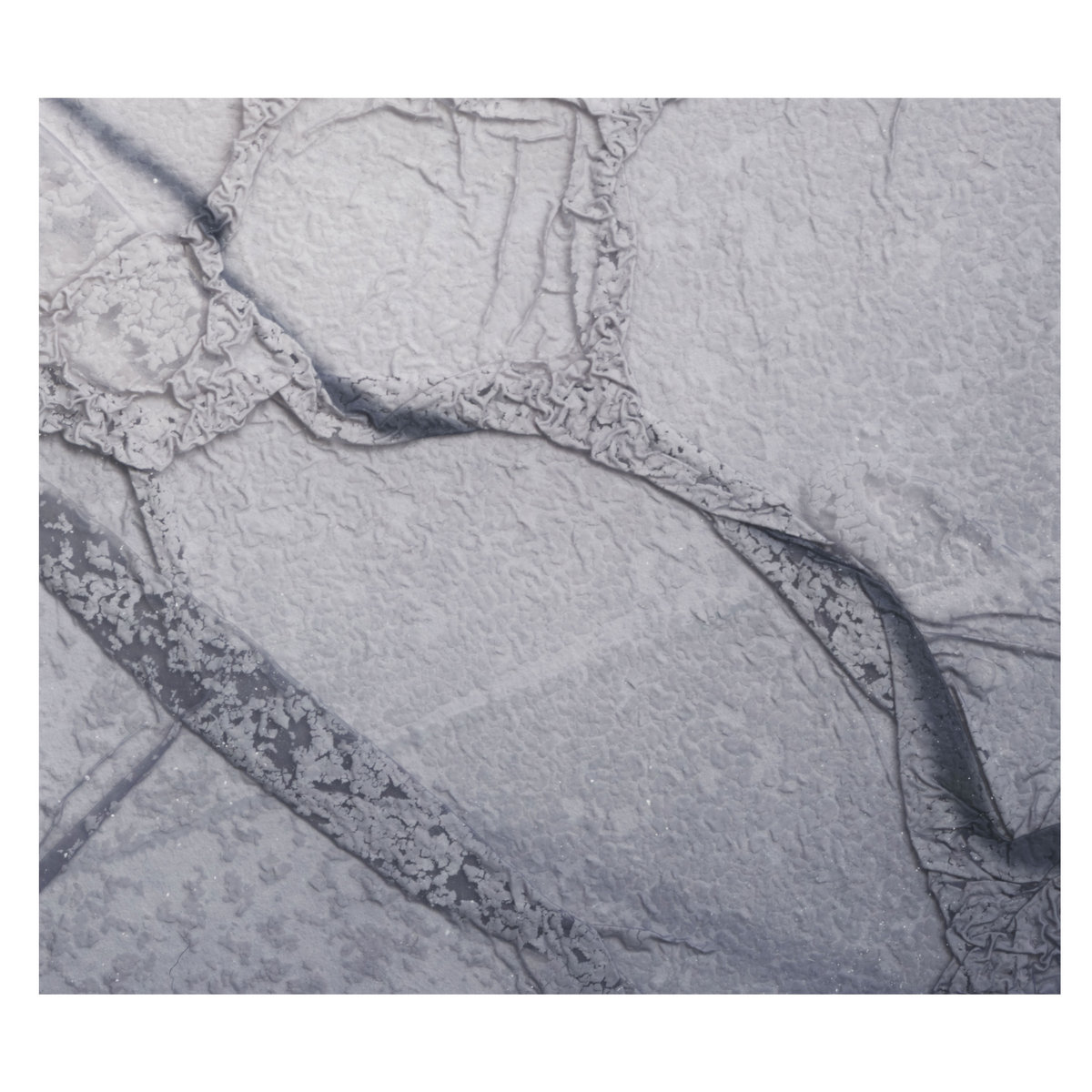
The artwork was made as always influenced by the music and idea behind the album – originating from a photo from Rutger which was then captured with analogue photography and processed here at quiet details studios.
As usual, the album is presented on the physical edition, a custom six-panel digipack with a separate fine art print too. The CD also has a special long-form continuous mix of the album, created by the artist and representing the music in its purest form – highly recommended.
The Space Between Worlds marks the fourth release on the label, from the label’s own Major Axis. Exploring the invisible threads that connect nature’s atmospheres, the EP drifts through shifting skies, distant horizons, and spaces suspended in dusk light.
Breaks move like weather systems, textures breathe like open landscapes, and low end rolls in like a far-off tide. It’s immersive, elemental, and transportive – less a collection of tracks, more an entry point into the spaces where worlds overlap.
Major Axis – Production Tormund – Mixing & Mastering Lykos – Artwork
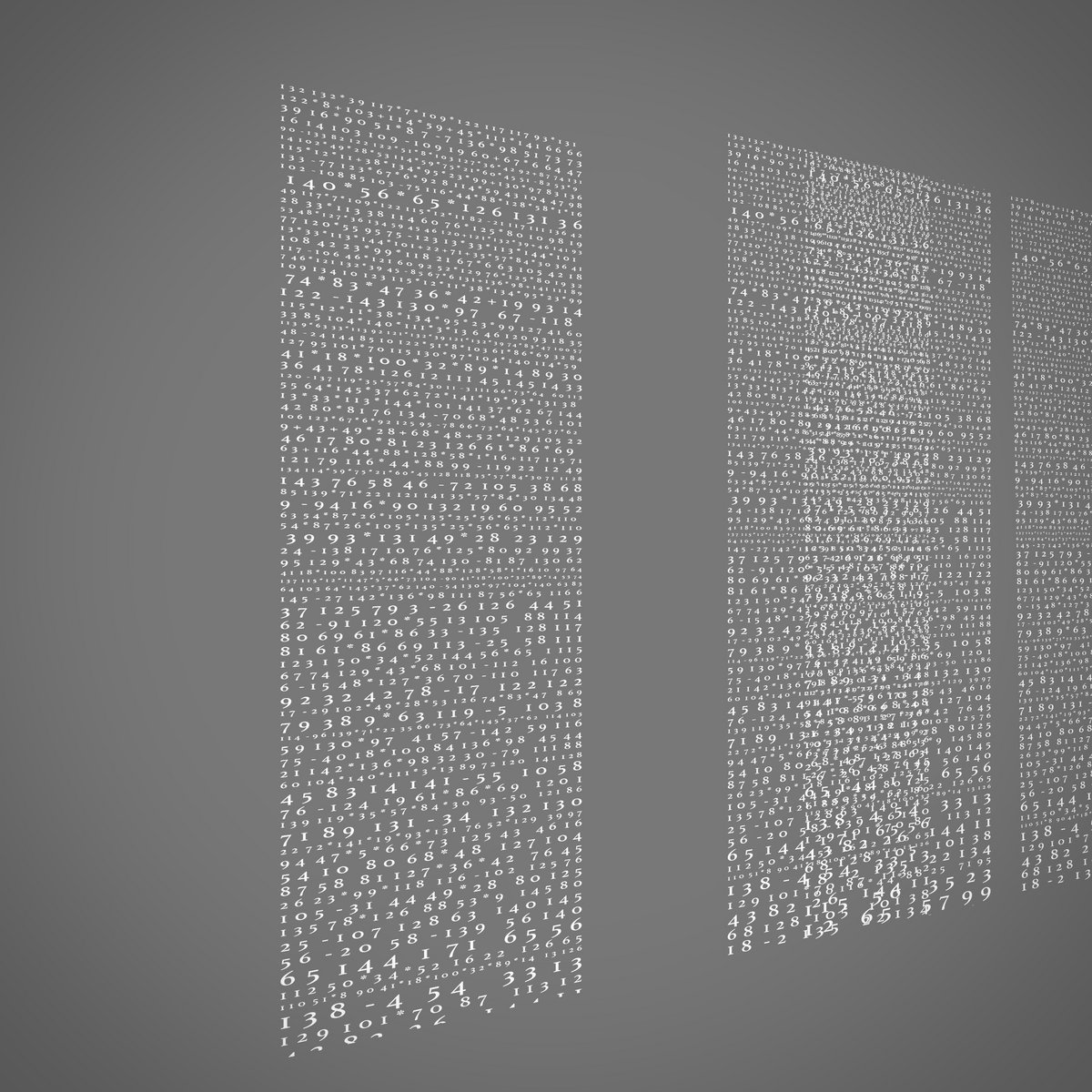
A two-chapter suite for modular & FM synth, wind & string instruments, electronics, sound objects and field recordings. The work is structured as a two-chapter descent from concrete score to analog & digital abstraction. It begins with the tangible written material and human presence of the performers, which are systematically subjected to a process of erosion. The initial components are reduced to “digital dust” — meaningless data fragments — then recombined algorithmically. This process entirely empties the material of its original structure and meaning. The work culminates in a final, unreal space, becoming a meditation on the transformation of human intention into pure, post-human data.
The notion of Hope for Nothingness as Something is a radical philosophical pivot, shifting the focus of human aspiration from tangible acquisition to ultimate negation. There’s a profound psychological shift: the very concept we often fear or dismiss as empty can be re-framed as an object of desire, value, or ultimate meaning. This concept draws its discursive power from its inherent paradox: desiring an absence and treating that absence as the most valuable presence.
“Is nothingness the same as nothing? Everything evolves around that. Absolute discardment, because there is hope only where nothing is retained. The fullness of nothingness. That is the reason for the insistence on the zero point.”
– T. Adorno
All tracks composed, played, mixed and mastered by Antonio Gallucci @ Mercurial Studio in Pistoia (Italy) between May and October 2025.
Antonio Gallucci is a musician, sound engineer, and digital technology expert born and raised in South Italy. He lives and works in Tuscany. His works reveal a poetic and conceptual dimension that leverages the use of new and old technologies, found objects and sounds, and the extreme manipulation of sources, within a reflective and conscious aural experience. Over the past 25 years, he has collaborated with museums, theaters, artists, and international record labels.
The music of this trio is an ongoing conversation between three women about life as it unfolds between artistic practice and daily routines. Compassioned conversations about being someone’s mother, someone’s daughter, someone’s partner, someone’s friend seamlessly float into the musical sphere, where words and emotions are transformed into pitches, harmonies, rhythms and artistic gestures.
Three strong artists from the creative music scene of northern Europe has formed a trio that feeds from the compassioned relationship between its members. Danish Anne Efternøler is a desired trumpet player on the Scandinavian scene, while German Johanna Borchert´s distinct approach to the prepared piano has given her a prominent place between the heaviest pianoplayers(sic) of her generation. For more than 25 years vocalist and multi-instrumentalist Maria Laurette Friis has been pushing the musical borders leaving a remarkable contribution to the field of abstract music.
Maria Laurette Friis – vocals Johanna Borchert – prepared piano and vocals Anne Efternøler – trumpet, flute and objects
Track 1, 3, 5, 6, 9, 10, 11 Recorded at Hobby Horse Studio, Copenhagen, January 10. 2022 By Simon Mariagaard. Track 2, 4, 7, 8 Recorded live at KoncertKirken, Copenhagen, July 5 2023 By Mads Madsen. All music By Anne Efternøler, Maria Laurette Friis, Johanna Borchert.
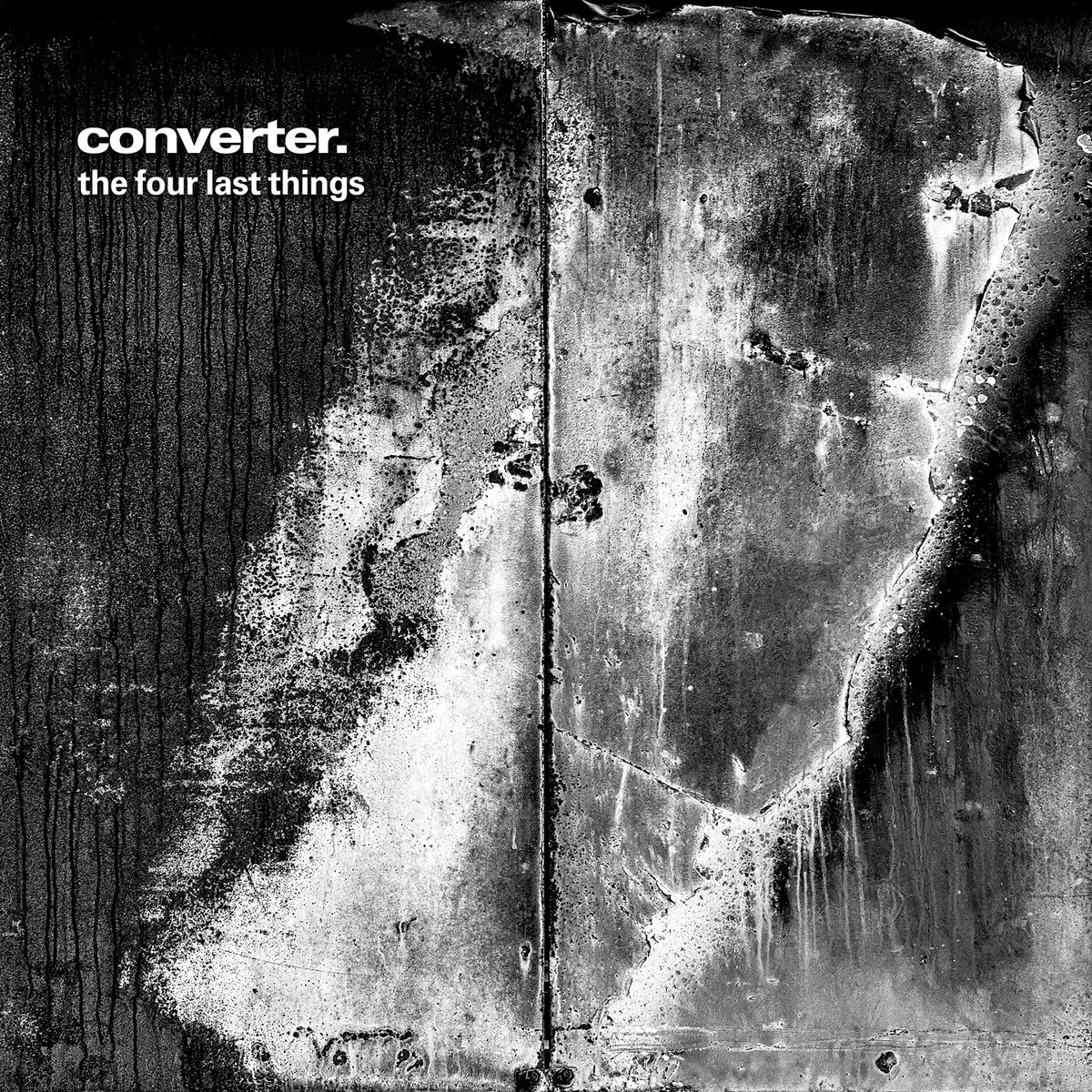
CONVERTER is the seminal power-noise project of american composer scott sturgis, a foundational figure in the evolution of rhythmic industrial music. emerging in the late 1990s, sturgis moved beyond the conventional structures of his earlier work with pain station to develop a more visceral and abstract sonic language. his debut album, ‘shock front’ (1999), stands as a cornerstone of the ant-zen catalogue, widely regarded for its masterful synthesis of harsh, distorted rhythms, brooding atmospheres, and precise, machine-driven grooves.
through layers of clattering percussion and cold analog pulses, CONVERTER transforms noise into a refined rhythmic architecture, delineating the sonic contours of a dystopian, mechanized era. converter’s work occupies a charged space between violent sonic confrontation and cinematic isolation, revealing an uncommon ability to uncover structural beauty within dissonance while evoking the vast, haunting loneliness of the post-industrial landscape.
original songs by scott sturgis.
dismantled, deformed, destroyed, constructed, inspired and built by daniel myer / architect. linktr.ee/danielmyer
mastered by anatoly grinberg artwork by stefan alt


 Music For The Rest Of Us