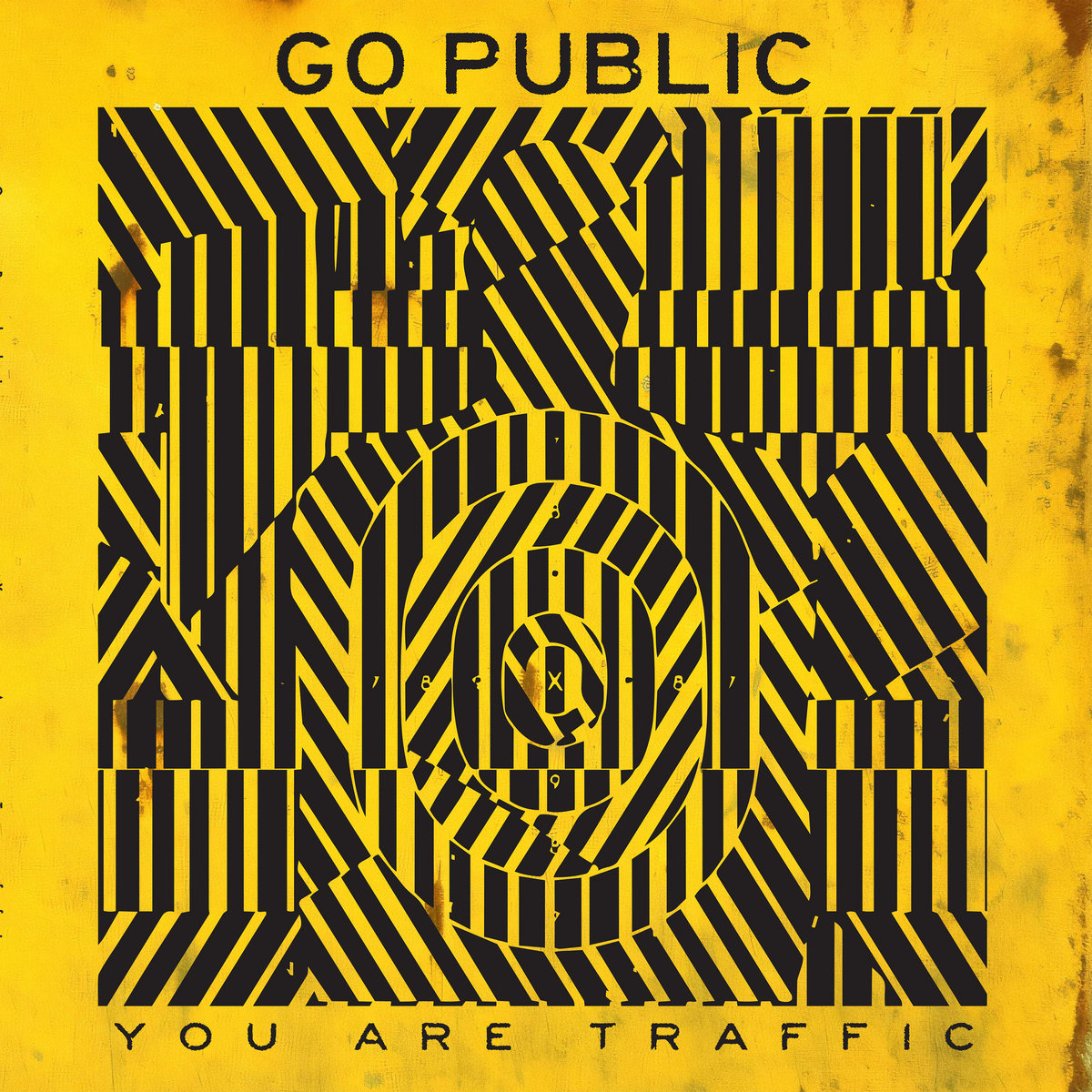
Label Description: The past isn’t real, the future ain’t happening, all we’ve got is right now and Go Public and You Are Traffic: Hey now, don’t dream it’s over. An Atlanta band naming a record after traffic might be like dropping a two-ton anvil right on the biggest Bozo-red clown nose imaginable, but there are levels to every parking deck. Maybe it’s a gridlock of the soul? The close-together shame of becoming a stranger, a slow motion accident of skeleton details? This band’s business—skronky contortions and nope wave deconstructions, prickly wisdom and post-punk pith—is ageless yet absolutely right this very moment, distilling the cosmically unique pointlessness of this number that never should’ve become a year, and magnifying the microscopic glimmer of hope at its furthest corner. Call it dice-roll politics: a saving throw at a craps tempo—bleakly vibrant jams for endtime dance parties.
These men have been in bands. You have maybe heard those bands, if you live in Georgia, or are their friends. Their bands were good; this band is great. Go Public can drop names, a whole catholic education of influences and inspirations, from every acre of the radio dial; but what matters is what comes out, not what goes in. You Are Traffic has few peers; brittle but hard-boiled, it’s a swinging splatterhouse of booksmart, tough guy art with the jittery anxiety of Talking Heads and the restless musicality of This Heat in equal measure. The guitar sounds like a dayglo glass sword, for Christ’s sake. Sean Rawls and Adrian Finch yelp and squelch frantic findings while Sam Gunn and Jay Domingo hold everything down with one-mind chops and muscle memory, culminating in a crucial half-hour of modern American noise unrestrained by any boundaries, be they stylistic or terrestrial. You Are Traffic and you’re reading this on whatever day this is and it’s the perfect time to get personal with Go Public.–Garrett Martin
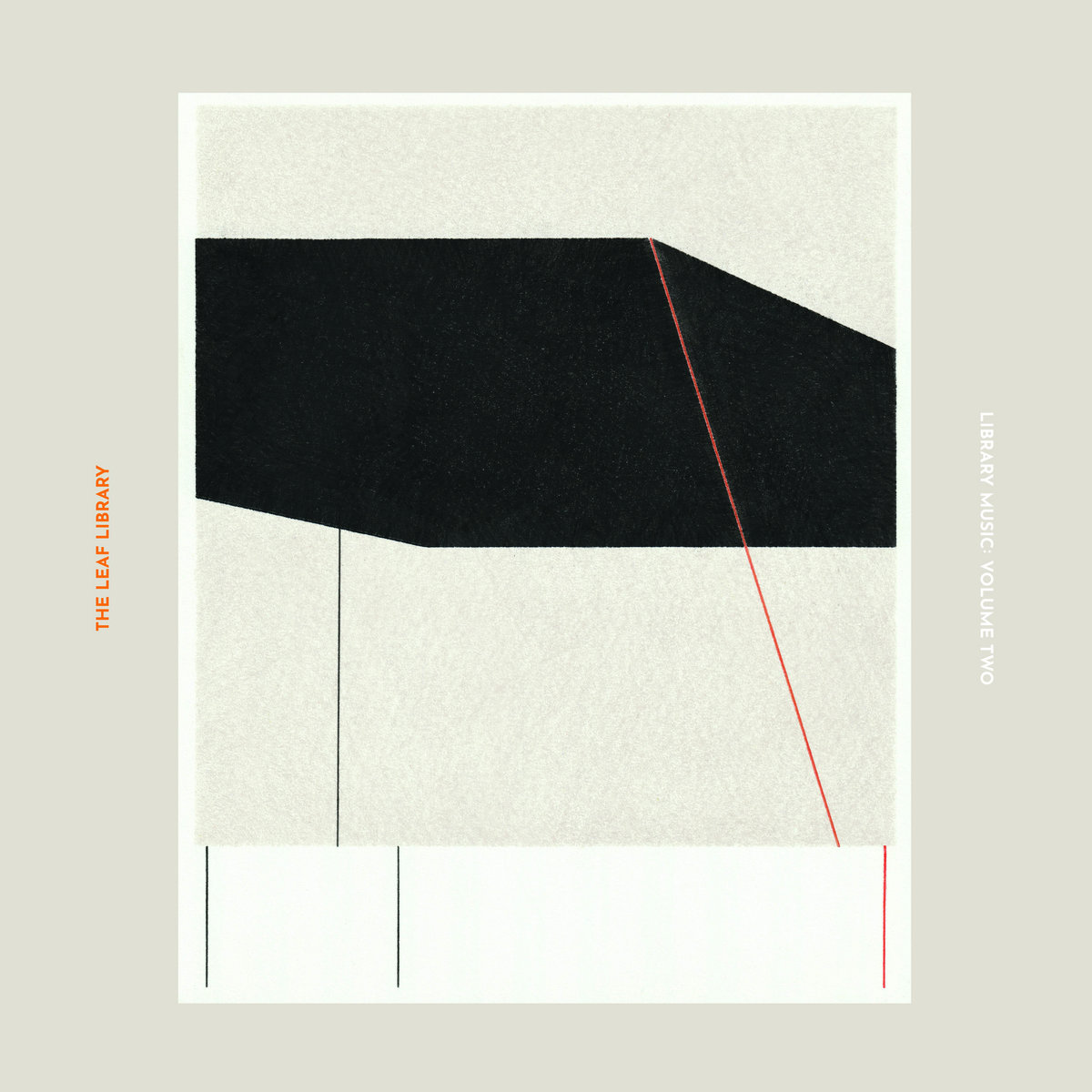
Label Description: THE LEAF LIBRARY OPEN THE ARCHIVES AGAIN WITH SECOND COLLECTION OF RARITIES, LOST SONGS AND STRANGE SEEDS
Library Music: Volume Two— out 25 September 2026 via wiaiwya (wia130lp)
“One of Britain’s most quietly treasured experimental pop groups”
Following the much-loved Library Music: Volume One (2022), and hot on the heels of this year’s critically acclaimed ‘After The Rain, Strange Seeds’ (9/10 – Uncut) , London group The Leaf Library return with a second journey through the margins of their catalogue. Gathering together rare recordings, compilation tracks, limited edition releases, collaborations and hidden gems from their ever-expanding musical world, Library Music: Volume Two is another vibrant and varied collection of electronic indie pop, in all its guises.
Far from a conventional odds and ends collection, the double LP compilation reveals another side of a band who have always treated the spaces between albums as places to explore. These are the moments where ideas stretch out; there are hypnotic drones, motorik rhythms, glowing analogue textures, pastoral electronics and the warm, melodic melancholy that has become unmistakably The Leaf Library. There is the electro-pop of Flowers At The Border, the psych rock-adjacent Building Better Worlds, and the gentle chamber shuffle of Kendrick Road. Tracks range from the 22 minute folk kosmiche epic Versatile Clouds to the 59 seconds, record skip punctuation mark of Harmonic Runout, with a whole array of trips, ideas and experiments in between.
Since forming in a pre-Ghost Box, Castles in Space and Clay Pipe world, The Leaf Library have carved out a unique place somewhere between dream pop, kosmische repetition and experimental songcraft — drawing comparisons to Stereolab, Broadcast, Yo La Tengo and the outer edges of library music, while creating a sound entirely their own.
“We’ve always loved making things outside the pressure of a ‘proper’ album,” says singer/guitarist Matt Ashton. “Singles, collaborations and compilation tracks give you permission to follow an idea wherever it wants to go. Looking back, those pieces tell their own story.”
Where their studio albums have shown the group carefully building immersive worlds, the Library Music series maps the pathways between them — the sketches, diversions and unexpected discoveries that often reveal the most about a band.
Across a lucky thirteen tracks, Library Music: volume two is a reminder that some of the best discoveries are found on the shelves you forgot to check.
Praise for The Leaf Library:
“Melancholy wonder… woozy ebb and flow” — The Guardian “Vintage modern indie greatness” — Is This Music? “World-weary yet innocent, blissful dreampop.” – Uncut “A spooky, pastoral ramble that is both atmospheric and unnerving.” – The Quietus “A sensory deprivation tank of experimental sometimes-pop.” – Concrete Islands “Early Stereolab motorik melodicism” — Fika Recordings
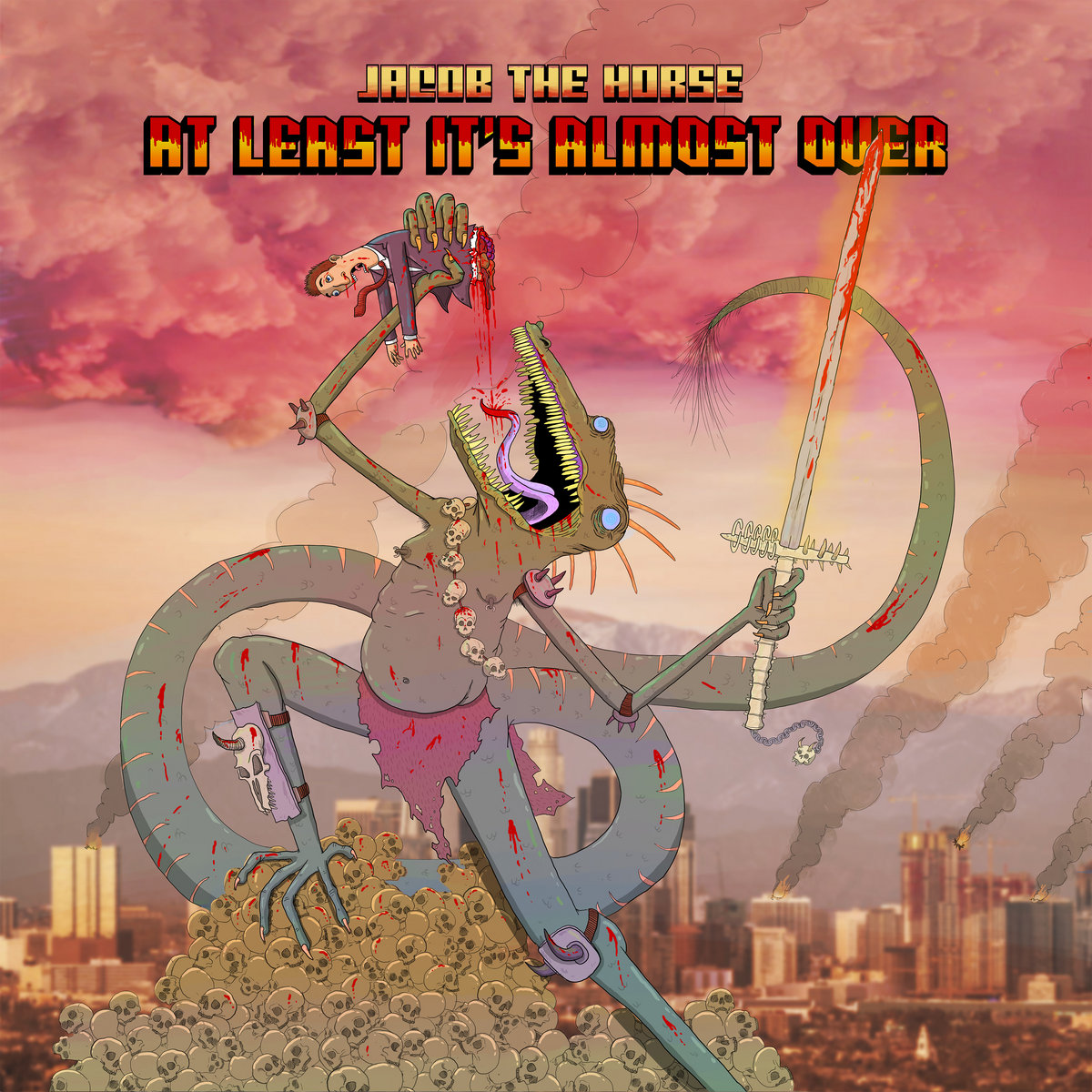
Label Description: Los Angeles indie-punks Jacob the Horse take on the rise of modern fascism, dealing with anxiety, and rallying cries for anarchy and Satan on new album At Least It’s Almost Over (out Mar. 20). It hits that nostalgic sweet spot of classic punk with elements of grunge, while bringing in tight, modern, folk-punk lyrical content that speaks to the time we’re living in now. It sparks equal parts anger and depression, while making sure we’re all having a great time listening. It’s the kind of album that you find at 14-years-old and it changes your life forever, in the same way The Clash did in the ‘70s, Dead Kennedys in the ‘80s, Propagandhi in the ‘90s, Against Me! In the ‘00s and Amyl and the Sniffers today. It’s telling you that it’s okay to be upset, to open your eyes and be part of a movement.
Jacob the Horse is Aviv Rubinstien (guitar, lead vocals), Rick Chapman (drums), Mark Desrosiers (bass) and Josh Fleury (lead guitar). At Least It’s Almost Over was engineered and produced by Jack Shirley (Jeff Rosenstock, Deafheaven, Gouge Away) at The Atomic Garden Recording Studio in San Francisco, and includes several updated re-recordings of previously released songs: “The Black Hand,” Keystone State,” “666 Chicks” “The River,” and “Totally Depressed.”
Album credits:
All Songs Written & Performed by Jacob the Horse
Jacob the Horse is
Aviv Rubinstien: Guitar, Lead Vocals
Rick Chapman: Drums, Vocals
Mark Desrosiers: Bass, Vocals
Josh Fleury: Lead Guitar, Vocals
Produced by Jack Shirley
Recorded at The Atomic Garden, Oakland, CA
Additional Engineering & String Arrangement by Josh Fleury
Saxophone on “Bad New Religion” by Walt Young
Additional Vocals on “Clever Cleaver” by Vivi Decareau
Gang Vocals by Tom Chapman, Lianne O’Shea, Marcy and Thomas Braidhardt, and friends
Label Description: These songs invite progressive, collectivist, and non-confrontational reflection as an antidote to the years of programming and propaganda we all endure. Let’s help each other UNLEARN. Let’s afford each other the space to grow. //
SONG SUMMARY: 01. Knocks – Finding the energy to take positive action 02. I Gotta Go – How life goes on amid daily horrors 03. Temperature Drop – How no one’s coming to save us 04. Last Song – How AI art & music will change us 05. Read Me Out – Turning the page on the Boomer’s world 06. Nothing Left – Silence will speak on your behalf if you don’t 07. Doing Any Good – How advocating for change is depleting 08. Fever – How to develop empathy for the victims of disinformation 09. The Recidivist – How old habits and ideas imprison us 10. Graveyard of Good Intentions – We’re fighting the wrong battle 11. Cheap Seats – How to deal with the “Billionaire Problem” 12. Wipe Right Out – How you won’t listen to me anyway
We are waking up one by one. The algorithms will try to keep us apart because this is what those in power fear the most – that we learn from each other’s experiences. //
This is why art is so important. Stories and narratives are the only way to create positive change. So we come together around art. And conversation. And solidarity. And big ideas. //
Positive change is a collective effort. Individualism is our common enemy. //
PRAISE: “My pick for this week is the just released ‘No Love Songs Volume 2.’ Singer/songwriter/guitarist Michael Boezi and a bunch of fine musicians bring us a great collection of songs about the unfortunate state of the world.
Despite the subject matter, which is presented through great lyrics and excellent instrumentation, the album is not depressing, because it’s a perfect example of how art is essential in hard times, of how we can work through chaos by using our creativity.”
— Aaron Smith (source: BlueSky)
CREDITS: Lyrics and music by Michael Boezi
PERFORMERS: Michael Boezi: Voice, guitars on all songs Dave Brophy: Drums & percussion on all songs Joe McMahon: Bass guitar on all songs Andrew Stern: Lead guitar on 2, 5, 7, 8, 9, 10, 11, 12 Andrew Stern: 12-string guitar on 8, 9 Andrew Stern: Slide guitar on 12 Britt Connors: Backing vocals on 3, 6, 8 James Rohr: Wurlitzer on 3, piano on 6 Andy Santospago: Pedal steel guitar on 1, lap steel on 4 Aaron DeGraff: Backing vocals on 9 Dave Brophy: Backing vocals on 1, 4, 5, 6, 7, 8, 11, 12 Peter Fernandez: Rhodes on 1, 2, 9 Peter Fernandez: Organ on 1, 2, 5, 8, 9 Peter Fernandez: Synth & other keyboards on 1, 5 Andrew Stern: Triangle on 2 Dave Brophy: Organ on 7
PRODUCTION: Recorded at Studio Solitaire in Somerville, MA All songs engineered by Dave Brophy Backing vocals engineered by Mike Connors on 3, 6, 8
Arranged by Michael Boezi and Dave Brophy Produced by Michael Boezi and Dave Brophy Mixed and mastered by Dave Brophy Cover photograph by Michael Boezi Cover design by Michael Boezi
Cover image: Title: [Emma Gillingham Bostwick, half-length portrait of a woman, three-quarters to left, facing three-quarters to right] Artist: Mathew B. Brady Date: Between 1851 and 1860 Source: Library of Congress Underlying Rights: Public Domain Worldwide
Formed in the late 90s, Tulsa’s Unwed Sailor embrace a unique form of bass-led, instrumental pop with post-rock dynamics that glide between white-knuckled heaviness and breezy melodicism. Since returning from a decade-long pause in 2019, a prolific spree of creative exploration and genre blending has yielded their finest work to date, including Mute The Charm (2023), Underwater Over There (2024), and Cruel Entertainment (2025).
To craft their eleventh album, High Remembrance, founding member Johnathon Ford brought a series of home-recorded drafts, demos, and hooks to the studio, where they came to life with long-time collaborators Matt Putman (drums) and David Swatzell (guitar) guided by themes of nostalgia and the bittersweet comforts of memory. Across the album’s eight tracks, there are shades of peak era alt-rock grit, late 70s AM radio swagger, and rapturous New Wave abandon, among other touchstones that defy easy categorization.
“Truest Sentence” opens with vinyl crackle and a tremolo chime that summons an effortless groove full of layered guitars, complex percussion, and Ford’s distinctive bass guitar buzz, as catchy and head-noddingly punchy as ever. Lead single, “West Coast Prism”, pairs an indelible melodic hook with upbeat drums and a jangly arrangement that transforms into a driving, technicolor refrain. True to its title, the song evokes white light splitting into a spectrum, as spacious synths and soft backing vocals create an aura of melancholic bliss; Ford fittingly cites “a deep fondness for the ocean, surfing, redwoods, and rocky coastline of Oregon” as the spiritual backdrop for its environment.
Inspired by the ways that memories create personal identity, “Don’t Let Go” could be a lost alternative radio earworm with its taut pacing, crunchy tone, and woozy guitars, while its deceptively simple rhythm section and glitchy electronics root it firmly in the present. “Cinnamon” forefronts beautifully arranged acoustic guitar countermelodies, along with layers of subtle detail, choral vocals, and relaxed, upper-neck bass guitar strums. According to Ford, the song is “a tribute to the 70s and 80s country music that soundtracked family trips to the desert when I was a kid,” with Townes Van Zandt’s “Pancho and Lefty” as a particularly meaningful anchor point.
At this point in Unwed Sailor’s storied career, Ford finds some of his strongest inspiration in reflecting on where the project began, while perpetually pushing it forward with new ideas, arrangements, and genre infusions. “It’s become about holding onto the things you love the most,” he notes, “including yourself.” His chord-driven bass playing remains the common thread through the band’s records, lending a familiar gravitas and warmth to every new collection.
The second side of High Remembrance commences with “Punk Broke”, an homage to the band’s Seattle origins – and David Markey’s famed documentary, 1991: The Year Punk Broke – where whammy-bar wobble, palm muted picking, and shimmering synth stabs lead into an anthemic guitar solo that descends over a field of crisscrossing melodies. With its twang, reverb, and cumulus clouds of slow-attack keys, “Gingerman” evokes a nighttime desert drive with the cobalt fade of the day behind a jagged silhouette of distant mountains, while the sonic contrasts and layered mix of “Three Jewels” offer up the album’s most rewarding headphone listen.
Title track, “High Remembrance”, showcases Unwed Sailor’s ability to employ a relatively simple arrangement to create a memorable, widescreen finale and embody the tone of the album as a whole. Written back during the band’s hiatus in the 2010s, the song feels like a familiar forest trail seen during all four seasons at once, and as it closes with a long fade, we are left in the blurry, liminal space of memory, absorbing the last few moments of a reverie before returning to reality.
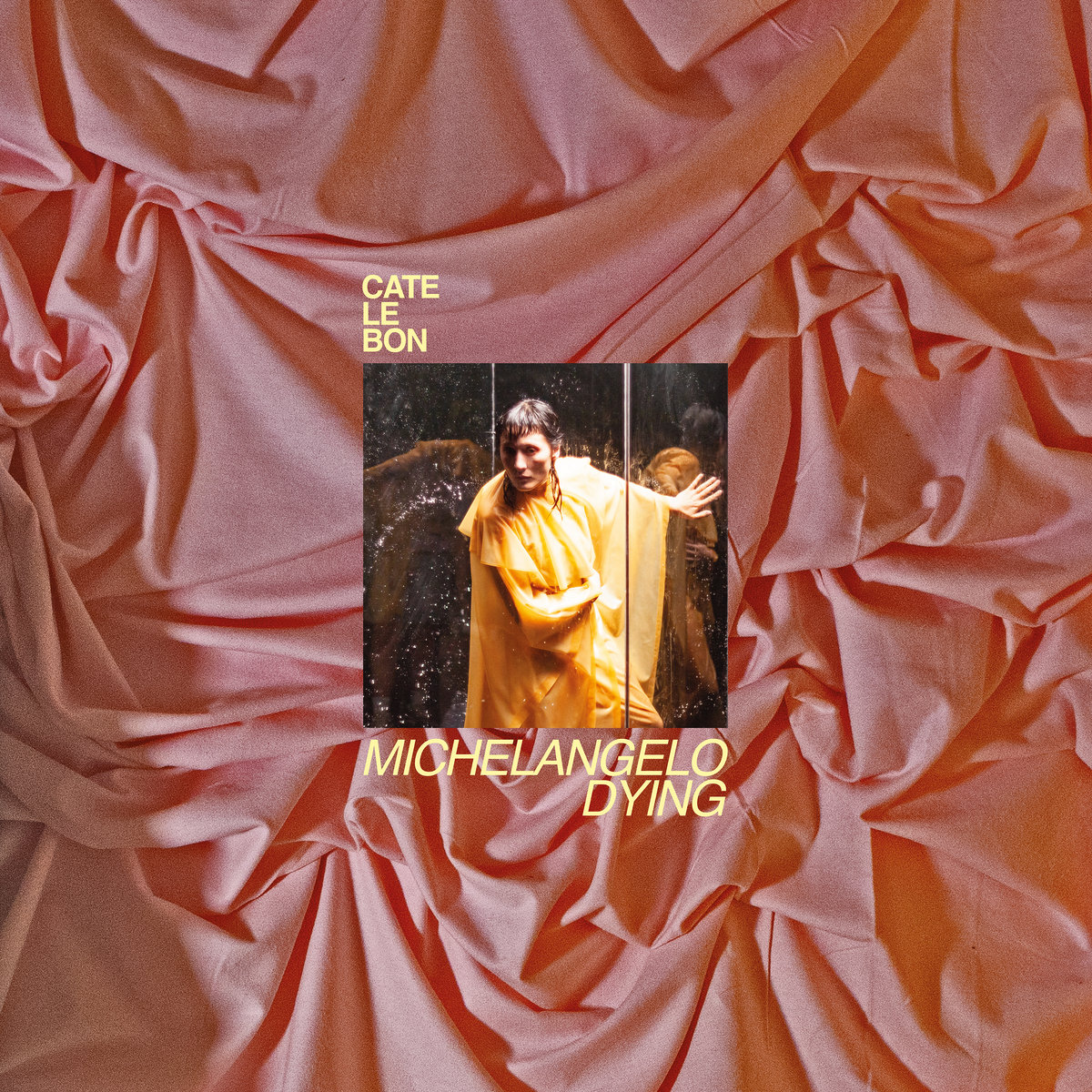
Label Description: Its creation led by pure emotion, Cate Le Bon’s seventh record Michelangelo Dying usurped the album she thought she was making. The product of all- consuming heartache, her feelings overrode her reluctance to write an album about love, and in the process became a kind of exorcism. What emerges is a wonderfully iridescent attempt to photograph a wound before it closes up but which in doing so, picks at it too.
Musically, there is a continuation and expansion of a sound a machine with a heart that has taken shape over her last two records (2019s Reward and 2022s Pompeii) as Le Bon has increasingly taken control of the playing and producing herself. As guitars and saxophones are pushed through pedals and percussion and voices are fed through filters, an iridescent, green and silky sound emerges, with flashes of the artistic singularities of David Bowie, Nico, John McGeoch and Laurie Anderson surfacing and disappearing below the waterline throughout.
What were left with is an ever-changing, continuous entity, a kind of song cycle. Each iteration reflects and progresses the last, each one a shard of the same broken mirror shifting, glinting, concealing and revealing, depending on how it is turned in the light. There are ultimately, Cate asserts, No revelations. No conclusions. There is no reason. There is repetition and chaos. I eventually allowed myself a vacant mind to experience it without resistance and without searching for a revelation or order to any of it.
An exercise in the viscerality(sic) of life, of love, of humanity for both listener and artist, Michelangelo Dying knows what it is to hold, to be held, and to be exquisitely, profoundly alone. “The characters are interchangeable” concludes Cate, “but at the end of it all, its me meeting myself.”