This collaborative release presents three immersive movements of avant-electronics full of unexpected tonal contrasts and shifts in intensity. Powered by modular synthesis, “concrete” assemblage technique and a pervasive desire to work with the full spectrum of sound, Tokokawa is the product of its two producers’ commitment to a dynamic, ever-renewing sense of aesthetics.
From late 2023 to the present, we started from a simple, agreed interest in collaboration to something that became much more carefully calibrated and conceptually guided.The results are, to my ears, a seamless and strangely organic suite of electro-acoustic pieces that hone in on the “essences” of various avant-electronic genres (“noise,” “drone,” “dark ambient,” etc etc) without succumbing to their more cliched elements. We composed this material almost telepathically (i.e. with a bare minimum of instruction and revision needed) and I’m excited to share the results with my supporters here.
I think our music is a representation of us being conduits for energies that precede us and will survive us, and to that end we also named the three “phases” here with verbal cues indicating different states of matter: “Amanogawa” is either the “Milky Way” or, in direct translation, the “River of Heaven.” “Nurikabe” is a solid plaster wall that, I’m told, occasionally figures into bouts of sleep paralysis. “Jouhatsu suru Yuurei” are “vaporizing ghosts” (the confusion this may cause native Japanese speakers is intentional – I was trying to imagine something ephemeral becoming somehow even more ephemeral).
We aimed at creating pieces which would also have the “properties” of solid, liquid or gas, but not completely: the focus is, again, on cyclical renewal and therefore each of these phases has just enough of an open-ended quality to it.
The CD version of this album on Fourth Dimension is also enhanced by lovely full-color artwork from Paul Takahashi, and expert mastering by Ryoko Ono.
Originally released on 5th July 2024
Y’ng-Yin Siew (Reverse Image), Thomas Bey William Bailey: analog modular synthesis, real-time digital processing
A ponderance on the cosmic horrors in the shadows, just beyond the veil of what you can see.
The sky and the cosmos are one.
Special thanks to everyone at FromSoftware for Bloodborne, which served as the inspiration for and subject matter of this album.
All sounds designed by rauðvik at Overlook Studios Recorded, mixed, and mastered by rauðvik at Overlook Studios Cover photo by Nephron – Own work, CC BY-SA 3.0, commons.wikimedia.org/w/index.php?curid=9716436 Text added by rauðvik
Memorial continues the path opened by Sacrifice. After the burning, there is stillness. Time spent among what remains. Ashes settle, memory lingers, and the question is no longer how to begin again, but what can finally be released.
The record moves through remembrance toward letting go and acceptance — a quiet reconciliation with what cannot be carried further. It speaks from a single, unpersonified voice: a shared human state shaped by loss, exhaustion, love, and the fragile will to endure.
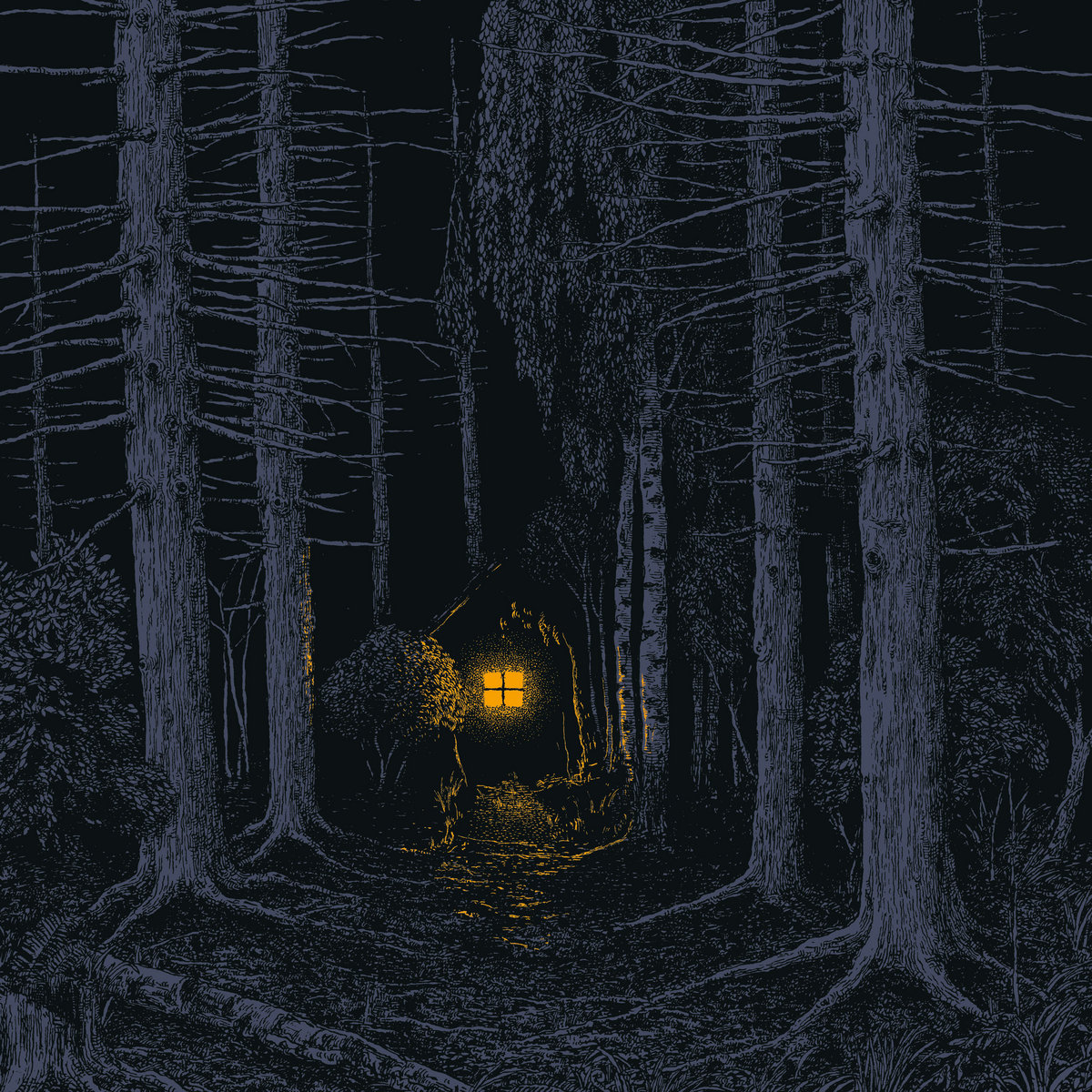
At its center stands a forest hut: not a physical place, but a retreat of the mind. A solitary structure in the woods, an escape from the collapsing outer world, where everything decays, familiar bonds loosen, and people drift apart and return changed. The hut becomes a memorial itself — an obelisk in the forest, a burial site for former lives, a place one returns to alone to contemplate what remains.
Inside, memory becomes both refuge and weight. What was meant to be forgotten stays. What was meant to last dissolves. Grief softens into stillness.
Unlike Sacrifice, Memorial offers a different kind of rebirth. Rebirth here is indistinct — a quieter transformation found in letting go rather than becoming. Only in its final moments does movement return: a fragile renewal, like thawed water finding its way to a river.
Memorial is dedicated to more than one loss. It holds space for the dead, for love that has outlived itself, for time that cannot be returned, for friends forced to flee, and for selves left behind. Its meaning remains open, shifting with each return — a structure in the forest, unchanged, waiting.
Information about vinyl and CD editions will be available very soon; as usual, they will be released via Avantgarde Music.
Music – Andrey Novozhilov and Tim Yusupov Screwdriver solo on track “When the Ashes Grow Cold” – Artem Selyugin of Show Me A Dinosaur, Somn, hopeyouwell Sound – Mikhail Kurochkin Artwork – Margot Makletsova
For the next interpretation of quiet details, I have the pleasure of welcoming a true musical experimentalist, Rutger Zuydervelt, here as Machinefabriek.
Hailing from the Netherlands, Rutger has been active as Machinefabriek for over twenty years, releasing on highly regarded labels such as Western Vinyl, Type, Important, 12K, Entr’acte, Miasmah, Consouling Sounds, Eilean and Edition Wandelweiser. This, alongside many collaborations, music for film and dance, installations and live performances, has given him a place as one of the most admired artists working today.
Known for his ability to bring together various strands of musical exploration – from electro-acoustic, field recording, ambience, drone, sound art and minimalism – he has created something completely unique in the quiet details series
Lijnverkenning is an album of sparse and powerful textural beauty. Machinefabriek’s innate comprehension of the potential of sound to affect us in profound and unknowable ways.
This is an album where the personality of the machines dictated the direction of music – carefully and deftly guided by Rutger’s intuition and musicality.
There’s an exquisite subtlety throughout, layers of sound implying so much and the interplay creating something incredibly moving.
As Rutger says:
Of course I said yes when quiet details asked me to join their roster. I was playing Scanner’s Forces, Reactions, Deflections quite a bit at the time, and it inspired me to create my own take on the quiet details idea. I started working with cassette tapes and created a whole bunch of short, quite melodic compositions, but eventually decided they didn’t fit the label’s aesthetic, and definitely didn’t work in the long-form format that qt used for its CDs.
So I started anew, focusing on longer durations and moving toward a more free-form and intuitive direction. Taking time, letting my machines softly hum. In the process of creating the music, I think I found a strange form of intimacy within the sounds — as if eavesdropping on the ghosts inside the machines I was using. The tracks here were mostly made by combining various layers of minimalistic improvisations with field recordings, oscillators, effect pedals, etc. I even hesitate to call these pieces “compositions,” because to me they feel more like entities that follow their own logic, rather than clearly defined and constructed songs.
Stemcassette is a different story. That track came to life after I used a short vocal sample taken from a tape I found in a second-hand memo recorder I had bought. It was filled with home recordings of rehearsals by an opera singer. A short, pitched-down snippet was used in the piece Lijnverkenning 3, but I couldn’t shake the idea of doing more with the sample. So I created the short Stemcassette from it, and felt it worked well as a mid-album “breather.”
Lijnverkenning means “line exploration.” It’s an expression I once saw marked on a public bus, presumably indicating a test of a new route. It’s a multifaceted word, with many connotations that also relate to the music. I hope listeners of this album will feel like explorers — Lijnverkenners — too.
Huge thanks to Rutger for this stunning addition to the series.
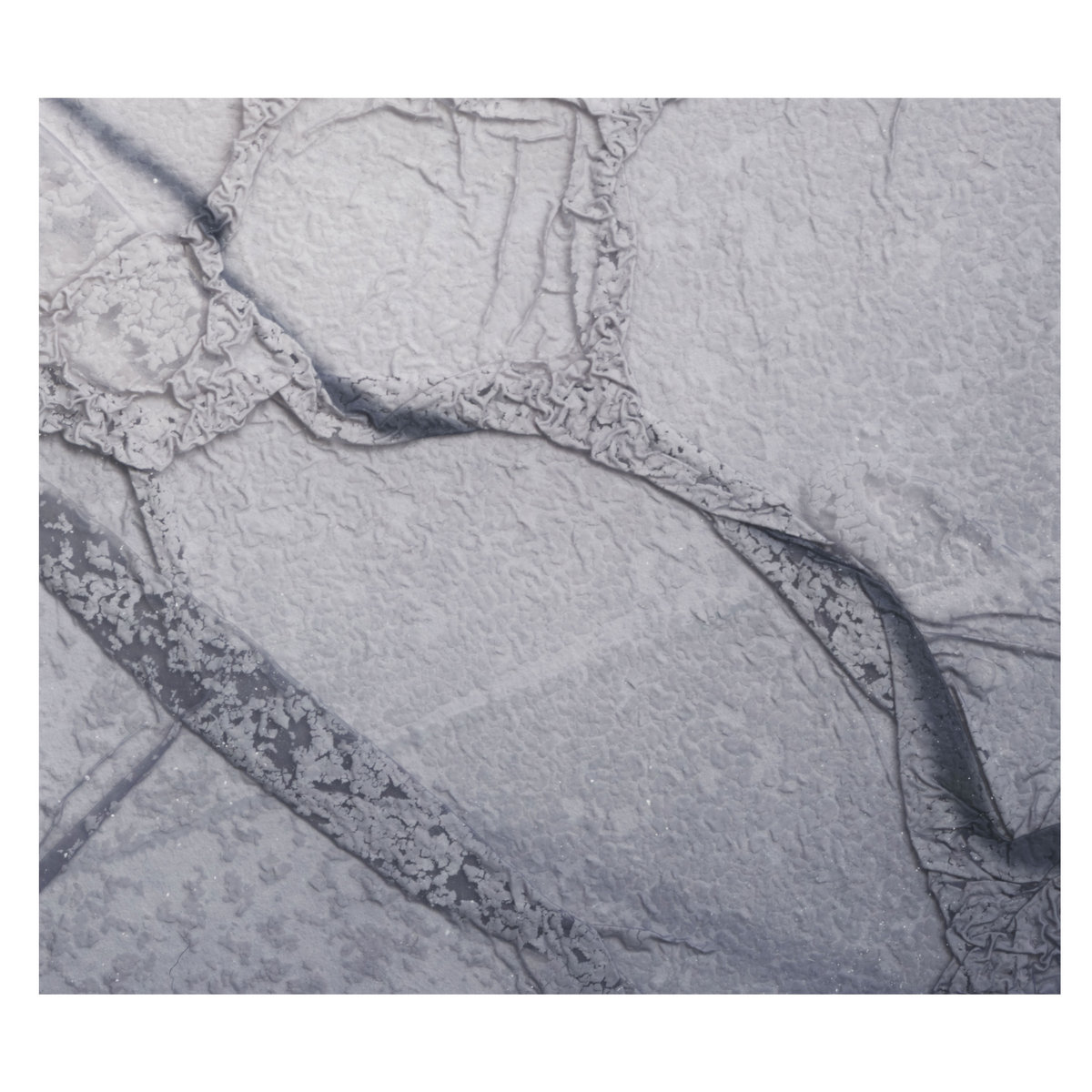
The artwork was made as always influenced by the music and idea behind the album – originating from a photo from Rutger which was then captured with analogue photography and processed here at quiet details studios.
As usual, the album is presented on the physical edition, a custom six-panel digipack with a separate fine art print too. The CD also has a special long-form continuous mix of the album, created by the artist and representing the music in its purest form – highly recommended.
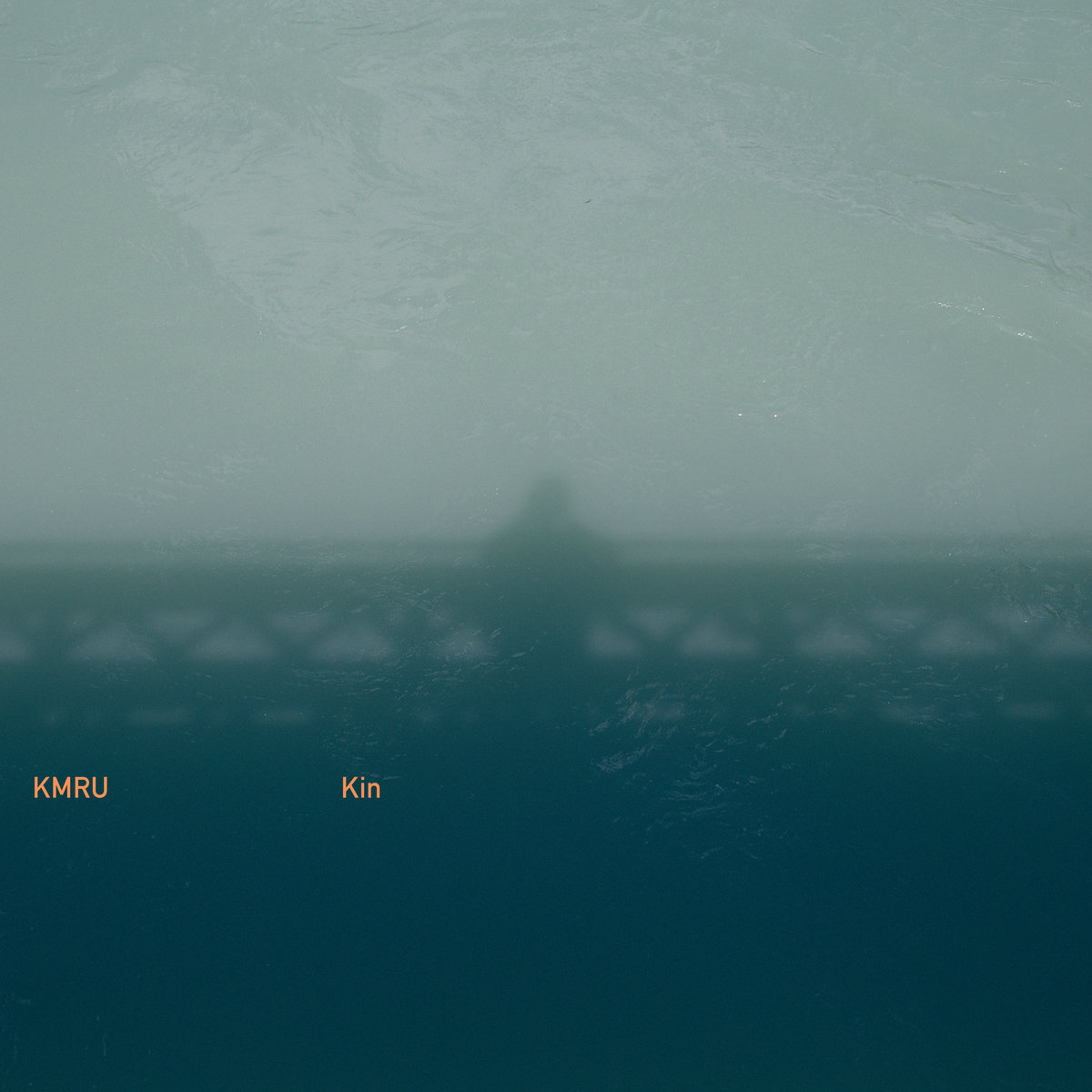
Editions Mego welcomes KMRU back to the fold. Kin is Nairobi born, Berlin based, sonic wizard Joseph Kamaru’s second release on Editions Mego, following on from the classic 2020 release Peel. Since the release and subsequent praise for Peel, the artist has been a staple on the electronic scene performing on numerous stages and festivals worldwide in tandem with a flood of media recognition. Kin could be construed as the second child following Peel. The project came out of initial discussions with Peter Rehberg about what a Peel sequel would sound like. Kamaru is quick to clarify that Kin is not that record; “I’ll know when that record will come and when I’ll make it. It’s already happening… or maybe it lives within both of these Mego records”.
It is this deft ambiguity and vague tiptoeing around the concrete that encapsulates the ambiguous sound world of Kamaru’s vision.
Kin was started early 2021 in Nairobi with Kamaru exploring his noisier palette of sounds encompassing distortions reminiscent of the sounds he would muster from in his youth when playing guitar. He paused making this record for a year as soon as Peter died, then slowly returned to it through 2022 resulting in the immense new work we have here.
The charms within Kin lay as Easter eggs revealing the true identity behind the colourful sonics only after multiple deep listens. With Trees Where We Can See sets the tone by way of a warm swaying melody inviting the listener in for further investigation. In 2022 KMRU and Mego stalwart Fennesz toured the USA together resulting in a strong friendship and also, the second track here, Blurred. A neat Mego/Editions Mego loop as such. Blurred arranges twangy guitar strums alongside glistening glaciers of shimmering drones. They Are Here represents a darker hue as melancholic clouds of shadowy noir tap directly into the listener’s nerve stream. Maybe takes a detour into a bristling euphoric electronic storm whilst We Are screeches in a pattern formation not unlike a highly abstracted Aphex Twin forcing its way out of a hard drive. By Absence concludes proceedings, operating as both exit music and a portal to further sonic investigation with acoustic bellowing residing amongst a kaleidoscopic backdrop.
Kin is a trip that rewards close repeated listens as all the colours and textures, nuance and narratives unveil themselves. This isn’t a record to be glossed over, magic rewards concentration.
Kin is a record to be Played slow and LOUD.
For Pita.
All tracks written, produced, mixed by Joseph Kamaru Blurred co-written & produced with Christian Fennesz Mastered by Stephan Mathieu at Schwebung Mastering Photography: Joseph Kamaru Layout & Design: Nik Void Cut by Andreas Kauffelt at Schnittstelle, Berlin
Frozen Bloom is our fourth album where we took some different routes compositionally(sic). Two of four tracks are traditionally storm-like blackgaze passages and another two are leaning towards more meditative drone experience.
It is about unfulfilled dreams. About how we sacrifice everything today for some abstract “tomorrow” which may never come. But tomorrow and yesterday don’t exist – only this very moment of static contemplation.
When winter is just starting to fade and give some space for a spring’s first steps, when first life starts to reappear and the very early flowers peek through the thawing soil a sudden shift in temperature can leave them petrified and frozen back again like being punished by the Queen of Fields. This statuesque dead beauty, being infinitely alive and dead at the same time is Frozen Bloom.
We got a chance to collaborate with A. Lunn (appearing courtesy of Bindrune records) who kindly agreed to record an electric guitar solo as well as acoustic parts and choral parts on Frozen Bloom I
Recording, mixing and mastering by Mihail Kurochkin Cover art by Daniel Teisakowski (@daniel_tskwsk) Guest electric guitar, acoustic guitar, square neck resonator guitar and choral vocals – A. Lunn (Appearing courtesy of Bindrune recordings) Physical release via Avantgarde music Cassette release by Slowsnow records
Fragments is a series of short musical pieces conceived as breaths rather than songs.
After the album Ornaments, which was built around text, voice, and symbolic articulation, Fragments moves in the opposite direction: less language, less structure, less intention.
Each piece is limited in duration (around two minutes), not by constraint, but by necessity. They are not meant to develop or conclude — they appear, remain briefly, and dissolve.
The voice, when present, is reduced to a single word, a syllable, or a gesture. Sound is treated as matter: grain, air, erosion, suspension.
Fragments was composed and recorded live, without overdubs, to preserve fragility and immediacy. It is designed for saturated minds and quiet rooms — a space to breathe, not to explain.
This EP is not a continuation of Ornaments, but its decantation.
Kali Malone and Drew McDowall present Magnetism, their first collaborative album born from a decade-long friendship and ignited by a single day of creative synergy. When Malone stepped into McDowall’s Brooklyn home studio, a shared vision immediately took root and set the course for a remarkable collaboration between these two singular artists. On Magnetism, Malone’s poignant and evocative melodies manifest through McDowall’s signature timbral synthesis, creating a unified voice that soars freely and radiates with vitality. Technically, the duo employs an exquisite blend of Karplus-Strong synthesis, distortion and just intonation. Kali and Drew embrace these tools with refined grace while moving fluidly within their musical framework. Charged by the magnetic pull of repetition, saturation, and resonance, Magnetism pulses as a living music that captivates the senses and lingers long in the mind after the final notes fade.

 Music For The Rest Of Us